
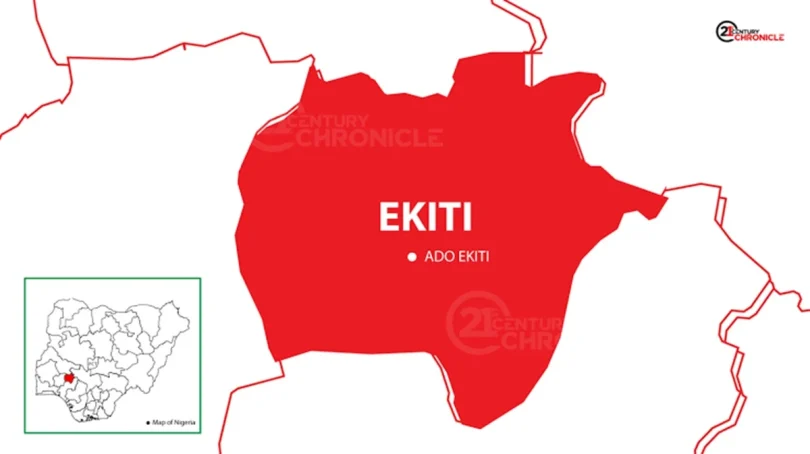
The Speaker of the Ekiti State House of Assembly, Rt. Hon. Adeoye Aribasoye, has said the legislature is yet to receive the Constitution of the Federal Republic of Nigeria, 1999 (Sixth Alteration) Bill, 2026, transmitted by the National Assembly to state Houses of Assembly for consideration.
Aribasoye, who spoke in an interview with the Nigerian Tribune at the weekend, said the Ekiti Assembly would subject the proposed constitutional amendments to thorough legislative scrutiny once the documents were formally received.
He stressed that the Assembly would not take decisions on the proposed alterations without carefully examining the details and assessing their implications for the people of Ekiti State.
Responding specifically to the status of the documents in Ekiti, Aribasoye said: “We are yet to receive it.”
He, however, assured that the Assembly would approach the exercise with the seriousness expected of a legislature entrusted with representing the interests of the people.
The Speaker said the lawmakers would “examine every detail,” stressing that their eventual position would be based on the contents of the proposals and their implications for the state and its citizens.
He said, “We remain committed to examining every detail, ensuring it reflects the expectations of our people, and taking informed decisions on every clause.”
Aribasoye added that the Assembly’s consideration of the proposed amendments would be guided by the constitutional procedure governing alterations to the nation’s supreme law.
“We are guided strictly by the provisions of Section 9 of the Constitution of the Federal Republic of Nigeria, as amended,” he said.
His comments came against the backdrop of the commencement of the state-level phase of the ongoing constitutional alteration process, following the reported transmission of the Sixth Alteration Bill to the 36 state Houses of Assembly by the National Assembly on September 16, 2026.
The transmission, according to the Clerk to the National Assembly, Kamoru Ogunlana, was made pursuant to Section 9 of the 1999 Constitution, which requires the approval of not less than two-thirds of the state Houses of Assembly for a constitutional alteration to proceed.
The proposed constitutional amendment includes the establishment of state police, a major reform that would provide for a dual policing structure involving the Federal Police and state police services.
The state police proposal is the alteration that has so far secured passage in both chambers of the National Assembly in the current review exercise.
Other areas covered by the broader constitutional review process include local government autonomy, electoral reforms, judicial administration, devolution of powers, fiscal reforms, human rights, traditional institutions and other institutional reforms.
The Speaker’s position underscores the constitutional role of state legislatures in the ongoing amendment process, as the National Assembly cannot complete the alteration procedure without the required concurrence of the state Houses of Assembly.
Under Section 9, at least 24 of the 36 state Houses of Assembly must approve a constitutional alteration proposal, representing the required two-thirds threshold.