
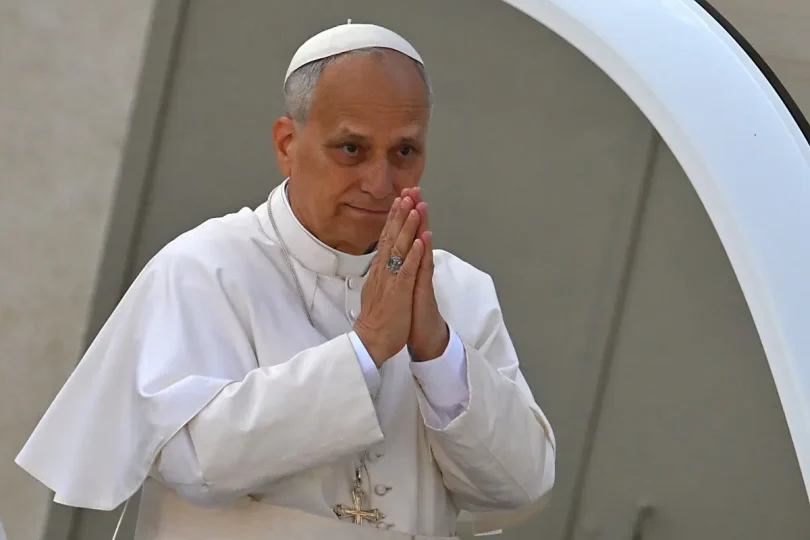
Pope Leo XIV is set to begin an 11-day tour of Africa on Monday, marking his first major international journey since assuming leadership of the Catholic Church last year. The visit will take him across Algeria, Cameroon, Angola, and Equatorial Guinea, covering more than 18,000 kilometres.
The 70-year-old pontiff, who became head of the world’s 1.4 billion Catholics in May, is expected to address a wide range of issues, including interfaith dialogue, peacebuilding, inequality, and human rights. Over the course of the trip, he will deliver 11 speeches, celebrate seven masses, and visit about a dozen locations. His tour comes amid heightened global tensions linked to the Middle East conflict and its economic fallout.
In Algeria (April 13–15), Leo will make history as the first pope to visit the Muslim-majority nation, where Islam is the state religion. He is scheduled to visit the Great Mosque of Algiers, meet President Abdelmadjid Tebboune, and travel to Annaba, associated with Saint Augustine. He will also honour 19 নিহত clergy killed during the Algerian Civil War.
From April 15 to 18, the pope will be in Cameroon, where his message is expected to centre on peace and reconciliation, particularly in the conflict-affected northwest. In Bamenda, a focal point of unrest, he will lead a mass under tight security. The visit will also include meetings with President Paul Biya and tours of Catholic-run institutions.
Leo’s trip continues to Angola (April 18–21), where he is expected to highlight economic inequality despite the country’s vast oil and mineral wealth. He will visit Luanda and the historic pilgrimage site of Muxima, addressing issues such as corruption and fair resource distribution in a nation still recovering from years of civil war.
The final leg of the tour will take him to Equatorial Guinea (April 21–23), a predominantly Catholic country led by President Teodoro Obiang Nguema Mbasogo since 1979. Analysts expect the pope to strike a careful balance between supporting local Catholics and addressing concerns over governance, human rights, and social justice.
This trip will be Leo’s third outside Italy, following earlier visits to Turkey, Lebanon, and Monaco, and is likely to further define his global leadership at a time of international uncertainty.