
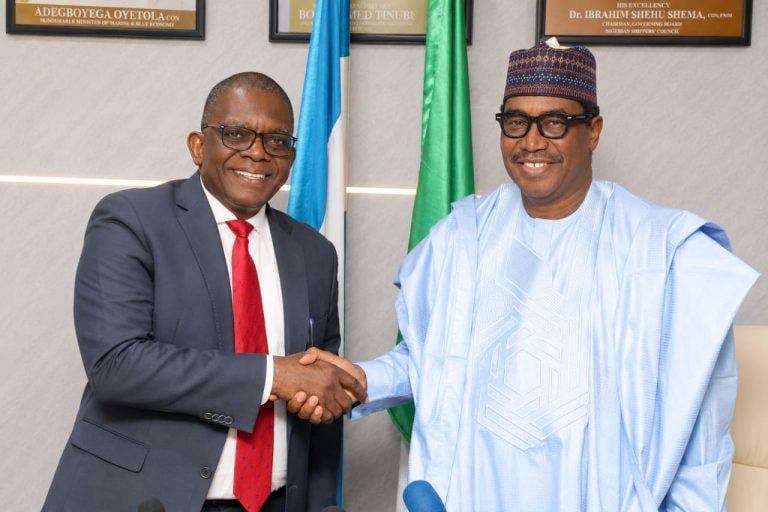
The Nigeria Ports Economic Regulatory Agency (NPERA) has officially commenced operations, marking a major shift in the regulation of Nigeria’s port economy.
The agency was established under the Nigeria Ports Economic Regulatory Agency Act, 2026, following President Bola Ahmed Tinubu’s assent to the legislation. NPERA is now responsible for the economic regulation of the country’s ports, with a mandate to promote transparency, competition, efficiency, and predictability.
Speaking at the commencement of operations, Chairman of the NPERA Governing Board, Dr. Ibrahim Shema, described the new agency as a fundamental reform of Nigeria’s port governance system.
NPERA will oversee areas including:
Port tariffs and charges
Licensing and service standards
Fair competition
Commercial dispute resolution
Trade facilitation
Protection of port users
Shema clarified that NPERA will not compete with the Nigerian Ports Authority (NPA), which will continue to handle port infrastructure and its landlord functions. Instead, the two institutions are expected to operate within clearly defined statutory responsibilities.
The agency identified transparency, fairness, predictability, efficiency, and accountability as the five principles guiding its regulatory activities.
NPERA also plans to expand the use of digital platforms for licensing, tariff administration, regulatory monitoring, compliance, and stakeholder engagement. The agency said this should help reduce unnecessary regulatory delays and improve cargo movement.
Executive Secretary and CEO of NPERA, Dr. Pius Akutah, expressed confidence that the new regulatory framework would significantly clarify the business environment within Nigeria’s ports over the next one to two years.
The transition from the Nigerian Shippers’ Council, which previously served as the interim port economic regulator, is expected to be orderly and minimally disruptive.
The commencement of NPERA represents a significant change in Nigeria’s port governance structure, with economic regulation now separated from infrastructure management. Its ultimate success, however, will depend on whether it can translate the new legal framework into faster cargo clearance, fairer charges, stronger competition, improved investment confidence, and greater efficiency across Nigeria’s ports.