
By Yahaya Umar
There is a quiet shift happening in Nigeria’s power sector, and it is not coming from new power plants or political promises. It is coming from the system that actually manages the electricity.
The Nigerian Independent System Operator, NISO, is now moving to fix something operators have complained about for years: a national grid that is simply not ready for the kind of energy transition Nigeria is talking about.
Speaking in Abuja to mark its first year in operation, NISO’s Managing Director, Abdu Mohammed Bello, made it clear that the focus has moved beyond just keeping the lights on.
The real work now is preparing the grid to handle renewable energy without pushing an already unstable system into more frequent collapses.
“At NISO, we are working to make sure that the approved transmission expansion plan is religiously implemented to add value to the system. This is very important; we have also advanced some frameworks for renewable energy integration into the national grid”, Bello said.
That statement may sound routine, but in Nigeria’s context, it is not. Integrating solar and other renewables into the grid is not as simple as plugging them in.
Unlike gas-fired plants that can be controlled, solar generation fluctuates with sunlight.
Without proper coordination, that inconsistency can destabilise frequency and trigger system disturbances the same kind Nigerians experience when the grid trips off unexpectedly.
This is why NISO says it is focusing heavily on system studies before scaling integration. Bello pointed to ongoing work around battery energy storage systems an area Nigeria has largely ignored until now.
“We have also conducted critical studies, including those on renewable energy integration and battery energy storage systems… advanced electricity systems use a lot of battery energy storage systems and renewable energy systems as well”, he said.
In practical terms, this is where the real gap has been.
Nigeria has talked up solar for years, but without storage, that power cannot be managed effectively. During the day, supply can spike; at night, it drops. Without batteries to balance that cycle, the grid remains exposed.
What NISO is trying to do is build that missing layer quietly, but critically.
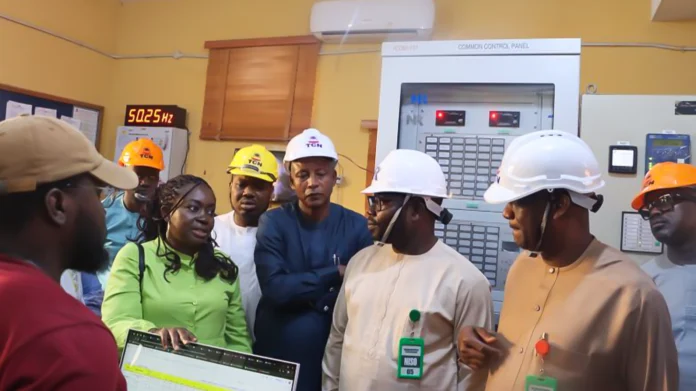
At the same time, the agency is tightening operational control of the grid itself. Over the past year, it has accelerated work
on SCADA/EMS systems to improve real-time monitoring. In a country where operators have often relied on delayed or incomplete data, this is a significant step. The ability to “see” the grid as events happen is what separates stable systems from reactive ones.
NISO also says it has advanced telemetry deployment across key electricity trading points and is expanding the use of digital and IoT-based tools to improve visibility.
These are the kind of backend upgrades that do not make headlines but determine whether the system can respond quickly when something goes wrong.
On the stability front, Bello highlighted efforts such as Free Governor Mode Operation to improve frequency response, alongside ongoing protection coordination across the grid.
In simple terms, these are safeguards designed to prevent small faults from escalating into nationwide outages a problem Nigeria knows too well.
Still, the challenges remain layered.
Bello admitted that market liquidity issues, weak infrastructure, and compliance gaps across operators are slowing progress. Add renewable integration constraints to that, and it becomes clear that this overhaul is not a quick win it is a long process of fixing multiple weak points at once.
What stands out, however, is the shift in approach. For years, Nigeria’s power conversation has been dominated by generation how many megawatts are produced, how many plants are coming on stream.
But generation without a functional grid means very little. Power that cannot be transmitted or balanced is as good as not generated at all.
That is the gap NISO is now trying to close. Not with big announcements, but with system discipline, better monitoring, tighter coordination, and a grid that can actually take in new sources of energy without breaking down.
Whether this translates into fewer grid collapses and more stable supply is what Nigerians will be watching. Because in this sector, progress is not measured by frameworks or studies it is measured by whether the lights stay on.