
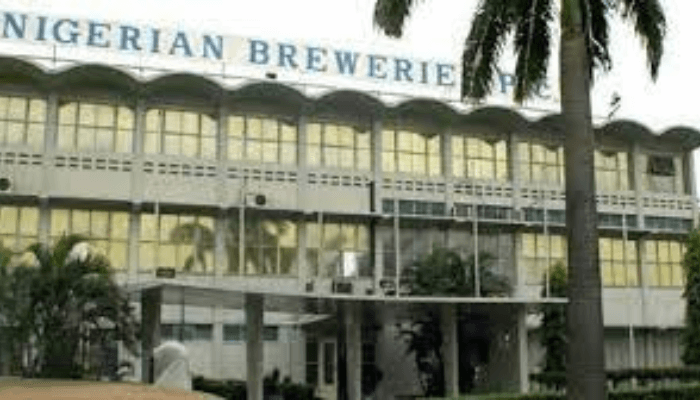
Nigerian Breweries Plc sustained its earnings recovery in the first half of 2026, posting a profit after tax of N92.95 billion, a 5 percent increase from N88.42 billion recorded in the corresponding period of 2025, as a sharp decline in finance costs offset rising operating expenses and a higher tax burden.
The brewer’s unaudited financial statements showed that profit before tax rose 18 percent to N156.33 billion from N132.24 billion a year earlier, supported by a 61 percent decline in net finance costs to N7.65 billion from N19.65 billion.
Revenue climbed 9 percent to N803.68 billion from N738.14 billion, driven by pricing actions, premiumisation, sustained investment behind strategic brands and continued growth in the malt category despite a still challenging consumer environment. Gross profit increased 14 percent to N354.86 billion, lifting gross margin by about two percentage points.
Operating profit rose 8 percent to N163.97 billion, although the company continued to absorb significantly higher operating costs. Selling, distribution and administrative expenses expanded by 20 percent to N192.99 billion as investments in route-to-market execution, advertising and employee costs increased.
A deeper look at the accounts shows that advertising and sales expenses increased to N71.93 billion from N59.51 billion, while employee benefit costs rose to N48.63 billion from N41.24 billion. Distribution expenses also climbed to N68.04 billion from N54.11 billion, reflecting continued investments in market execution and logistics.
Despite the stronger operating performance, net profit growth remained modest because income tax expenses surged 45 percent to N63.37 billion from N43.83 billion. The company’s effective tax rate rose to 40.54 percent, compared with 32.7 percent in the corresponding period of last year.
One of the strongest indicators of the brewer’s turnaround was its balance sheet.
Nigerian Breweries ended the half year with zero loans and borrowings, compared with interest-bearing debt of more than N152 billion in the corresponding period of 2025, while cash and cash equivalents stood at N74.63 billion. The company therefore moved from a net debt position a year ago to a net cash position of N74.63 billion, significantly reducing financing pressure.
The brewer also generated N111.07 billion in net cash from operating activities, compared with just N7.18 billion in the first half of 2025, reflecting stronger cash generation and improved working capital management. Cash balances increased by N13.37 billion during the period to N74.63 billion.
Shareholders’ funds strengthened considerably during the period as retained earnings returned to positive territory at N13.65 billion, reversing a retained deficit of N72.17 billion at the end of 2025. Total equity increased to N645.86 billion from N560.22 billion over the same period.
Management said the performance demonstrated the company’s resilience despite macroeconomic volatility.
According to the earnings update, revenue growth reflected the benefits of revenue management initiatives, continued investment behind strategic brands, focused execution across the value chain and sustained contributions from premium brands and the malt portfolio. The company added that improved liquidity and the elimination of borrowings had strengthened its financial flexibility while restoring retained earnings to a positive position.
Commenting on the results, Wassim Elhusseini, managing director of Nestlé Nigeria PLC, said: “Our performance in the first half of 2026 demonstrates continued progress in strengthening the fundamentals of our business. The delivery of a seventh consecutive quarter of profitability since our return to profit in Q4 2024, alongside 12% revenue growth and Profit After Tax of ₦64.8 billion, reflects the resilience of our brands, the discipline of our execution and the commitment of our people.
“We remain optimistic about the outlook and will continue to pursue sustainable, profitable growth with focus and prudence.”
Looking ahead, Nigerian Breweries said it will remain focused on disciplined execution, revenue optimisation, cost efficiency and cash generation while maintaining financial flexibility to navigate evolving market conditions.