
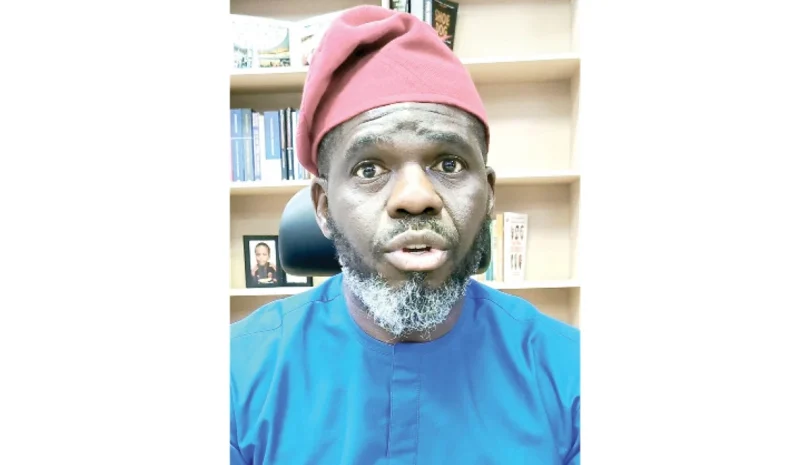
The Ekiti State Commissioner for Finance and Chairman of the Forum of Commissioners for Finance in Nigeria, Akin Oyebode, in this interview with ‘YOMI AYELESO, speaks on the impact of the Federal Government’s reforms, the role of states in driving development, why collaboration between the federal and state governments is crucial, and how Ekiti State under Governor Biodun Oyebanji is positioning itself for long-term prosperity through investments in infrastructure, agriculture, technology and human capital.
AS Chairman of the Forum of Commissioners for Finance in Nigeria, President Bola Tinubu recently said more money is now going to the states and urged Nigerians to engage their governors on how the funds are being utilised. How will you interpret the President’s statement?
First, we must acknowledge the President for taking difficult but necessary decisions that have significantly improved the fiscal position of the federation. It is not only the states that are receiving more revenue; the entire federation is benefiting, with the Federal Government also receiving its constitutional share. What we are witnessing today is stronger coordination between the Federal Government and the states. That collaboration should continue to improve, particularly in project delivery and ensuring that national and sub-national development complement one another. Across the country, infrastructure projects are ongoing at both federal and state levels. In fact, World Bank reports show that more than 60 per cent of government capital expenditure is now being driven by sub-national governments. That demonstrates that states are playing a critical role in Nigeria’s development. None of this would have been possible without the bold reforms initiated by President Tinubu.
Many Nigerians, however, argue that despite these reforms, hardship has increased. What more should be done to improve the economy, especially as it relates to the average citizens on the streets?
I don’t dispute the fact that Nigerians are going through difficult times. I am a Nigerian and I live here too. But we also need to ask ourselves what would have happened if those reforms had not been implemented. In my opinion, the situation would have been much worse. At the time the reforms were introduced, foreign exchange was scarce. Manufacturers, traders and businesses struggled to access the foreign exchange needed for imports. Inflationary pressures were extremely high, with inflation hovering around 30 per cent. Today, the macroeconomic environment is considerably more stable. Inflation has moderated, price increases have slowed significantly, and businesses can now access foreign exchange for legitimate transactions. The challenge before us now is ensuring that this macroeconomic stability translates into improved living conditions for households. To achieve that, Nigeria must sustain double-digit economic growth that exceeds population growth. Growth also has to spread beyond sectors such as telecommunications, ICT and oil and gas. Agriculture, distributive trade and other sectors that directly affect ordinary Nigerians must experience strong growth. If agriculture, for instance, grows consistently at 10 to 12 per cent annually, households will begin to feel the benefits much more directly.
Given this situation you have explained, what hope can you offer Nigerians? How soon can these economic gains reach families?
A number of important steps still need to be taken. We must improve collaboration in public spending, particularly in critical sectors of the economy. The government should also continue to privatise activities that can be managed more efficiently by the private sector. For example, I see no reason why electricity transmission cannot be privatised. Likewise, NNPCL can reduce some of the federation’s equity in certain assets to attract private investment, raise additional revenue and accelerate production. Another important area is monetary policy. If inflation continues to decline, interest rates should also begin to moderate so businesses can access affordable financing to expand their operations. These are technical but important policy decisions that can stimulate investment, create jobs and accelerate economic growth.
Turning to Ekiti State, many observers believe the state has made significant economic progress under Governor Biodun Oyebanji. What would you describe as the administration’s biggest factor driving these achievements in almost four years?
The biggest factor is the Governor’s clear vision of delivering shared prosperity. It is a simple, consistent and well-articulated vision that every ministry and agency understands and works towards. Secondly, we have maintained relative peace and security, which remains the foundation of development. While no society is perfect, Ekiti remains one of the safer states in the country. Infrastructure development has also been transformative. Better roads improve economic activities across the state. We have equally invested heavily in agriculture, food security and youth empowerment. Electricity is another major area. Communities that previously had no access to power are now connected. Street lighting has also extended business hours. People often overlook the economic impact of something as simple as street lights. If commercial activities increase from 12 hours daily to 15 hours, that represents about a 25 per cent increase in trading time. The multiplier effect on the local economy is enormous.
Looking ahead to the governor’s second term starting in October, many believe industrialisation and private investment should be priorities to create more jobs. What needs to happen?
Investment takes time, but we have already laid the foundation. Take the Special Agro-Industrial Processing Zone; it is designed to attract agro-processing industries to Ekiti. Agbeyewa Farms is an excellent example of what we want, but we need hundreds of such investments. The Ekiti Knowledge Zone (EKZ) is another game-changer. It will attract technology companies and provide opportunities for our young people, particularly those already working remotely or freelancing. The operational airport is another strategic asset. Investors always consider connectivity before choosing where to locate. Today, Ekiti is effectively about 30 minutes by air from Lagos, making the state much more attractive for business. In the second term, our strategy will become even more proactive. Rather than waiting for investors, we will actively engage targeted companies and convince them that Ekiti offers the right business environment. We have also improved the investment climate through institutions such as the Ekiti Development and Investment Promotion Agency (EKDIPA), introduced business-friendly reforms and consistently ranked among Nigeria’s top-performing states in the World Bank’s State Action on Business Enabling Reforms programme.
Where do you see Ekiti’s economy over the next four years under Governor Oyebanji?
I joined the Ekiti State Government in 2019, and I can confidently say the state has changed significantly since then. The economy is on an upward trajectory. Flagship projects such as the Special Agro-Industrial Processing Zone and the Ekiti Knowledge Zone will play major roles in our future growth. We are creating more employment opportunities and expanding economic activities. Agriculture will continue to be one of our strongest sectors, from crop production to poultry and food processing. I believe Ekiti will emerge as the agricultural hub of the South-West and eventually become one of Nigeria’s leading agricultural states. The future is full of opportunities, and I am confident that Governor Oyebanji’s second term will deliver even greater value and development.
But some people believe second-term governors often lose momentum. Do you share that view?
I prefer evidence-based conversations. There are many governors who performed exceptionally well during their second terms. Former Lagos State Governor Babatunde Fashola delivered major projects in his second term. Former Governor Kayode Fayemi implemented significant programmes during his later years in office, many of which this administration has continued to build upon. Governor Dapo Abiodun has also delivered several flagship infrastructure projects during his second term, especially the airport. So I don’t agree that second-term governors automatically perform poorly. In reality, first-term governors often have to balance governance with electoral considerations. Some important but difficult reforms cannot be fully implemented because of political realities. A second term gives a governor greater freedom to focus entirely on development without the distraction of another election. The first term is like preparing the meal, while the second term is when people enjoy it. That is how I see Governor Oyebanji’s administration. The foundation has been laid, and the second term presents the opportunity to maximise the benefits for the people of Ekiti.