
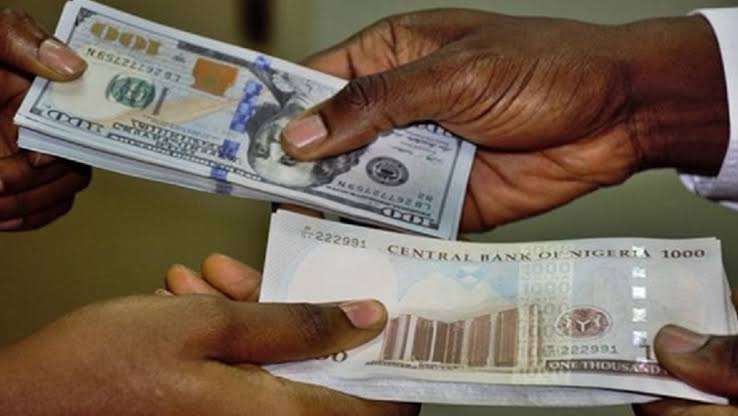
Nigeria’s currency weakened further across foreign exchange markets on Tuesday, slipping to N1,380.71 per dollar at the official window despite rising global oil prices driven by tensions in the Middle East.
Data from the Nigerian Autonomous Foreign Exchange Market (NAFEX) showed the naira depreciated by N16.47, or 1.2 per cent, compared to the previous rate of N1,364.24/$1.
The local currency also lost ground against other major currencies, closing at N1,863.76/£1 against the British pound and N1,615.01/€1 against the euro.
At the parallel market, the naira weakened further to N1,390/$1, while it traded at N1,379/$1 at a commercial bank counter, reflecting sustained pressure across segments of the forex market.
Analysts attribute the continued decline to growing demand for safer foreign currencies amid global economic uncertainties, even as higher oil prices would typically support Nigeria’s earnings.
Market activity, however, showed some resilience, with interbank turnover rising to $98.83 million across 78 deals, up from $76.65 million recorded in the previous session.
In the cryptocurrency market, sentiment remained cautious. Bitcoin traded at $77,216.66, while Ethereum gained 1.5 per cent to $2,324.59.
Other digital assets posted marginal gains, including Dogecoin, Solana and Cardano, while Ripple recorded a slight dip. Stablecoins such as USDT and USDC remained unchanged at $1.00.
Investors are now awaiting key monetary policy decisions from major central banks, with the United States Federal Reserve expected to announce its rate decision on Wednesday, followed by the European Central Bank on Thursday.
The outcome of these decisions is likely to influence global capital flows and, by extension, the direction of emerging market currencies like the naira.