
Media professionals operating in 2026 must combine moral integrity, technological competence and a strong understanding of the media’s role in society, an expert has said.
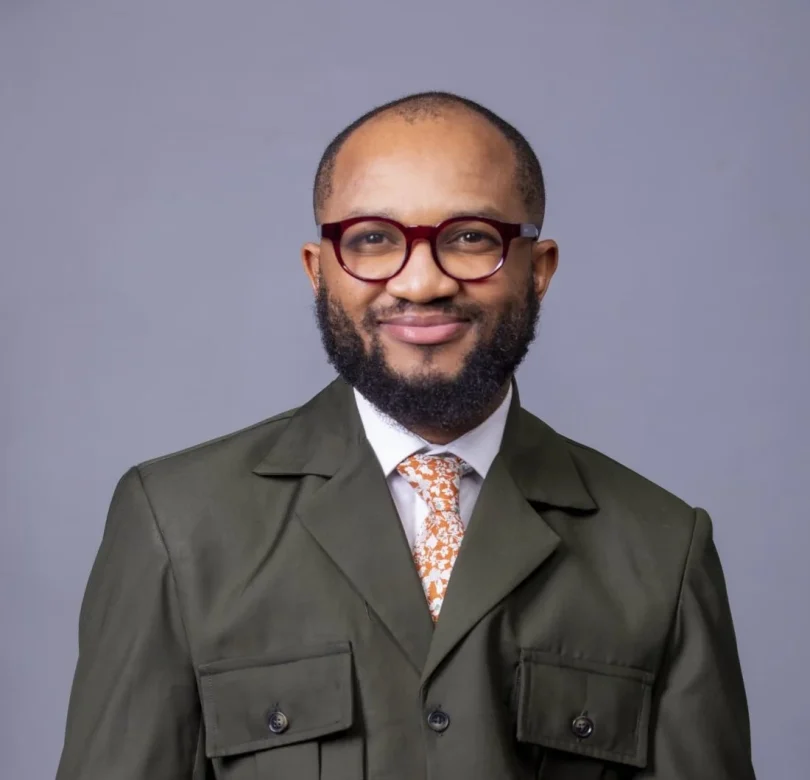
Dr Chike Mgbeadichie, Director of the Media Innovation Programme (MIP) and Head of the Department of Communication, Media and Cultural Studies at the Pan-Atlantic University School of Media and Communication (SMC), Lagos, disclosed this in an interview.
According to him, technological competence and ethical conduct have become indispensable for media professionals in the rapidly evolving media landscape.
“For us at the School of Media and Communication, a well-trained media professional is one who is morally on top, uses media professionally, and understands the place of technology,” he said.
“You cannot separate tech from the media in today’s world in 2026. Ethical reporting is as important as any other thing. It is absolutely critical.”
Mgbeadichie also stressed the strategic role of the media in nation-building, describing it as a key institution for informing and educating society.
“The media shapes things. The media informs. The media educates. The media should not be seen as something to be given second thought. No, it is the meat of the matter,” he said.
He said the philosophy cuts across the school’s programmes, including Mass Communication, Strategic Communication, Film and Multimedia Studies, and Information Science and Media Studies.
ALSO READ: Tribune’s Journalist, Segun Kasali, 24 others selected for 2026 MTN MIP
“Our focus is to ensure that professionals who pass through the school understand the significant place of the media in today’s society, embrace technology, but do so responsibly.
“The message contained in the media must be truthful, humane, and must uplift the belief systems we have as Nigerians, as Africans, and as a global community.”
On how the definition of a well-trained media professional has changed over the past five years, Mgbeadichie said the core mission of the school remained unchanged, but technology had assumed greater importance.
“The only major shift is largely on technology. Five years ago, technology wasn’t what it is today. Tech keeps evolving, and we try to match up with that pace,” he said.
He explained that the school now places greater emphasis on ensuring that graduates understand the responsible use of technology, particularly amid the proliferation of misinformation and malinformation.
“We are ensuring that media professionals who pass through us are conscious of the place of technology. They must use technology responsibly in disseminating information, and they must also be equipped to check for fake news, misinformation, and malinformation and understand the different roles these play in society.”
Speaking specifically about the Media Innovation Programme, Mgbeadichie said the programme was designed to produce media professionals who are technically skilled, ethically grounded and socially responsible.
He said the school’s educational philosophy was based on “the well-rounded and holistic formation of the human person,” adding that the MIP reflected this through two major pillars: Humanistic Education and Experiential Learning.
According to him, the programme seeks to develop professionals who are “technically competent in communication and the media and deeply committed to moral integrity and responsibility.”
To achieve this, he said, the MIP incorporates humanities-based courses, including Ethics and Human Formation.
“In the last three months alone, this cohort has had sessions on Ethics and Human Formation, Entrepreneurship — all tied back to ethics and values — and Personal Formation, covering character, dressing, communication, and critical thinking,” he said.
Mgbeadichie also highlighted the importance of facilitators, saying the programme deliberately combines academic and industry expertise to provide students with a balance between theory and practice.
“We deliberately blend academic expertise with industry expertise to give students a complete picture — the balance of theory and practice. Our facilitators are absolutely top-notch, whether in the MIP or in any other programme in the school,” he said.
On experiential learning, Mgbeadichie said the school believed students learned best through practical engagement.
He disclosed that about 40 per cent of courses across programmes in the School of Media and Communication were designed to be practical.
He said the practical approach included guest and expert sessions, visits to media houses, symposiums and the use of the Shyllon Museum of Art on campus, where students interact with art objects and connect classroom concepts with real-world experiences.
“A key feature of the MIP is its monthly reflective component. We don’t want students to just attend classes. We want them to show how they have applied what they have learned,” he said.
“Every month, when fellows return to their bases, they submit a reflection piece on the key lessons gathered in class and how they have applied that knowledge in their day-to-day work. We review these to ensure the programme is meeting their specific needs.”
Reflecting on the five years since the MIP began, Mgbeadichie said feedback from participants showed that the programme had contributed to improvements in their professional work.
“From what has been submitted so far, we can confidently say that every month spent on campus has significantly added to the fellows’ knowledge.
“More importantly, that knowledge has been translated into their work, and it has led to visible improvement in the media and communication space where they operate.”
He assured that the university would continue to strengthen the programme by introducing new ideas, expanding its offerings and engaging more facilitators.
“We hope to keep getting better, developing the programme, expanding on it, introducing new and fresh ideas and sessions, and bringing in more fascinating facilitators to keep pushing this narrative,” he said.