
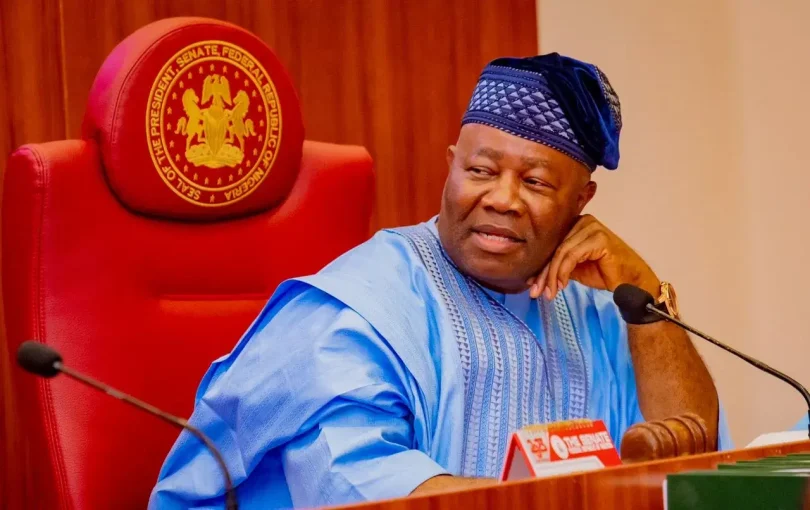
Nigeria’s Senate has amended its Standing Rules to restrict access to key leadership positions, a move widely interpreted as an effort to block incoming political heavyweights especially outgoing governors from dominating the legislature ahead of the 2027 elections. The changes, targeting Orders 4 and 5, were adopted during a closed-door session lasting nearly three hours.
Under the revised Order 4, the Senate reaffirmed a strict hierarchy based on ranking, stating that leadership positions must be filled according to legislative experience rather than political influence. This effectively places first-time senators, regardless of their political stature, at the bottom of the leadership ladder.
Order 5 introduces an even stricter requirement, mandating that only senators who have served at least two consecutive terms immediately before nomination can contest for principal offices. This disqualifies newcomers and those without continuous legislative experience from vying for positions such as Senate Leader, Chief Whip, and Minority Leader.
The amendments come amid growing political maneuvering ahead of 2027, with many outgoing governors and former officeholders seeking to transition into the Senate. Reports indicate that at least 10 governors completing their second terms by May 2027 are already positioning to secure senatorial seats, signaling a potential influx of influential figures into the National Assembly.
Tensions are already emerging in states like Imo, where efforts to position Governor Hope Uzodimma for a Senate seat have sparked resistance from incumbent lawmakers and renewed ambitions from former governor Rochas Okorocha. The Senate’s new rules are expected to significantly reshape these ambitions by limiting the immediate influence of such entrants in legislative leadership.