
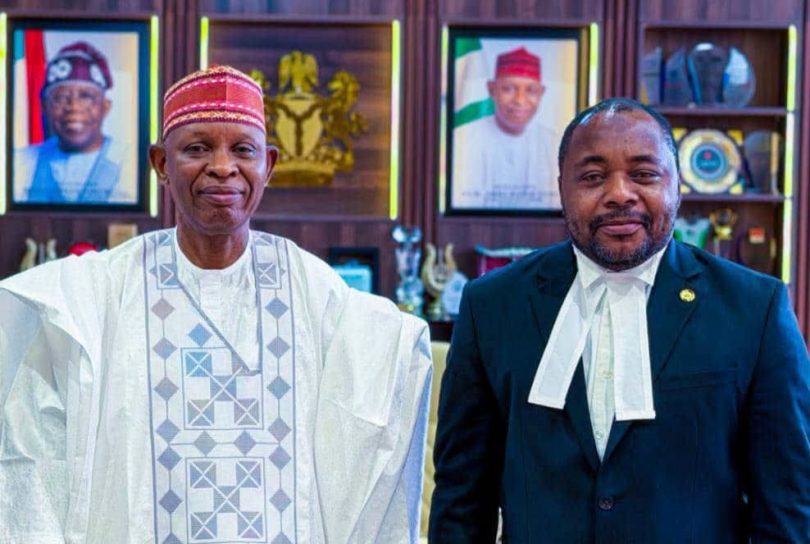
The Chairman of the Kano State Multi-Agency Task Force on Drug Abuse and Illicit Trafficking, Muhuyi Magaji Rimin Gado, has revealed that the committee will deploy artificial intelligence (AI) to strengthen the fight against drug abuse and illicit drug trafficking across the state.
Muhuyi disclosed this during an exclusive interview with SolaceBase TV on its programme, Moment with AAJ, where he outlined the committee’s strategy to dismantle drug networks and regulate the pharmaceutical sector through technology-driven surveillance.
He said the AI-powered system would enable authorities to monitor the movement of pharmaceutical products from the point of purchase to the final consumer, making it difficult for drug dealers and those diverting prescription medicines for abuse to operate.
“We are deploying necessary tools, including artificial intelligence, to make it extremely difficult for drug dealers to continue their activities,” Muhuyi said.
According to him, the initiative is backed by the executive order signed by Governor Abba Kabir Yusuf, which provides the legal framework for monitoring pharmaceutical operators and enforcing stricter regulations on the sale of controlled medicines.
Muhuyi explained that under the new system, all pharmaceutical operators in Kano would be required to register their businesses, upload records of where they procure their products, and maintain digital records of every sale.
“We must know who you are, where you operate, your qualifications, your licence, where you buy your medicines from, and who you sell them to. Every transaction must be documented, and receipts must carry the identity of the buyer and be uploaded onto the platform,” he said.
He added that the AI platform would analyse the records, detect suspicious patterns, identify supply chains linked to drug abuse, and automatically alert authorities for enforcement actions.
Describing the approach as scientific and intelligence-driven, Muhuyi said the growing threat of drug abuse in Kano required the deployment of modern technology rather than relying solely on conventional enforcement methods.
He disclosed that the committee has already compiled a database containing more than 3,000 suspected drug dealers, who are currently being profiled for intelligence-led operations.
“We know them, we know their methods, and we are closing in on them. We will get them at the right time and at the right place,” he said.
The chairman said the task force had adopted a bottom-up strategy aimed at rehabilitating drug users while simultaneously targeting major suppliers and criminal networks behind the illicit trade.
Since the committee commenced operations, Muhuyi said over 170 security personnel drawn from various security agencies have been participating in patrols and enforcement operations across the state.
He noted that the committee had carried out several raids in identified drug hotspots, leading to multiple arrests and the recovery of illicit substances.
According to him, suspects are screened immediately after arrest to determine whether they require rehabilitation or prosecution, stressing that all actions are conducted in accordance with due process and court orders.
Muhuyi also revealed that the committee has identified several black spots across Kano where drug-related activities are prevalent and warned that anyone found violating the restrictions imposed on such locations would face arrest.
He commended Governor Abba Kabir Yusuf for establishing the committee despite the political risks involved, describing the decision as a bold move driven by public interest rather than political considerations.
“The people of Kano have long awaited decisive action against drug abuse. We are here, we mean business, and we will pursue anyone involved regardless of status or influence,” he said.
Muhuyi warned drug dealers and individuals attempting to obstruct the committee’s work to abandon such efforts, insisting that the taskforce would continue its operations until the drug menace is significantly reduced across Kano State.