
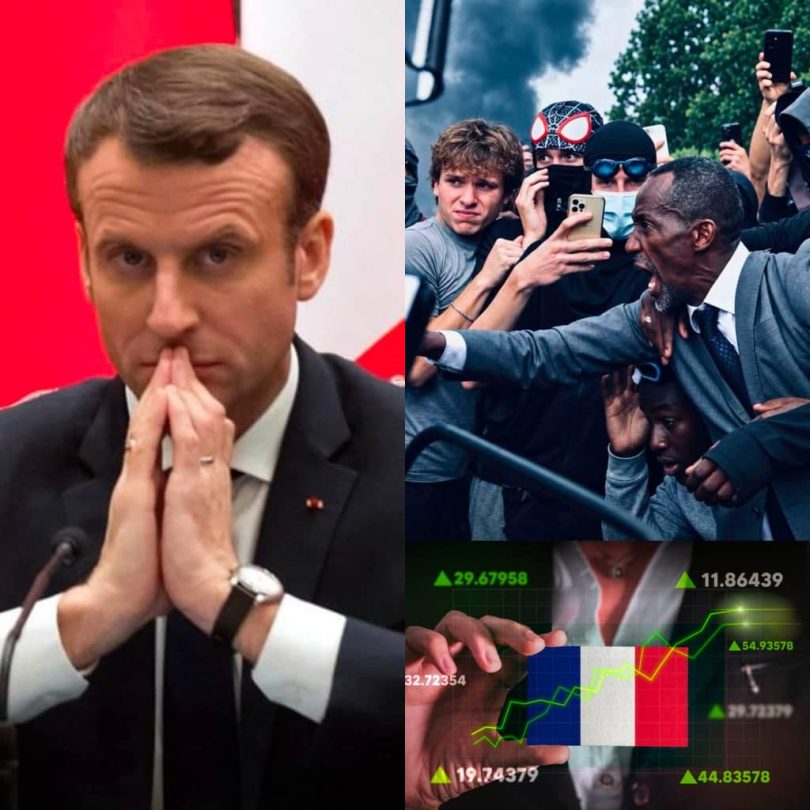
France has reportedly slipped into a technical recession after recording two consecutive quarters of economic contraction, raising fresh concerns about the health of Europe’s second-largest economy.
According to the figures attributed to France’s National Institute of Statistics and Economic Studies (INSEE), the country’s Gross Domestic Product (GDP) contracted by 0.2 per cent in the third quarter of 2026, following a decline in the second quarter.
The development has reignited conversations about France’s historical economic relationship with Africa, particularly its former colonies, and growing calls across the continent for greater economic independence and control over natural resources.
For decades, France maintained significant economic, military and political influence in several African countries, particularly within Francophone West and Central Africa.
However, a wave of anti-French sentiment and demands for economic sovereignty has gained momentum in parts of Africa, with countries increasingly questioning longstanding arrangements and seeking greater control over their natural resources.
Critics of France’s historical relationship with Africa argue that the continent must no longer operate under economic arrangements that undermine its ability to independently manage and benefit from its wealth.
While France’s reported economic contraction cannot be directly attributed to changing relations with African countries, the development comes amid a broader shift in France-Africa relations.
The debate over resource ownership, economic sovereignty and Africa’s relationship with former colonial powers continues to shape political and economic discussions across the continent.
TRACKNEWS ONLINE
Source: TrackNews