
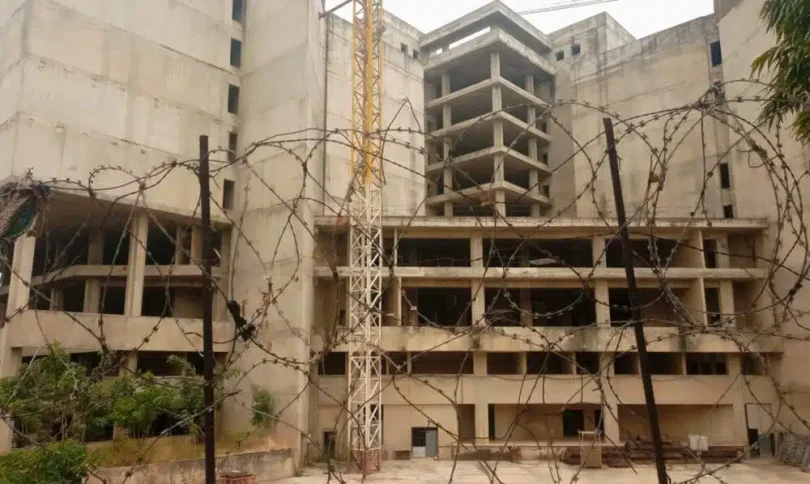
Nearly two decades after construction began, the long-delayed National Library of Nigeria Headquarters Building Complex in Abuja is finally set for a major revival.
The Federal Government has approved ₦118.309 billion to complete construction work on the project, alongside an additional approximately ₦37 billion for furnishing.
The combined approval puts the estimated cost of completing and equipping the National Library headquarters at about ₦155 billion.
Minister of Education, Tunji Alausa, disclosed the development on Wednesday while briefing State House correspondents on decisions reached at the Federal Executive Council (FEC) meeting in Abuja.
For a project that was expected to be completed within two years when construction commenced in April 2006, the latest approval could mark a significant turning point.
The National Library headquarters project was launched in 2006 with an expected completion timeline of 2008.
However, work reportedly stopped in October 2008, leaving the ambitious national project unfinished for years.
Alausa said President Bola Tinubu, upon assuming office in 2023, directed the Ministry of Education to explore alternative funding options that could finally bring the project to completion.
The latest FEC approval is expected to provide the financial backing needed to restart and conclude construction.
According to the minister, the government intends to draw from legally cleared funds under the Unclaimed Capital Market/Unclaimed Dividend Trust Fund and the Dormant Account Trust Fund, among other sources.
However, he stressed that funds still facing legal disputes would not be touched.
“Every single fund that is still subject to a legal challenge will not be part of the money that will be transferred to the fund,” Alausa said.
He explained that only funds that are legally available and free from encumbrances would be considered for the education-related investments.
Alausa defended the government’s decision to channel the available funds into education, describing investment in Nigerian children as one of the most important uses of national resources.
“We need to educate our children. We need to move this fund to use it, and using this fund to educate our children, you can never get a better use for this fund than to educate our children,” the minister said.
The approval is also expected to complement funding already secured from other sources, including the Tertiary Education Trust Fund (TETFund).
Alausa also acknowledged the contribution of First Lady Oluremi Tinubu, whom he said helped raise about ₦25 billion towards the National Library project by directing that gifts associated with her birthday celebration be channelled towards its completion.
With the fresh FEC approval and additional funding sources now in place, the minister expressed optimism that work on the long-abandoned project would resume in the coming months.
FG addresses complaints over withheld student funds
Beyond the National Library project, Alausa also addressed concerns about tertiary institutions allegedly withholding funds belonging to students.
He said the Federal Government had introduced new timelines and frameworks aimed at preventing delays in transferring such payments to beneficiaries.
Under the new arrangement, institutions are expected to return funds to students within one week after receiving confirmation that the Federal Government has made the relevant payment.
Alausa admitted that there had been challenges in the past but maintained that the government had put measures in place to prevent such incidents from becoming a recurring problem.
Responding to a specific complaint involving Abia State University, where a payment-related issue was said to have lingered for more than six months, the minister requested details of the case and promised to investigate.
For the Federal Government, the broader message from Wednesday’s FEC decisions was clear: funds that can legally be unlocked should not remain idle while major projects, and the country’s education needs, continue to wait.
And for the National Library headquarters, a project that has spent almost 20 years caught between ambition and abandonment, the ₦155 billion approval may offer its clearest path yet towards finally opening its doors.