
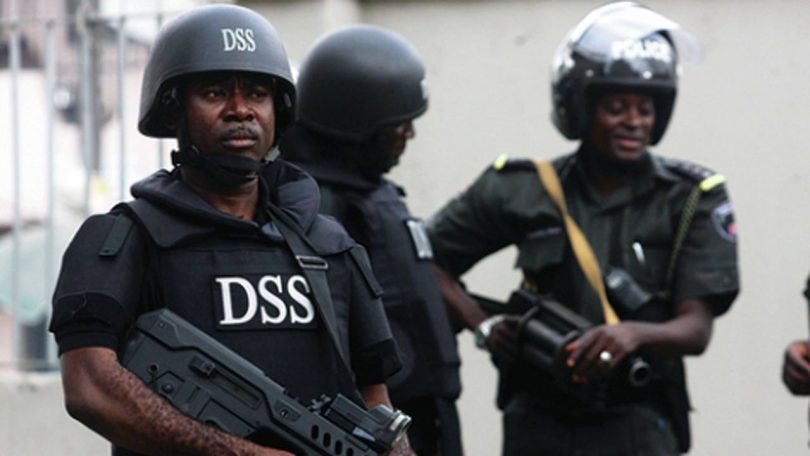
The Department of State Services (DSS) has seized 676 firearms and more than 330,000 rounds of ammunition in its ongoing operations against terrorism, banditry, kidnapping and other violent crimes across Nigeria.
Director-General of the DSS, Mr Oluwatosin Ajayi, disclosed this while speaking with senior editors as he marked two years in office on August 28, 2026.
Ajayi, who has spent 36 years in the intelligence service, said the seizures were part of a broader effort by the agency to disrupt criminal networks, strengthen intelligence-led operations and improve cooperation with other security agencies.
The DSS boss, who began his career as a cadet officer and rose through the ranks to become the first cadet of the Service to attain the position of Director-General, also spoke extensively on the agency’s evolving approach to human rights, accountability, media relations and the fight against terrorism and insurgency.
He said his administration had focused on five major areas: strict law enforcement, inter-agency cooperation, accountability, respect for human rights, and infrastructural and administrative reforms aimed at improving operational efficiency.
According to him, the DSS has deliberately moved away from approaches that could blur the line between civil disputes and criminal matters, insisting that civil cases should be resolved through dialogue or the courts rather than arrests and the use of force.
“I have told my people there should be no arrest in any civil case,” Ajayi said, explaining that the Service now seeks judicial interpretation where necessary instead of resorting to coercive measures.
He cited the case involving Professor Pat Utomi and the alleged attempt to establish a shadow government as an example of the new approach. Rather than arresting Utomi, he said, the Service approached the court for an interpretation of the matter.
He also cited disputes involving the Socio-Economic Rights and Accountability Project (SERAP) and Sahara Reporters publisher, Omoyele Sowore, saying the Service had increasingly relied on judicial processes rather than arrests to resolve contentious matters.
A new approach to human rights
Ajayi said respect for human rights had become a central component of his administration, arguing that an intelligence agency could not effectively perform its duties while alienating the population it depended on for information.
He said the DSS had adopted what he described as “restorative justice”, including compensation and other forms of restitution where its operatives had wrongfully injured, detained or otherwise harmed innocent people.
The Director-General said the Service had paid more than N300 million in compensation in various cases, although he stressed that the figure did not capture all interventions because some cases were handled without publicity.
One of the cases involved a Jos-based businessman who was mistakenly shot by DSS operatives.
A court had ordered the Service in 2016 to pay him N10 million in compensation, but the judgment was not implemented at the time.
Ajayi said he ordered a review of such cases after assuming office and accepted responsibility for correcting past mistakes.
“When you wake up, that’s your morning. It’s never too late to do the right thing,” he said.
He said the victim’s condition had deteriorated considerably and that, after medical assessment, the Service not only provided medical treatment but approved an additional N10 million to help him rebuild his livelihood.
“We actually went further to set up a business for him, and he is now an employer of others,” Ajayi said.
He also disclosed that an Abuja-based businesswoman who was mistakenly arrested during an operation targeting suspected oil bunkerers was paid N10 million after investigators established that she was innocent.
According to him, the DSS subsequently supported efforts to rebuild her business.