
…targets net-zero emissions by 2060
The Federal Government has reaffirmed its commitment to the Paris Agreement and a low-carbon, climate-resilient development pathway to achieve net-zero emissions by 2060.
- …targets net-zero emissions by 2060
- ALSO READ: Senate, NITDA back digital trust for jobs, business growth
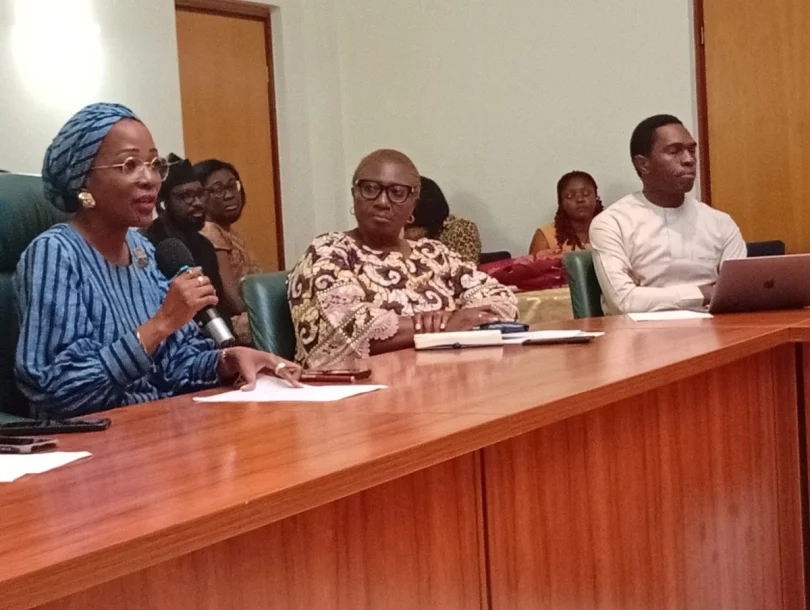
The Director General, National Council on Climate Change (NCCC), Dr Tenioye Majekodunmi, stated this at the Justice and Energy Transition Roundtable organised by the Shehu Musa Yar’Adua Foundation in conjunction with the Ford Foundation, which was held on Tuesday at the Shehu Musa Yar’Adua Centre in Abuja.
The Paris Agreement, a legally binding international treaty on climate change, was adopted by 195 Parties at the UN Climate Change Conference (COP21) in Paris, France, on 12 December 2015. It entered into force on 4th November 2016, and as at 27th January 2026, there are 194 Parties to the Paris Agreement. Its overarching goal is to hold the increase in the global average temperature to well below 2°C above pre-industrial levels and pursue efforts to limit the temperature increase to 1.5°C above pre-industrial levels.
ALSO READ: Senate, NITDA back digital trust for jobs, business growth
The NCCC DG, who spoke on the topic “Government Perspective on Nigeria’s Energy Transition”, said climate action must not only give room for development but expand energy access, create jobs, strengthen industries, improve productivity and raise living standards.
She said government aimed to strengthen coordination, policy coherence and institutional alignment to allow climate action across the economy to contribute to the country’s national commitments. She charged the private sector, development partners, financial institutions, the civil society and other stakeholders to join hands with the federal and state governments to move from commitments to implementation.
Dr Majekodunmi also called for concessional climate finance, development finance, private capital, blended-finance instruments and innovative mechanisms capable of turning climate ambition into investable opportunities.
She said, “The framing of this discussion matters. Around the world, the energy transition is accelerating. Countries are confronting the need to reduce emissions, transform energy systems and build economies that are more resilient to a changing climate.
“Nigeria remains firmly committed to the objectives of the Paris Agreement and to a low-carbon and climate-resilient development pathway, including our ambition to achieve net-zero emissions by 2060. But our transition is taking place within a very particular development context.
We are a rapidly growing country with significant energy-access needs, rising demand for infrastructure, a young population requiring millions of economic opportunities and legitimate aspirations for industrialisation and improved standards of living.
“Our energy transition therefore cannot be separated from our development transition. For Nigeria, climate action must enable development, not constrain it. It must help us expand energy access, create jobs, strengthen industries, improve productivity and raise living standards. Energy transition is complex. It sits at the intersection of climate science, energy security, economics, finance, technology, geopolitics, employment and social justice.
She added, “Our responsibility is therefore not climate policy in isolation. It is to strengthen coordination, policy coherence and institutional alignment so that climate action across the economy contributes to Nigeria’s national commitments while advancing our broader development priorities.
“And we are increasingly moving from commitments to implementation.
That implementation cannot be delivered by government alone. It requires Federal and State Governments, the private sector, financial institutions, development partners, academia, civil society, communities and, importantly, our young people.”
In their separate presentations, Dr Priscilla Achapka and Dr Marcel Mbamalu, Founder, Women Environmental Programme, and Publisher/Editor-in-chief, Prime Business Africa, respectively, called for a just transition that will make a difference among the poor, the urgent need to balance the promise of renewables against Africa’s continuing dependence on fossil fuels, as well as indigenous solutions to the continent’s problem.
Dr Achapka said, “A just transition should make a practical difference in the woman’s kitchen, a child’s classroom, in rural health centres, a small business, the mobility of a person with a disability and the land. These are not side issues, they are the human meaning of energy policy. The transition should move Nigeria from exclusion urgently, from position to repair and from scarcity to dignity. Government must be placed for public value, investors must accept social and environmental accountability, civil societies must support reform participation, communities must have real negotiating power and journalists must keep asking. The truth test is not whether technology changes, it’s whether lives improve fairly, visible and accountable.”
Dr Mbamalu, who presented a paper titled, “Beyond Headlines: How Nigerian Media can Report Energy Transition Through a Justice Lens”, tasked journalists with five ethical commitments of energy-transition reporting, which include accuracy and verification, fairness and balance, accountability, public interest, and responsible sourcing. He said for Nigeria to achieve its net zero Energy Transition Plan, it will spend approximately $410 billion between 2021 and 2060.
The Director General of the Shehu Musa Yar’Adua Foundation, Amara Nwakpa, earlier in his welcome remarks, said the event was designed to engage with the media and build capacity around the reporting of justice in energy transition, particularly in Nigeria, and also to equip the media with a lens for measuring energy transition through that lens of justice.