
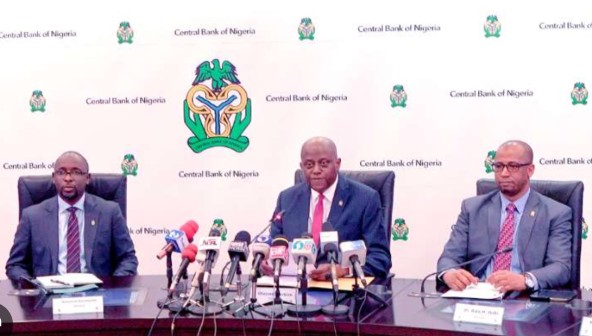
The Monetary Policy Committee of the Central Bank of Nigeria has cut the Monetary Policy Rate from its previous level to 23 per cent, marking the first reduction in 2026 and the lowest level since February 2024.
CBN Governor, Olayemi Cardoso, announced the decision on Tuesday at a news conference in Abuja following the committee’s 307th meeting.
The latest reduction came after Nigeria’s headline inflation rate fell to 15.39 per cent in August 2026 from 15.43 per cent in July, according to the National Bureau of Statistics.
The 23 per cent MPR is also below the previous 22.75 per cent recorded in February 2024, when the benchmark rate was last at its lowest level.
Cardoso said the committee also adjusted the asymmetric corridor around the MPR to +50/-300 basis points.
However, the MPC retained the Cash Reserve Ratio for deposit money banks at 45 per cent and 16 per cent for merchant banks. The CRR on non-Treasury Single Account public sector deposits was also retained at 75 per cent.
According to the governor, the decision to reset the MPR and adjust the asymmetric corridor was aimed at strengthening monetary policy transmission and reinforcing the MPR as the main signal of monetary policy.
“The MPC emphasized that the recalibration of the corridor does not constitute a change in the current monetary policy stance, but rather an operational reset to enhance the effectiveness of monetary policy and support the transition to an inflation targeting framework,” he said.
Cardoso said MPC members considered the prevailing macroeconomic environment supportive of the adjustment without undermining the ongoing disinflation process.
He explained that the divergence between the MPR and prevailing market rates had weakened the effectiveness of monetary policy transmission.
The governor also said the CBN’s ongoing efforts to repair its monetary policy implementation framework, including the adoption of the Nigerian Overnight Funding Average as a transaction-based operational benchmark, had improved transparency in money market operations.
“The committee therefore considered a reset of the MPR and recalibration of the corridor appropriate to better align the monetary policy implementation framework with market realities,” he said.
Cardoso said the adjustment would strengthen policy transmission and restore the MPR as the principal signal of monetary policy.
He added that the recalibration of the policy framework should not be interpreted as a change in the underlying monetary policy stance.