
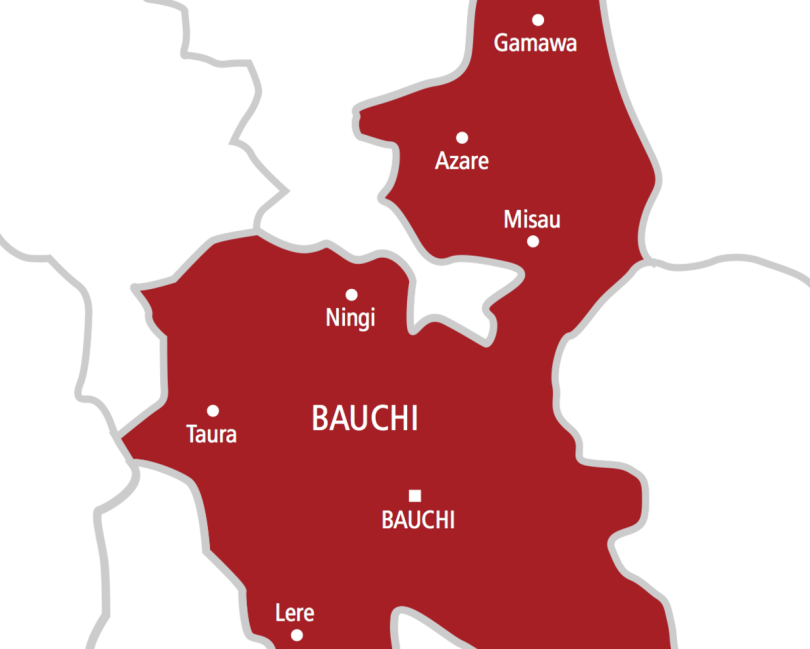
The Bauchi State Government has approved and released N1.024 billion as compensation for 321 persons affected by the ongoing gully erosion control project stretching from Tsohon Kampani to Gwallagan-Mayaka, under the Agro-Climatic Resilience in Semi-Arid Landscapes (ACReSAL) programme, a World Bank-supported initiative.
- ALSO READ: Police deploy tactical teams to Benue community over killing
- ALSO READ: Cross River govt mourns landslide, flood victims
The disclosure was made on Monday by the Bauchi State Project Coordinator of ACReSAL, Dr Kabir Ibrahim, during the opening of a three-day stakeholders’ training on the implementation of the Resettlement Action Plan (RAP).
The training, organised by ACReSAL, is aimed at equipping stakeholders with the knowledge required for the transparent, inclusive and effective implementation of the compensation process in line with the World Bank’s Environmental and Social Standards.
Dr Ibrahim said the engagement would bring together Project Affected Persons (PAPs) from eight communities, grouped into three clusters, to ensure they fully understand the compensation procedures before payments commence.
“We are here this morning to begin a three-day engagement with Project Affected Persons from eight communities to discuss the implementation of the Resettlement Action Plan,” he said.
He explained that the Bauchi State Government, in collaboration with the World Bank, initiated the erosion control project to address persistent gully erosion and flooding affecting communities along the Tsohon Kampani-Gwallagan-Mayaka corridor.
According to him, transparency and inclusiveness remain central to the implementation process.
“In line with the World Bank’s Environmental and Social Standards, it is important that the implementation process is transparent, inclusive and free of grievances. All Project Affected Persons must fully understand every stage of the process before compensation is paid,” he stated.
Dr. Ibrahim noted that ACReSAL has spent the last three years engaging with affected communities, building their capacity and keeping them informed throughout the planning phase.
He said the current exercise would also allow officials to update records where ownership of land or property had changed since the initial valuation.
“Today’s meeting focuses on RAP implementation, particularly with PAPs from the Suleimana Adamu community. We are explaining the compensation procedures and updating our records where there have been changes in land ownership or property ownership since the RAP study was conducted,” he said.
He added that beneficiaries were particularly interested in understanding how property valuations were determined, the payment timeline and the livelihood restoration programmes that would accompany the project.
Beyond erosion control, he said the project would include complementary interventions such as the provision of community boreholes and a “One Person, One Tree” initiative to enhance environmental sustainability.
Dr Ibrahim disclosed that Governor Bala Abdulkadir Mohammed approved an additional 20 per cent above the original property valuations to cushion the effects of inflation and rising living costs.
“The valuation exercise was conducted last year. However, considering the current economic realities and inflation, we presented our concerns to His Excellency, who graciously approved an additional 20 per cent on top of the assessed values.
“For example, if a property was valued at N1 million, the owner will receive N1.2 million. This demonstrates the Governor’s commitment to fairness,” he said.
He explained that compensation payments would be handled by the State Compensation Committee under the chairmanship of Alhaji Nuru Suleiman Adamu, the Emir of Lere, rather than the ACReSAL office.
ALSO READ: Cross River govt mourns landslide, flood victims
According to him, operational arrangements would be finalised immediately after the three-day engagement to enable compensation payments to begin.
Dr. Ibrahim revealed that while 321 persons had been identified as directly affected, more than 213,000 people would benefit directly and indirectly from the project.
He said the intervention would create a flood control corridor capable of containing over 40 million cubic metres of water, with an estimated lifespan of 50 years.
Construction has already commenced on sections located on government-owned land belonging to the College of Agriculture and Abubakar Tatari Ali Polytechnic after both institutions voluntarily granted access.
“As construction approaches community-owned lands, compensation will be fully paid before any work begins within those affected corridors,” he assured.
He stressed that the entire approved compensation fund had already been released into the designated government account.
“We are committed to ensuring that every kobo is used solely for compensating eligible Project Affected Persons. There will be no shortcuts or irregularities. Payments will be carried out transparently and on-site,” he said.
According to him, officials will visit each affected property to verify ownership documents, confirm beneficiaries’ identities, issue compensation cheques and immediately document each payment to ensure accountability.
Dr. Ibrahim also urged community members to take ownership of the project and support its successful implementation.
He disclosed that under the Memorandum of Understanding signed with the contractor, Triacta Nigeria Limited, qualified youths from host communities would be given priority for available employment opportunities.
“Youths with practical skills such as carpentry, masonry, welding and other construction trades should prepare themselves because recruitment will continue as construction progresses,” he said.
Although the project has a contract duration of 24 months, the contractor has indicated its intention to complete the work within 12 months if conditions permit.
He encouraged residents to channel any complaints or grievances through established community structures to ensure prompt resolution.
Speaking earlier, ACReSAL’s Social and Livelihood Officer, Khadija Muhammad Katagum, described the Project Affected Persons as central to the success of the intervention.
“Our commitment to transparency and inclusive participation is in line with the World Bank’s Environmental and Social Standard 5. The success of this project depends greatly on your cooperation, support and active participation,” she said.
Also speaking, Executive Director of the ACReSAL focal NGO, Savannah Institute for Sustainable Development (SISIDev), Titi Yakubu, commended the Bauchi State government and the World Bank for bringing the long-awaited project to reality.
She noted that the erosion had caused significant hardship for affected communities over the years and urged residents to support the implementation process to ensure its sustainability.
The community leader of Suleiman Adamu Community, Engr. Nurudeen Yusuf Abubakar, also commended the state government and ACReSAL, describing the intervention as a landmark project that would significantly improve the livelihoods of affected residents.
He assured the government and project officials of the full cooperation of the affected communities to ensure the successful completion of the project.