
…challenges global poverty metrics
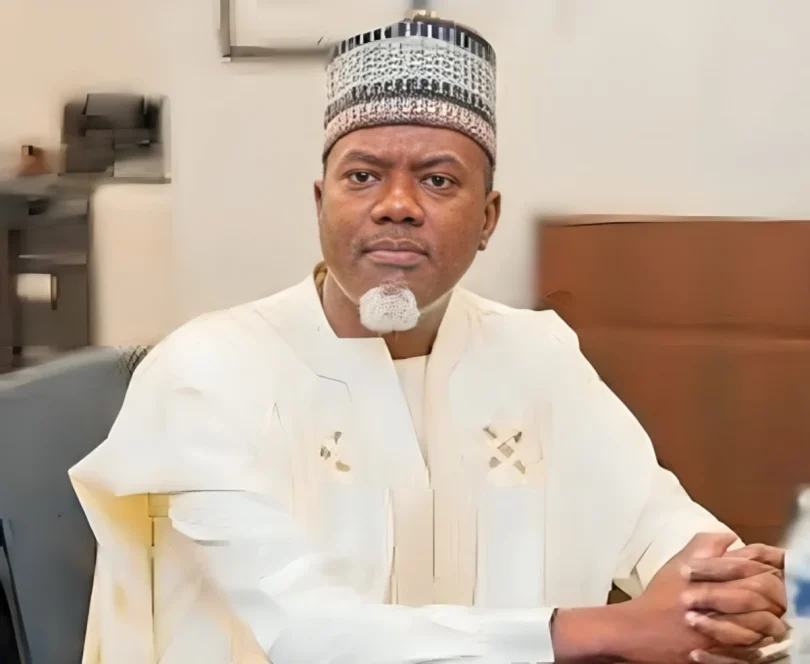
Nigeria’s Ambassador-designate to Mexico, Reno Omokri, has said the average Nigerian is better off under President Bola Tinubu than before the President assumed office in May 2023, despite the hardship and poverty confronting millions of Nigerians.
Omokri made the claim while responding to questions on the rising cost of living, poverty and whether Nigerians were actually benefiting from the Tinubu administration’s economic reforms.
He spoke with Seun Okinbaloye on Channels Television’s Politics Today, where he acknowledged that many Nigerians were still living in poverty but argued that the Federal Government was implementing measures that would ultimately lift more people out of poverty.
“There are a lot of people living in poverty in this country,” Omokri said.
“But this administration is doing the right things to take people out of poverty.”
He identified the ongoing effort to strengthen local government autonomy as one of the measures he believes could improve development at the grassroots.
ALSO READ: Tinubu has already won 2027 presidential election — Reno Omokri
“First and foremost, this administration is devolving power from the federal government to the local government. So right now, I think in about a month’s time, you’re going to be having local governments getting the allocation directly,” he said.
Omokri argued that greater resources at the local government level would help drive development closer to the people, while cautioning against attributing every social challenge to the Federal Government
He cited water supply as an example, arguing that the responsibility largely falls within the domain of state and local governments.
The ambassador-designate also pointed to infrastructure projects as evidence of what he described as the administration’s efforts to reduce transportation costs and improve economic activity.
He cited the proposed Sokoto-Ilela-Badagry superhighway, saying it would significantly reduce travel time across the country, as well as the 750-kilometre Lagos-Calabar coastal highway, which he said would cut travel time along the route.
Omokri also cited rail infrastructure in Lagos and Abuja as examples of projects capable of providing cheaper transportation alternatives.
Using the ride-hailing sector as an example, he argued that improved infrastructure had changed the economics of urban transportation.
“Look at Uber. Why did Uber leave Nigeria?” he asked.
According to him, the expansion of rail transportation in Lagos had made it possible for commuters to travel between parts of the city at a fraction of the cost, citing the Blue Line and Red Line, with the Green Line expected to come on stream.
Omokri also defended the administration’s record on fuel availability, arguing that Nigerians no longer experience the prolonged queues and scarcity associated with previous periods.
“When was the last time Nigeria slept in fuel stations?” he asked.
“Nigerians have not slept in fuel stations since this man became president.”
He further cited developments in education, particularly the student loan scheme administered by the Nigerian Education Loan Fund (NELFUND), as another intervention by the administration.
According to him, more than one million students were already benefiting from student loans.
He also argued that the Tinubu administration had avoided a nationwide Academic Staff Union of Universities (ASUU) strike.
“A four-year course under President Bola Tinubu is a four-year course,” Omokri said.
However, when confronted with the continuing hardship faced by Nigerians and the World Bank’s poverty estimates, Omokri challenged the use of global poverty benchmarks as the sole measure of Nigerians’ living standards.
He argued that international institutions such as the World Bank and International Monetary Fund apply standardised metrics that do not necessarily capture the particular circumstances of individual countries.
“I’m saying that we should domesticate their metrics. So some of their metrics will apply to us,” he said.
Asked what he considered a more appropriate measure for assessing Nigerians’ economic wellbeing, Omokri pointed to inflation and the Consumer Price Index (CPI).
“The metric that we should use in Nigeria is this: inflation rates. So the Consumer Price Index. That is the best metric that we can use,” he said.
Omokri maintained that inflation had declined from the level recorded when Tinubu assumed office, arguing that the trend should be considered alongside other economic indicators when assessing the administration’s performance.
He nevertheless acknowledged the hardship being experienced by Nigerians, but insisted that poverty did not begin with the Tinubu administration.
“There were a lot of people living in poverty before this administration came,” he said.
The ambassador-designate argued that the debate over Nigerians’ living standards should therefore consider the government’s investments in infrastructure, education and local government development alongside poverty and inflation figures.
His comments come amid continuing debate over whether the Tinubu administration’s economic reforms are improving living standards or worsening the hardship faced by ordinary Nigerians.