
The Independent Corrupt Practices and Other Related Offences Commission (ICPC) has recovered over ₦5.3 billion from local government accounts in seven states and the Federal Capital Territory (FCT), as part of efforts to strengthen financial accountability and prevent the mismanagement of public funds at the grassroots.
The commission also announced plans to work with the National Information Technology Development Agency (NITDA) to ensure that all 774 local government areas in Nigeria publish their budgets, statutory allocations, internally generated revenue, expenditure, audit reports and other financial records online for public scrutiny.
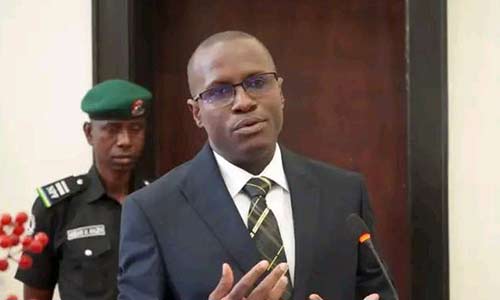
The Chairman of the ICPC, Dr. Musa Aliyu, disclosed this on Thursday, November 12, 2026, in Lafia, Nasarawa State, during the official flag-off of the ICPC-NITDA Local Government Websites Pilot initiative.
Aliyu explained that the initiative, which commenced in Nasarawa State, would eventually be extended to all 774 local government areas across the country to promote transparency, strengthen public oversight and enable citizens to monitor how funds allocated to their communities are spent.
According to the ICPC chairman, the July 2024 Supreme Court judgment affirming the financial autonomy of local governments and the direct payment of their statutory allocations has made accountability in the management of council resources more important.
He maintained that financial autonomy must be accompanied by greater responsibility, transparency and proper monitoring of public expenditure.
“Autonomy brings responsibility. Funds that now flow directly to the councils must be spent openly and for the benefit of the people,” Aliyu declared.
The ICPC chairman explained that the recovery of over ₦5.3 billion from local government accounts in seven states and the FCT demonstrated the financial risks associated with grassroots administration and the importance of effective monitoring mechanisms.
He said the commission’s efforts were intended to ensure that public funds meant for local development were properly accounted for and utilised in the interests of citizens.
Aliyu maintained that the new digital transparency initiative would provide Nigerians with access to financial information about their local government councils, enabling them to examine how public resources are allocated and spent.
He explained that the websites would require local government authorities to regularly disclose information across five major areas of accountability.
These include financial records, open procurement, human resources, citizen engagement and corruption control.
Under the financial disclosure component, councils would be expected to publish their annual budgets, statutory allocations, internally generated revenue, expenditure, audit reports and outstanding debts.
The open procurement component would provide information relating to public procurement activities, while the human resources component would address relevant personnel information.
The citizen engagement component would provide channels through which residents could submit feedback, raise concerns and report suspected wrongdoing.
The corruption control component would support measures aimed at preventing and identifying financial irregularities in local government administration.
Aliyu maintained that making the information publicly available would enable citizens to track government spending and demand accountability from their elected local government officials.
He also explained that journalists would be better equipped to ask informed questions about public expenditure, while oversight institutions could identify financial risks before they resulted in losses.
The ICPC chairman disclosed that NITDA had pledged to register domain names and develop and host websites for all 774 local government areas for at least one year.
According to him, the arrangement would involve a division of responsibilities between the two federal agencies.
While ICPC would establish the accountability framework and standards governing the information to be published, NITDA would provide the technological infrastructure and digital platforms required for implementation.
Aliyu, however, warned that creating websites alone would not guarantee transparency unless local government authorities consistently published accurate and updated information.
He consequently urged local government chairmen to appoint dedicated officers responsible for managing their councils’ websites and ensuring that financial and administrative records remained current.
The ICPC chairman stressed that the success of the initiative would depend on the commitment of council authorities to provide reliable information and maintain the platforms.
Speaking at the event, the Director-General of NITDA, Kashifu Abdullahi, said the initiative was designed to strengthen governance, deepen citizen engagement and create opportunities through the use of digital technology.
Abdullahi explained that NITDA would establish the relevant technological standards, develop website templates and train citizens to support the long-term sustainability of the platforms.
He maintained that the objective was not merely to create websites for local government councils but to transform how grassroots administrations interact with citizens and deliver public services.
“Our ambition is not 774 websites. It is 774 digitally empowered local governments delivering better experience to millions of Nigerians,” Abdullahi stated.
He said the initiative would provide a foundation for more responsive local governance by improving access to information and strengthening communication between councils and their communities.
The NITDA Director-General also emphasised the need for sustainability, noting that the platforms should remain functional and useful beyond their initial deployment.
Flagging off the pilot initiative, the Governor of Nasarawa State, Abdullahi Sule, welcomed the collaboration between ICPC and NITDA and pledged his administration’s support for its implementation.
The governor designated the Nasarawa State Information Technology and Digital Economy Agency (NASITDEA) as the state’s technical partner for the project.
He directed local government councils in the state to take responsibility for ensuring that information published on their websites was accurate, relevant and regularly updated.
Sule maintained that the success of the programme should not be measured by the number of websites launched but by the usefulness and accessibility of the information made available to residents.
According to him, public financial records must be presented in a manner that enables citizens to understand and monitor government expenditure.
The governor also urged ICPC and NITDA to extend the transparency initiative beyond local government councils to state governments.
He offered Nasarawa State as the first state willing to participate in a similar arrangement for the publication of state government financial records.
Sule argued that wider financial disclosure would help Nigerians understand how public resources move between different levels of government and identify where allocations intended for local councils might be delayed.
He maintained that making local government allocations publicly available as soon as they were received would also improve accountability in the payment of workers’ salaries.
According to him, when residents can independently verify that allocations have been received, local government authorities would no longer be able to claim that salaries could not be paid because funds had not been released.
The governor stressed that such transparency would make it easier for citizens to demand explanations from council administrators about the management of public resources.
The Speaker of the Nasarawa State House of Assembly, Dr. Danladi Jatau, also expressed support for the initiative.
Jatau recalled that the Constitution empowers the State House of Assembly to exercise oversight over local government finances.
He pledged the legislature’s cooperation in promoting accountability and ensuring that councils fulfil their financial responsibilities.
The Emir of Lafia, Justice Sidi Bage Muhammad I (rtd), equally commended ICPC, NITDA and the Nasarawa State Government for introducing the initiative.
The Emir welcomed the programme as an effort to strengthen transparency and improve governance at the grassroots.
The initiative comes against the background of the July 2024 Supreme Court judgment on local government financial autonomy, which has increased attention on how statutory allocations are received, managed and expended by local councils.
For ICPC, the recovery of over ₦5.3 billion from accounts in seven states and the FCT underscores the importance of financial monitoring and effective safeguards against the misuse of public resources.
The planned publication of financial information across all 774 local government areas is intended to enable residents to scrutinise council budgets, examine expenditure, review allocations and report suspected irregularities.
However, the commission emphasised that the effectiveness of the arrangement would depend on the willingness of local government authorities to provide accurate and regularly updated records.
With Nasarawa State serving as the pilot location, ICPC and NITDA intend to expand the digital transparency programme nationwide.
Post Title: “Autonomy Brings Responsibility” — ICPC Recovers ₦5.3bn From LG Accounts In Seven States, FCT, Moves To Publish 774 Councils’ Finances Online By Naijaonpoint.