
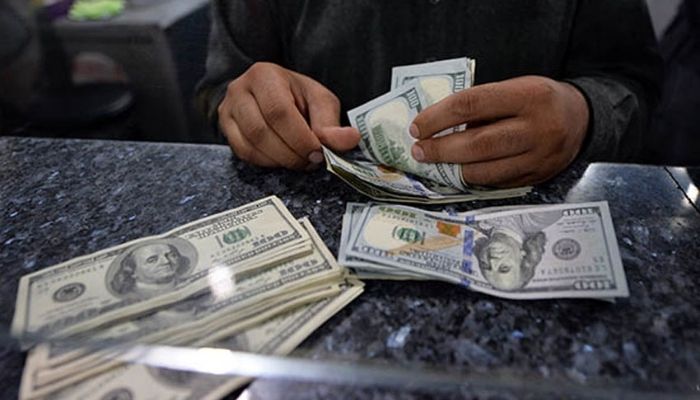
Autonomous sources accounted for the largest share of Nigeria’s foreign exchange inflows in 2025, as aggregate inflows into the economy rose 13.81 percent to $109.86 billion, according to the Central Bank of Nigeria’s 2025 Annual Report and Accounts.
The CBN report showed that foreign exchange inflows from autonomous sources rose 25.12 percent to $70.54 billion in 2025 from $56.38 billion in 2024, accounting for 64.21 percent of total FX inflows during the year.
The increase was driven primarily by higher non-oil export receipts and over-the-counter purchases, particularly capital importation, the CBN said.
In contrast, FX inflows through the CBN declined by 2.08 percent to $39.32 billion, accounting for 35.8 percent of total inflows. The decline was attributed mainly to lower receipts from government debt and FX swaps.
The shift towards autonomous sources came as the CBN continued to implement reforms aimed at improving efficiency, transparency, liquidity and price discovery in the foreign exchange market.
Read also: Investment income boosts Regency Alliance Q1 profit to N617.5m
The Bank sustained the “Willing Buyer-Willing Seller” principle in the conduct of FX transactions and required authorised dealers to quote and display exchange rates at their currency exchange kiosks.
The Nigeria Foreign Exchange Code was also launched in January 2025 to strengthen governance and accountability in the FX market. The Code is based on six core principles covering ethics, governance, execution, information sharing, risk management, and confirmation and settlement.
According to the CBN, the principles are intended to promote fair pricing, integrity and proper oversight across FX transactions.
The increase in autonomous inflows also coincided with measures targeted at Nigerians living abroad and non-residents with financial interests in the country.
The CBN launched the Non-resident Bank Verification Number in May 2025, allowing Nigerians living abroad and other non-resident individuals with financial interests in Nigeria to obtain a BVN without being physically present in the country.
The Bank also introduced the Non-Resident Nigeria Ordinary Account and Non-Resident Nigerian Investment Account to facilitate remittances, foreign and local currency transactions and investment in Nigerian assets by non-residents.
The NRNOA allows non-resident Nigerians to remit foreign earnings to Nigeria and manage funds in both foreign and local currencies, while the NRNIA enables them to invest in Nigerian assets in either foreign or local currency.
The CBN also took measures to improve access to the foreign exchange market for bureaux de change operators. Existing BDCs were permitted to purchase up to $25,000 weekly from authorised dealers, with the temporary access to the Nigerian Foreign Exchange Market extended to May 30, 2025.
The reforms came as the overall balance of FX flows improved during the year. Aggregate FX outflows increased by 27.83 percent to $49.05 billion from $38.37 billion in 2024, mainly due to higher outflows through autonomous sources.
Outflows through the CBN rose 1.74 percent to $32.79 billion from $32.23 billion, while outflows through autonomous channels increased sharply by 164.84 percent to $16.26 billion.