
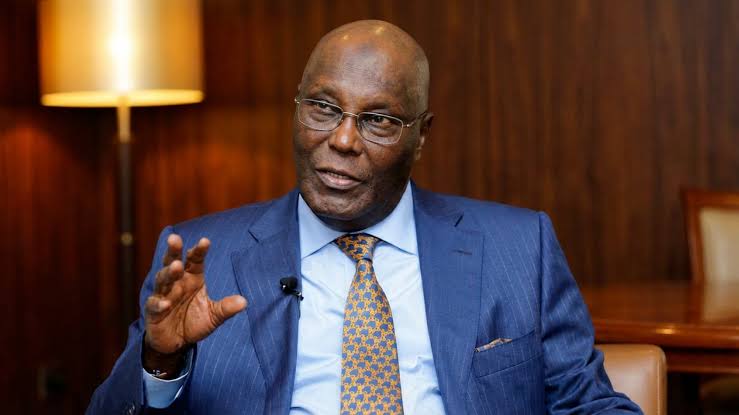
Former Vice President and presidential candidate of the African Democratic Congress (ADC), Atiku Abubakar, has asked the Tinubu administration to explain contradictions in its cash-transfer figures and to publish a verifiable trail for the over ₦600 billion it claims to have disbursed.
Speaking on Thursday through his Senior Special Assistant on Public Communication, Phrank Shaibu, Atiku described the programme as evidence of “government-by-press-release, arithmetic by convenience and accountability by imagination.”
He noted that while the Presidency announced on 16 July 2026 and again on 2 August 2026 that cash transfers had reached 15 million vulnerable households, the Minister of Humanitarian Affairs on 26 August 2026 said “slightly over 10 million households” had been reached.
“So where did five million households go? These are not opposition figures. They are Tinubu’s figures contradicting Tinubu’s figures,” Atiku said.
He also questioned the financial math. According to him, with a promise of ₦25,000 monthly for three months, or ₦75,000 per household, 10 million households should have gulped about ₦750 billion, while 15 million would exceed ₦1.1 trillion. Yet government says it spent just over ₦600 billion.
“How many received one tranche, two tranches or all three? How many payments failed or were reversed? How many names were merely lifted from an existing social register and presented as evidence of actual payment?
“A name on a social register is not a bank alert. Counting people in a database is not the same thing as proving money reached them,” he said.
Atiku argued that beyond the numbers, the administration should explain why millions of Nigerians now need emergency cash.
“A government boasting that tens of millions of households require emergency cash transfers should not be congratulating itself. It should be explaining why its economic policies pushed so many people into desperation.
“Tinubu has turned poverty into a government programme: make fuel expensive, transport rises; transport rises, food rises; food rises, medicine expensive, the family basket shrinks. Businesses face higher energy and logistics costs, workers lose purchasing power, and when millions become poorer, government registers them as ‘vulnerable,’ gives some of them cash and calls it reform.
“That is not prosperity. It is the industrial production of poverty followed by the bureaucratic management of the poor,” he said.
He contrasted this with his own proposal for a “targeted, capped and transparent intervention in the domestic petroleum value chain” aimed at reducing fuel and transport costs at source.
“When petrol becomes cheaper, the bus driver spends less, the farmer moves produce more cheaply, the trader pays less for haulage, businesses face lower logistics costs and the savings travel through the economy to the family kitchen.
“That is the difference. Tinubu waits until poverty enters the home and arrives with a cash-transfer form. Atiku wants to reduce the cost pressures that drove the family into poverty in the first place,” he stated.
Atiku demanded transparency on the disbursements, including unique verified households, payment tranches, state-by-state distribution, failed transactions, reversals and an independent audit.
“If ₦600 billion truly moved, then government must show the trail… The same government that demands every kobo of Atiku’s proposed intervention cannot ask Nigerians to accept its own hundreds of billions on faith. That is not accountability. It is hypocrisy armed with a calculator,” he said.
“Until the Tinubu administration reconciles these figures and produces a verifiable payment trail, Nigerians are entitled to keep asking: where did the five million households disappear to? Did they graduate from poverty, vanish from the social register, or simply disappear because government propaganda ran ahead of the truth?”