
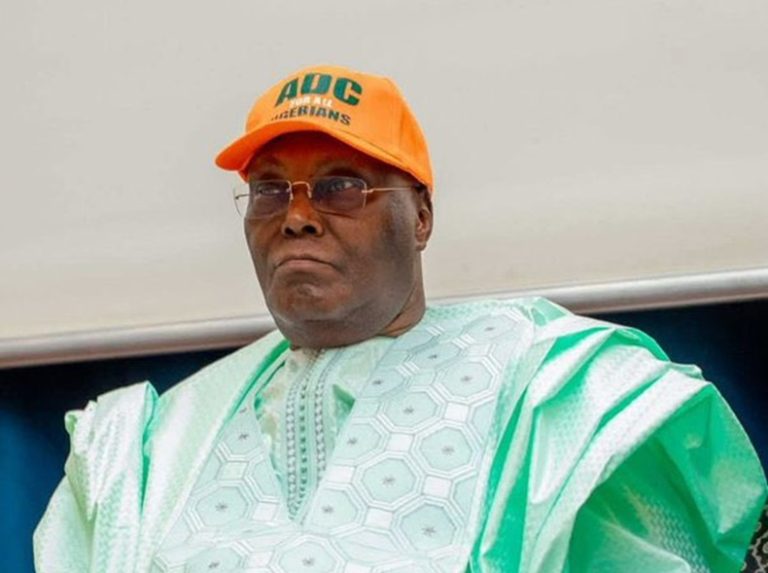
The presidential candidate of the African Democratic Congress (ADC), Atiku Abubakar, has challenged President Bola Ahmed Tinubu’s administration to explain how the financial obligations tied to Nigeria’s major state-owned refineries rose by more than ₦4 trillion in one year.
Atiku, through his Senior Special Assistant on Public Communication, Phrank Shaibu, questioned the government over the combined obligations of the Port Harcourt, Warri and Kaduna refineries, which reportedly increased from about ₦4.52 trillion at the end of 2023 to ₦8.67 trillion by the end of 2024.
The former Vice President argued that the approximately ₦4.15 trillion increase deserved a clear explanation, particularly given the Federal Government’s repeated assurances that billions of naira were being invested to revive Nigeria’s long-dormant refineries.
In a statement issued on Sunday, Atiku urged Tinubu to take responsibility for developments under his administration rather than continuing to attribute the country’s refinery problems to the government of former President Muhammadu Buhari.
At the heart of Atiku’s criticism is the sharp increase in the financial obligations attached to the three refineries.
He questioned what Nigerians gained from the additional expenditure and demanded greater transparency over how the money was spent.
“If the combined obligations of these refineries jumped by more than ₦4 trillion in 2024 alone, what exactly did Nigerians receive in return? Where did the money go? Where are the products? Where are the savings Nigerians were promised?” Atiku asked.
For the ADC presidential candidate, the figures cannot simply be dismissed as accounting entries, particularly at a time when Nigerians continue to grapple with economic hardship and the consequences of high energy costs.
He argued that ₦4 trillion represents resources that could have transformed critical sectors of the economy.
“Think about what ₦4 trillion could do for Nigeria. Think about the universities struggling with overcrowded lecture halls, hospitals without modern equipment, roads that have become death traps and communities without electricity or potable water,” he said.
Atiku described the situation as “an unforgivable failure of stewardship”, insisting that Nigerians deserve to know how such a huge increase occurred.
Port Harcourt refinery claim under scrutiny
Atiku also questioned the Federal Government’s handling of the Port Harcourt refinery, particularly its earlier claims that the facility had resumed operations.
In November 2024, the Tinubu administration announced that the refinery had commenced operations at about 70 per cent capacity, presenting the development as a major milestone in efforts to restore domestic refining.
But Atiku noted that the narrative surrounding the refineries has since become more complicated, with the leadership of the Nigerian National Petroleum Company Limited (NNPCL) acknowledging that the facilities were operating at what he described as a “monumental loss.”
The former Vice President therefore questioned why an administration that once celebrated the reported revival of the refinery was now distancing itself from the same facilities.
Also Read: Osun 2026: ‘APC killed 28 people’ – Isaac Fayose petitions ICC, pledges N5m for families
For him, the contradiction raises an uncomfortable question: if billions were spent to revive the refineries, why did their financial obligations continue to climb?
‘Government cannot claim credit and dodge blame’
Atiku further accused the Tinubu administration of selectively taking credit when government policies appear successful while shifting responsibility to previous administrations when problems emerge.
He argued that after more than two years in office, the current administration must be prepared to account for decisions made under its own watch.
The ADC candidate maintained that the refinery crisis should no longer be treated solely as a legacy problem inherited from Buhari’s administration.
According to him, the Tinubu government must explain the additional ₦4.15 trillion incurred during 2024 and demonstrate what Nigerians received in return for the expenditure.
The controversy comes amid Nigeria’s long-running struggle to restore its public refineries and reduce dependence on imported petroleum products.
Atiku’s latest criticism therefore puts the spotlight not only on the condition of the refineries, but also on a bigger question of public accountability: when trillions of naira are committed to fixing a national asset, who answers when the promised results fail to match the money spent?