
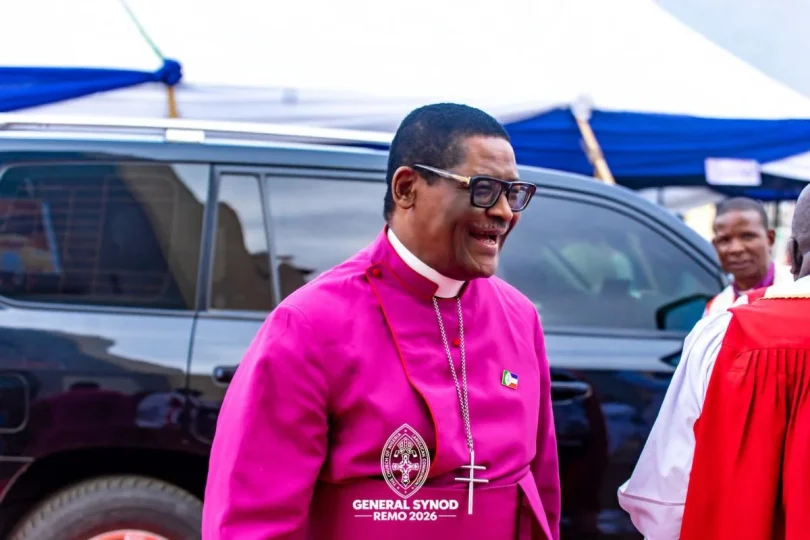
The Archbishop, Metropolitan and Primate of All Nigeria, His Grace, the Most Revd Henry Ndukuba, has expressed concern over the increasing rate of drug abuse and addiction among Nigerian youths.
He said the development was fast becoming endemic and urged stakeholders, particularly the Church, to intensify efforts to address the challenge, which he said had serious implications for the future of young Nigerians and the stability of communities.
Ndukuba spoke in his presidential charge to the 15th General Synod of the Church of Nigeria, held at Our Saviour’s Anglican Church, Ikenne-Remo, on Wednesday.
The Synod has the theme, “The Priesthood of All Believers: Equipping God’s People for the Work of the Ministry.”
The Primate identified corruption and drug trafficking as twin threats to the fabric of Nigerian society, saying Nigeria had moved from being mainly a transit route for illicit drugs to becoming a major participant in the drug trade.
Ndukuba charged the Church to intensify its involvement in campaigns against drug trafficking, drug abuse and addiction, stressing that it could not remain indifferent to a problem capable of destroying the lives, families and future of young Nigerians.
He called for stronger collaboration among government agencies, churches, schools, families and civil society organisations to prevent drug abuse and rehabilitate victims of addiction.
On insecurity, the Primate commended the Federal Government for its efforts to address the security challenges confronting the country but called for continuous review of strategies and improved operational effectiveness.
He expressed concern over continuing attacks on communities, particularly Christian communities in parts of northern Nigeria and some southern states.
Ndukuba said recent attacks in Adamawa, Plateau and Benue states raised questions about the capacity of criminal elements and insurgents to continue attacking communities and taking innocent lives.
“The recent attacks in Adamawa, Plateau and Benue would seem to suggest that banditry, criminality and insurgency are on rampage. Nigeria is bleeding and the lives of citizens are being wasted,” he said.
He criticised what he described as the use of propaganda and “play on words for political correctness” in describing violent attacks to the international community.
According to him, such an approach did not serve the interests of Nigerians directly affected by insecurity.
The Church leader urged the government and security agencies to adopt strategies capable of preventing attacks before they occurred, rather than relying mainly on responses after lives and property had been lost.
He also stressed the need to protect vulnerable communities, restore confidence among displaced citizens and create conditions that would enable farmers, traders and businesses to operate without fear.
Linking the national situation to the theme of the Synod, Ndukuba said the concept of the priesthood of all believers placed responsibilities on Christians beyond participation in worship.
He said Christians had a duty to contribute to the transformation of society through their various vocations, professions and positions of influence by promoting justice, integrity, peace and service.
The Primate urged members of the Church to see themselves as agents of God’s mission in their communities and the nation, stressing that the work of ministry should not be restricted to ordained clergy.
On the 2027 general elections, Ndukuba admonished the Chairman of the Independent National Electoral Commission (INEC), Professor Joseph Amupitan, to maintain neutrality and credibility.
ALSO READ: PHOTO: Peter Obi releases handover document to counter Anambra govt’s debt claims
He urged the INEC Chairman and national commissioners to demonstrate impartiality in partisan politics and ensure fairness, transparency and credibility in all processes leading to the elections.
According to him, the credibility of the electoral umpire would be crucial to public confidence in the 2027 elections.
He also urged political actors to respect democratic institutions and processes, while encouraging citizens to obtain their voter cards, participate in elections and hold elected leaders accountable.
The Ogun State Governor, Prince Dapo Abiodun, in his address to the Synod, charged the Church to promote peace, responsible citizenship and peaceful participation ahead of the 2027 general elections.
Abiodun urged the Church to encourage its members to perform their civic responsibilities conscientiously while rejecting provocation, intimidation, misinformation, electoral malpractice and violence.
He said political differences should not be allowed to destroy the bonds that unite Nigerians, stressing that elections should be contests of ideas, visions and programmes rather than occasions for violence.
The governor also charged the Church to provide guidance and opportunities for young people, warning against their involvement in violence, crime, substance abuse, fraud and extremism.
He commended the Anglican Diocese of Remo, led by the Bishop of Remo and Archbishop of the Ecclesiastical Province of Lagos, the Most Reverend Dr Michael Olusina Fape, as well as the clergy, laity, planning committees and other members of the diocese for hosting the Synod.
In his welcome address, Bishop Fape said the hosting of the Synod, which witnessed the consecration of four new bishops, was a celebration of God’s faithfulness to the diocese.
He said the diocese, which had existed for 42 years, was hosting a programme of the Church of Nigeria for the first time, apart from the Annual Conference of the Anglican Youth Fellowship and the National Bible Conference held in 2009.
Fape also thanked God for bringing the diocese together under one umbrella after overcoming the disunity that had divided different parts of the diocese between 1993 and 2003.
Those in attendance included the Chairman of African Newspapers of Nigeria Plc, Ambassador Olatokunbo Awolowo Dosumu; the Chief Imam of Ikenne, Sheikh Lawal; Chief Adewale Ayuba; and other dignitaries.