
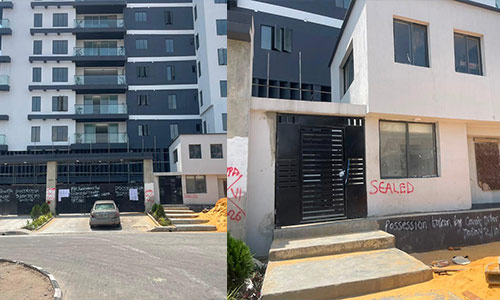
A property development agreement originally designed to produce 18 three-bedroom apartments in Lagos has escalated into a major legal dispute after the landowner accused Levitikal Realties & Construction Limited of expanding the project to more than 44 residential units, attempting to mortgage the entire property and selling apartments to third parties beyond its contractual entitlement.
The dispute has now attracted the intervention of the Federal High Court, which on September 29, 2026, restrained Levitikal, its directors, agents, representatives and persons acting through it from selling, transferring, assigning, mortgaging, leasing, charging, alienating or otherwise encumbering the disputed property.
The court also appointed an Official Receiver to take possession, custody and control of the property pending the resolution of the dispute through arbitration.
At the centre of the disagreement is a Joint Venture Agreement executed in May 2021 for the construction of 18 three-bedroom apartments.
Under the agreement, the landowner was to receive nine apartments, while Levitikal was entitled to the remaining nine upon successful completion of the development.
The landowner maintains that the arrangement did not transfer ownership of the underlying land to Levitikal but merely authorised the company to develop the property in accordance with the terms of the joint venture.
The relationship subsequently deteriorated after the landowner allegedly discovered that the development had been reconfigured from the agreed 18 three-bedroom apartments into more than 44 one-, two- and three-bedroom units.
According to the landowner, the alteration was carried out without her knowledge or consent and was inconsistent with both the Joint Venture Agreement and the development approval issued by the Lagos State Government.
The landowner alleges that the substantial increase in the number of apartments fundamentally changed the nature of the project and created uncertainty over which units belonged to each party under the original agreement.
The disagreement became more complicated over an alleged attempt to use the entire property as security for financing.
According to the landowner, Levitikal and its associated interests attempted to mortgage the property to Providus Bank without first obtaining her consent.
She contends that any financing arrangement involving the entire property exceeded Levitikal’s rights because, under the Joint Venture Agreement, the developer was ultimately entitled to only nine of the proposed 18 apartments and had no ownership interest that permitted it to encumber the landowner’s share.
The landowner argues that the proposed mortgage would have exposed not only Levitikal’s contractual entitlement but also her title to the land and the nine apartments reserved for her under the agreement.
Another major point of contention is the Power of Attorney granted in connection with the development.
The landowner maintains that the Power of Attorney was issued solely to facilitate construction and other activities necessary for the implementation of the joint venture and did not transfer ownership of the property to Levitikal.
She alleges, however, that the instrument was subsequently relied upon in a manner that sought to confer wider control over the property than contemplated by the agreement.
According to her account, proceedings were also instituted involving Levitikal and Providus Bank to compel the registration of the Power of Attorney, initially without her being joined as a party.
She said she later intervened in those proceedings to protect her title and proprietary interest in the property.
The controversy also extends to the alleged marketing and sale of apartments to third-party purchasers.
The landowner alleges that Levitikal marketed and sold units within the development, including apartments which she maintains fell outside the developer’s contractual entitlement under the original 18-unit arrangement.
She argues that the alleged sales raise questions about the legal authority under which the units were offered to members of the public and the interests purportedly transferred to buyers.
The dispute could consequently have implications for third-party purchasers who may have committed funds to apartments in the development without full knowledge of the disagreement concerning the underlying land, the Joint Venture Agreement and the extent of the developer’s entitlement.
The landowner also alleges that between 2023 and 2026, she and her representatives repeatedly sought access to the development to inspect the construction and requested copies of the approved building plans.
According to her, those efforts were frustrated and the requested plans were not made available, preventing her from independently determining whether the development complied with the agreement and approvals granted by the relevant Lagos State authorities.
Following what she regarded as fundamental breaches of the Joint Venture Agreement, the landowner revoked the Power of Attorney and terminated the joint venture arrangement.
She maintains that the alleged alteration of the project from 18 apartments to more than 44 units, the proposed mortgage of the entire property and the alleged sale of apartments beyond Levitikal’s entitlement amounted to substantial breaches of their contractual relationship.
The allegations have also been referred to the Economic and Financial Crimes Commission.
According to the landowner, the EFCC is examining allegations relating to the development, financing and sale of apartments on the property involving Levitikal and Samuel Ajose.
The existence of an investigation does not, however, amount to a finding of wrongdoing, and the allegations remain subject to investigation and the pending legal processes.
The Federal High Court’s intervention has, for now, restricted further dealings with the property while the underlying dispute proceeds to arbitration.
By appointing an Official Receiver, the court effectively placed the property under independent control pending the determination of the competing claims.
The substantive dispute remains centred on whether Levitikal acted within the scope of the Joint Venture Agreement and Power of Attorney, whether the developer was entitled to alter the configuration of the project, whether it could lawfully mortgage the entire property, and the validity of any interests already purportedly transferred to third-party purchasers.
The court’s orders are interim protective measures and do not, by themselves, amount to a final determination of the allegations against Levitikal or the respective proprietary rights of the parties.
... “Agreement Was For 18 Apartments, But Development Allegedly Expanded To Over 44 Units” — Lagos Landowner Battles Levitikal As Court Appoints Receiver ... TheNigeriaLawyer.