
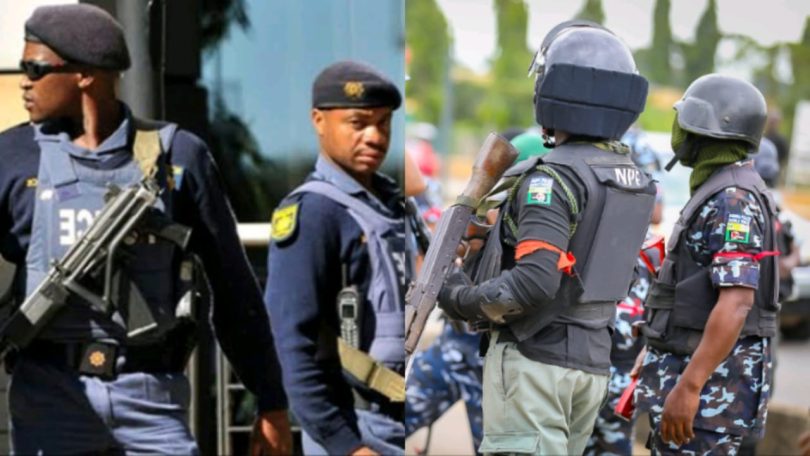
A former president of the Nigerian Bar Association, Olisa Agbakoba, has drawn on the Constitution of South Africa to suggest ways to prevent governors from abusing state policing.
“Nigeria need not look far for a tested solution. The Constitution of South Africa offers an instructive model,” Mr Agbakoba stated in a letter dated 26 June 2026 and addressed to the secretary to the government of the federation, George Akume. “Chapter 9, titled ‘Institutions Supporting Constitutional Democracy’, establishes and protects a range of independent state institutions, including the Public Protector, the Human Rights Commission, the Electoral Commission, and the auditor general, and crucially insulates them from executive interference.”
Mr Agbakoba noted that these institutions were not merely created by statute, adding they derived their independence directly from the Constitution itself, with security of tenure for their heads, guaranteed funding, and accountability to parliament rather than to the executive.
He added, “The result is that in South Africa, neither the President nor any provincial governor can dictate to or manipulate these critical institutions.”
Citing the need for Nigeria to adopt this model, Mr Agbakoba suggested that “critical institutions such as the Nigeria Police Force, INEC, the EFCC, the ICPC, the CBN, the National Judicial Council, the attorney general, the accountant general, the National Human Rights Commission, the Code of Conduct Bureau, and the Office of the Public Defender, which are currently listed under Section 153 of the 1999 Constitution as executive institutions, should be insulated from executive control and established as constitutionally protected institutions that consolidate democracy”.
According to him, these institutions should enjoy security of tenure, their funding should be a direct charge on the consolidated revenue fund, and their accountability should be under the supervision of the national assembly or the state houses of assembly and not the president or any governor.
“This process has been described by Professor Ben Nwabueze as the concept of limited government, which is the principle that executive power is not at large but is constrained by independent institutions guaranteed by the Constitution,” he stated.
Mr Agbakoba insisted that the state police would be a welcome and progressive development if built on this constitutional architecture of independence and accountability, warning they would inevitably become tools of oppression if handed to governors without these protections.
“If the proposed state police framework is built on this constitutional architecture of independence and accountability, it is a welcome and progressive development. If not, if state police are simply handed to governors without these protections, they will inevitably become tools of oppression, and Nigeria will have traded one problem for a far worse one,” the legal expert advised.
Mr Agbakoba’s suggestions came amid concerns that the state police might be abused by governors if eventually implemented.
The presidential candidate of the Nigeria Democratic Congress, Peter Obi, demanded that the implementation of state police be delayed until after the 2027 elections , fearing it could be used by President Bola Tinubu’s government to rig the elections.