
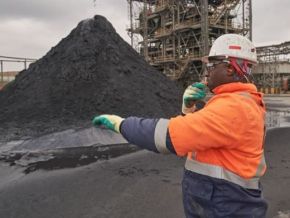
African governments are strategically recalibrating their approach to mineral wealth distribution, moving beyond traditional tax and royalty frameworks to embrace a more integrated model of value capture. This evolution is characterised by the increasing implementation of robust local content policies, the establishment of dedicated community development funds, and the expansion of state equity participation and commercialisation roles. Countries such as the Democratic Republic of Congo (DRC), Mali, Ghana, Burkina Faso, and South Africa are at the forefront of this transformative shift, signalling a new era in how the continent seeks to maximise the economic benefits derived from its rich natural resources.
This broader trend, as reported by Reuters last week, is evident in ongoing negotiations. In the DRC, for instance, several mining companies have formally requested an extension to the July 31 deadline for implementing a provision mandating the transfer of 5% equity to Congolese employees. This contrasts with the stance of labour unions, which are advocating for the immediate enforcement of this measure. This dynamic underscores a continent-wide movement to deepen local participation in the mining sector’s economic gains, extending beyond mere revenue collection.
Historically, African governments have primarily relied on three instruments to secure value from mining operations: direct taxation, mining royalties, and dividends derived from state ownership stakes. While these traditional mechanisms have been strengthened over time – with several jurisdictions, for example, increasing gold royalties from 2024 in response to surging bullion prices – a significant policy pivot is underway. Governments are now actively introducing less conspicuous, yet impactful, measures designed to embed greater economic benefits within their national economies.
Local content policies have emerged as a cornerstone of recent mining reforms across Africa. This concept encompasses a wide array of measures aimed at increasing the involvement of domestic stakeholders across the entire mining value chain, transcending the scope of tax collection alone. The DRC’s equity transfer provision exemplifies this approach, seeking to provide workers with a more direct stake in corporate performance, thereby supplementing their wage income.
Other African mining jurisdictions are adopting similar equity-focused strategies. Mali’s 2023 Mining Code, for instance, permits domestic private investors to acquire up to 5% of a mining company’s equity through paid participation schemes. South Africa, a pioneer in this domain, has long implemented comparable policies. The nation’s Mining Charter mandates that employees hold 5% of mining assets and host communities an additional 5%, alongside other provisions designed to enhance the participation of historically disadvantaged populations in the extractive sector.
The scope of local content policies is also expanding beyond ownership structures to encompass employment, subcontracting, and the procurement of goods and services. In Ghana, authorities are progressively requiring mining companies to award specific operational activities to domestic subcontractors, thereby bolstering the role of local businesses within the mining value chain. Burkina Faso has enacted a decree reserving certain management positions for its nationals, while Côte d’Ivoire, through its national mining local content policy adopted in December 2025, prioritises qualified national labour.
Community development mechanisms are also gaining significant traction. While mining companies have traditionally financed local projects through corporate social responsibility initiatives, governments are increasingly formalising these contributions within more stringent regulatory frameworks. Burkina Faso’s Local Mining Development Fund (FMDL), for example, is partly financed by a contribution equivalent to 1% of the turnover generated by mining permit holders. The DRC’s 2018 Mining Code established a Community Development Endowment, requiring mining companies to allocate at least 0.3% of their turnover to projects benefiting local populations. Mali has similarly operationalised various mining funds, including a Local Mining Development Fund, financed by both industrial and artisanal mining permit holders. These mechanisms share a common objective: ensuring that a portion of mining revenues directly benefits the communities most affected by the social and environmental impacts of mining operations.
Governments are also broadening their engagement beyond revenue collection, actively increasing their involvement in the management and commercialisation of mineral resources. Instead of solely acting as royalty collectors, some states are now seeking direct participation in the marketing of a portion of mineral production. The DRC’s state-owned mining company, Gécamines, leverages its copper and cobalt trading subsidiaries to market its share of production. Ghana has adopted a parallel strategy with GoldBod, established in 2025, to centralise the purchase, local refining, and commercialisation of artisanal gold and a portion of industrial gold flows. This trend signifies a broader expansion of state intervention, aiming to capture greater value through trading margins, transaction commissions, and enhanced influence over export pricing and sales conditions.
Despite these progressive measures, significant risks and challenges persist. The effectiveness of these reforms hinges on their implementation without disrupting the operations of a sector critical to public finances. A key challenge, as highlighted by mining expert Ahamadou Mohamed Maiga, is the availability of qualified and competitive local labour and businesses, noting that companies engage local partners based on performance and efficiency, not solely altruism. Furthermore, governance issues surrounding mining development funds require meticulous attention. State entities seeking greater autonomy and influence within mining value chains must also navigate substantial operational and financial hurdles. Africa’s vast mineral potential continues to attract considerable interest, but the ultimate success of its efforts to reshape the distribution of mining wealth remains a narrative yet to be fully written.
... African Mining Jurisdictions Evolve Wealth Sharing Beyond Taxation: Local Content, Equity, and State Commercialisation Take Centre Stage ... Naijaonpoint.