
The Nigerian government has intensified efforts to reduce contractual disputes in infrastructure projects across the country amid the country’s $2.3 trillion infrastructure deficits.
This comes as the federal government engages with key stakeholders on contractual obligations between public-owned entities and private establishments.
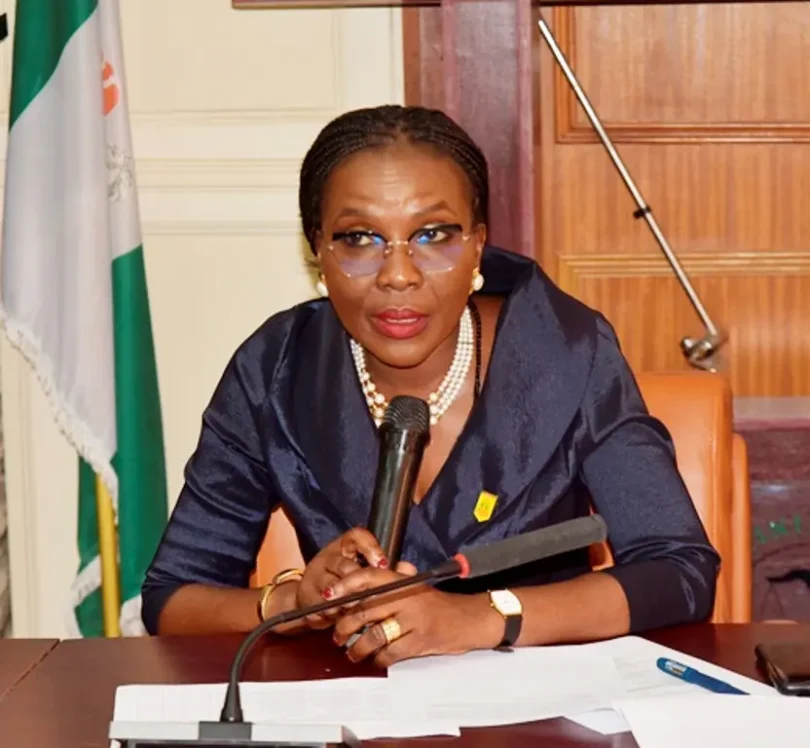
Speaking at an event in Abuja on Tuesday, the Solicitor-General of the Federation and Permanent Secretary of the Federal Ministry of Justice, Beatrice Jedy-Agba, said the complexities associated with long-term public-private partnership infrastructure contracts in Nigeria often expose the country to significant risks and liabilities.
She explained that the introduction of the Model PPP Agreement is aimed at shielding Nigeria from predatory litigation arising from poorly structured contracts.
According to Jedy-Agba, the new government model represents a collective commitment to promoting efficient governance, sustainable development, and economic prosperity.
“This has been a journey of collaboration, diligence, and shared purpose. We’ve had a series of engagements, retreats, and meetings where legal experts from across the country gathered to review and refine the model agreement. These engagements have laid the foundation for clearer, stronger, and more effective PPP agreements,” she said.
She noted that the framework would improve transparency, accountability, value for money, and investor confidence while ensuring adequate protection of public interest.
Jedy-Agba stressed that the Ministry of Justice remains central to safeguarding government interests in long-term infrastructure transactions.
“The complexities of long-term PPP infrastructure contracts naturally introduce significant risks and liabilities. This is where the Ministry of Justice plays a critical, non-negotiable role in mitigating risks, scrutinising indemnity clauses, and structuring robust dispute resolution mechanisms to ensure that the federal government is fully protected from predatory litigation, sovereign defaults, and lopsided risk allocation,” she stated.
In his remarks, Director-General of the ICRC, Jobson Ewalefoh, said Nigeria’s infrastructure deficit is currently estimated at $2.3 trillion, warning that the country would need to mobilise about $100 billion annually to bridge the gap by 2043.
“I wish to begin this morning not with a speech, but with a figure: $2.3 trillion. That is the conservative estimate of Nigeria’s infrastructure deficit today,” he said.
Ewalefoh noted that government revenues alone are insufficient to meet the country’s infrastructure needs, making private sector participation crucial to the success of President Bola Tinubu’s Renewed Hope Agenda.
He observed that for nearly two decades, Nigeria negotiated PPP projects on a case-by-case basis, resulting in inconsistencies in risk allocation, dispute resolution mechanisms, and investor protections.
According to him, the framework provides nationally accepted guidelines that will shorten negotiation timelines, reduce transaction costs, and enhance the bankability of infrastructure projects.
The ICRC director-general explained that the agreement contains provisions covering risk allocation, lender protections, dispute resolution, insurance requirements, performance monitoring, and anti-corruption safeguards.
He added that the framework introduces a structured dispute resolution mechanism that begins with consultations and negotiations before proceeding to arbitration under the Arbitration and Mediation Act, 2023.
“The result is a system that exhausts reasonable avenues for resolution before litigation costs arise,” he said.
Ewalefoh further stated that the agreement was designed to provide predictability for the government, protection for investors, and improved service delivery for Nigerians.
He said Ministries, Departments, and Agencies, MDAs, would no longer be required to negotiate PPP agreements from scratch, as the framework establishes a legally grounded baseline for infrastructure transactions.
“I am confident that, working together, the ICRC, our MDAs, development partners, and investors can help close the trillion-dollar infrastructure gap and, concession by concession, build the Nigeria that Renewed Hope has promised,” he said.
Stakeholders from various federal MDAs attended the engagement.
The initiative comes amid renewed government efforts to strengthen legal safeguards in major commercial agreements following Nigeria’s successful defense against the $11.5 billion arbitration claim filed by Process & Industrial Developments in the United Kingdom.