
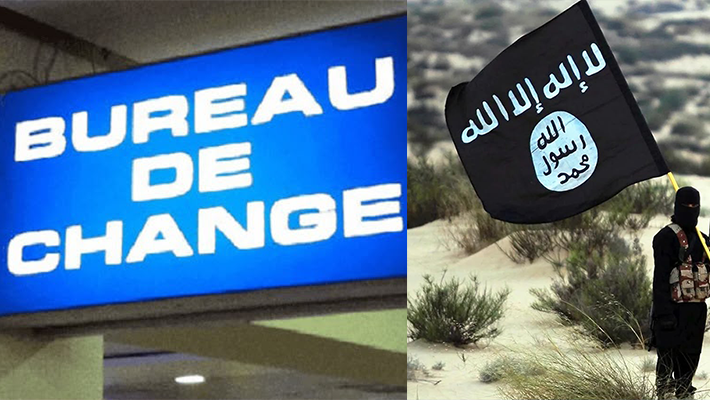
President Donald Trump’s administration on Monday designated Nigeria-based Mukhtar Adamu and three bureaus de change as terrorist facilitators over alleged links to the Islamic State of Iraq and Syria (ISIS) financing.
The BDCs, allegedly owned or controlled by Mr Adamu, are Generation Currency Bureau De Change Limited in Lagos; Manhattan Bureau De Change Limited in Kano; and Nine to Nine Exchange Bureau De Change Limited in Lagos.
Mr Adamu, born on August 2, 1990, and residing in the Agege area of Lagos, was designated “for having materially assisted, sponsored, or provided financial, material, or technological support for, or goods and services to or in support of, ISIS-WA”.
“Nine Exchange, Manhattan Bureau, and Generation Currency are being designated pursuant to E.O. 13224, as amended, for being owned, controlled, or directed by, or having acted or purported to act on behalf of, directly or indirectly, Mukhtar Adamu Muhammad,” the government said.
Department of State spokesperson Thomas Pigott said in a statement that three other individuals, as well as three separate entities in Europe and the Middle East, facilitated the transfer of money across countries to fund ISIS attacks.
Mr Pigott said their operations extended across France and Syria to Türkiye and Nigeria.
“We are cutting off the financial lifelines from around the world that enable ISIS to fund attacks, support its regional affiliates, and threaten civilians, including religious minorities,” he said.
Mr Pigott added, “These actions reflect the United States’ unrelenting pressure on ISIS, which continues to decentralise its operations and rely on financial intermediaries to connect its global network.”
Also blacklisted as ISIS financial facilitators by the U.S. government are France-based Miloud Abderrahmane, aka Abderrahmane, who aided the terrorist group with information on the use of explosives; and Abdelhakim Boukich, who operates a Syria-based money service business and transfers funds for ISIS supporters through cryptocurrencies to Norway, Belgium, the Netherlands, South Africa, and the U.S.
Similarly, Mohamad Alhmidan, aka Alhmidan, who is based in Türkiye and was designated by OFAC in March 2016, was cited by the U.S. government for transferring money from Syria to other regions using cryptocurrency.
As part of the sanctions, all property and interests in property belonging to the designated individuals and entities that are in the United States or under the control of U.S. persons will be blocked and must be reported to the Office of Foreign Assets Control (OFAC).
“In addition, any entities that are owned, directly or indirectly, individually or in the aggregate, 50 per cent or more by one or more blocked persons are also blocked.
“Violations of U.S. sanctions may result in the imposition of civil or criminal penalties on U.S. and foreign persons. OFAC may impose civil penalties for sanctions violations on a strict liability basis,” the U.S. Treasury said.
It warned that financial institutions and individuals who engage in transactions with the designated individuals and entities risk being exposed to secondary sanctions.
Hakama Sidi Ali, spokesman for the Central Bank of Nigeria, did not respond to requests for comment.
Nigerian Army spokesperson Onyechi Anele declined to comment on whether the military was aware of the sanctioned firms and individuals, directing Peoples Gazette to the police for enquiries.
Police spokesperson Anietie Iniedu promised to respond after checking with the Nigeria Police Force National Cybercrime Centre (NPF-NCCC).
“I’ll need to confirm with the NPF-NCCC, our cybercrime unit, whether they have that information,” Mr Iniedu said by telephone.
The U.S. reiterated its commitment to partnering with Nigeria in military operations, citing the U.S. and Nigerian forces’ elimination of Abu-Bilal al-Minuki, ISIS’s second-in-command globally.
“We will continue to use every diplomatic and legal tool available to hold ISIS and its supporters accountable – wherever they operate, and however they move money,” it said.