
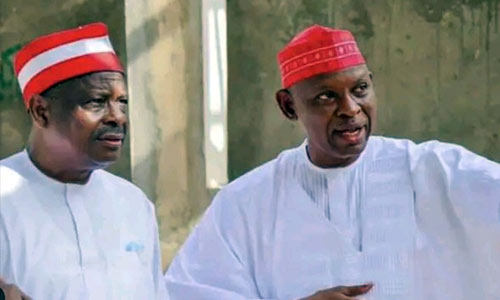
Former Kano State Governor and leader of the Kwankwasiyya movement, Senator Rabiu Musa Kwankwaso, has accused Kano State Governor, Abba Kabir Yusuf, of allegedly using anti-corruption petitions and proxy organisations to damage his reputation and weaken his political movement ahead of the 2027 general elections.
Kwankwaso claimed that the governor, whom he had supported throughout his political career, was now attempting to drag him and his family into public controversy through allegations submitted to the Economic and Financial Crimes Commission (EFCC).
In a statement posted on his Facebook page on Friday, November 27, 2026, the former governor expressed concern over what he described as a deterioration in his relationship with Yusuf, accusing him of betraying the political trust and confidence he had enjoyed over several years.
Kwankwaso recalled that Yusuf had served under him in different capacities, including as Personal Assistant, Principal Private Secretary and Commissioner, before emerging as the Kwankwasiyya movement’s governorship candidate in the 2019 and 2023 elections.
He maintained that the trust he placed in Yusuf throughout those years had been “misused and abused.”
The former governor alleged that Yusuf was determined to use government institutions and other organisations to tarnish the reputation he had built during decades of public service.
According to him, the alleged campaign was part of a broader political strategy aimed at weakening his influence and undermining the Kwankwasiyya movement ahead of the 2027 elections.
Kwankwaso claimed that the governor had previously approached the EFCC with a formal request seeking an investigation against him but failed to achieve his objective because of the Commission’s established procedures and institutional independence.
He further alleged that after the purported attempt failed, Yusuf resorted to working through the Society for Anti-Corruption and Good Governance Initiative (SACGGI), an organisation that recently petitioned the EFCC over alleged assets linked to the former governor.
“We believe that some months ago the Governor personally submitted a formal request to the EFCC seeking to come after me. After failing to compel the Commission, owing to its institutional integrity and established procedures, he resorted to a little-known body called the Society for Anti-Corruption and Good Governance Initiative (SACGGI),” Kwankwaso said.
The former governor suggested that the petition submitted by SACGGI was not an isolated anti-corruption initiative but part of what he believed was a politically motivated attempt to subject him to public scrutiny and damage his standing.
He also alleged that information relating to the petitions and accusations against him was being selectively released to journalists and amplified through public platforms to portray him negatively.
According to Kwankwaso, the alleged circulation of such information was intended to influence public perception of his political activities and weaken his movement’s prospects in the forthcoming general elections.
The former governor maintained that the alleged campaign was not limited to him and his family but had also extended to other political figures associated with the Kwankwasiyya movement.
He specifically mentioned Comrade Aminu Abdussalam, a Kano State governorship aspirant reportedly involved in legal and electoral processes concerning his candidacy, as another member of his political camp affected by the developments.
Kwankwaso warned that the alleged targeting of members of his political movement could deepen divisions and heighten political tensions in Kano State.
He expressed concern that the continued use of accusations and institutional processes in political disagreements could threaten peace and security, particularly as preparations for the 2027 elections gather momentum.
Despite accusing Yusuf of attempting to involve the EFCC in the political disagreement, Kwankwaso commended the anti-graft agency for what he described as its professionalism, impartiality and respect for established investigative procedures.
He recalled previous occasions when the Commission had invited him in connection with matters arising from his years in public office, maintaining that he had no objection to lawful and independent investigations.
His criticism, he indicated, was directed at the alleged political motives behind the petitions rather than the EFCC’s statutory authority to investigate allegations of corruption.
Kwankwaso also defended his record in public service, noting that he had held several prominent political positions, including Governor of Kano State, minister and senator.
He maintained that he remained proud of his contributions to public service and would not allow politically motivated allegations, as he described them, to diminish his reputation.
The former governor urged political officeholders to recognise that the authority attached to public office was temporary and should not be used to pursue personal or political grievances.
He also called on political actors to respect the independence of democratic institutions and refrain from conduct capable of undermining public confidence in their integrity.
According to him, government institutions should be allowed to discharge their responsibilities without being drawn into political rivalries or efforts to damage the standing of perceived opponents.
The allegations come amid tensions between Kwankwaso and Yusuf, two political figures whose association dates back several years and whose political relationship played a significant role in the emergence of the Kwankwasiyya movement as a major force in Kano politics.
Kwankwaso’s statement reflects his belief that the disagreements have extended beyond political differences to what he considers attempts to discredit him through anti-corruption petitions and public allegations.
However, his claims that Yusuf personally initiated an EFCC request, subsequently worked through SACGGI or arranged selective media disclosures remain allegations made by the former governor.
The statement did not establish independent evidence linking Yusuf to the SACGGI petition.
Kwankwaso nevertheless maintained that the protection of institutional independence, political tolerance and due process was essential to maintaining public confidence and preventing further political tensions in Kano State ahead of the 2027 general elections.
Post Title: “A Little-Known Body” — Kwankwaso Alleges Governor Yusuf Turned To Anti-Corruption Group After Failed Attempt To Influence EFCC By Naijaonpoint.