
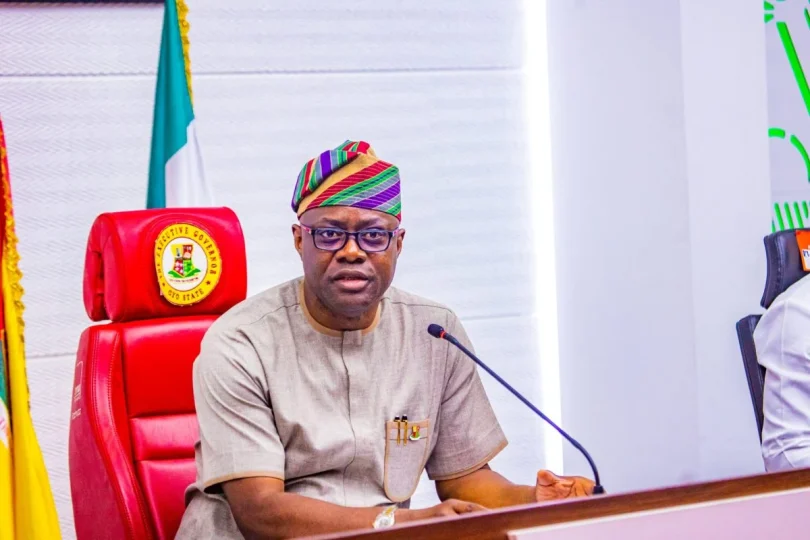
Governor Seyi Makinde of Oyo State has said his campaign for the 2027 presidential election will focus on resetting Nigeria and putting the interests of Nigerians above political, ethnic and religious considerations.
Makinde, who made this known in his latest newsletter, said the commencement of campaigns for the 2027 presidential and National Assembly elections marked the beginning of a national conversation on the state of the country, its future direction and the leadership required to move it forward.
According to him, “For me, this campaign will be about putting Nigerians first.”
He said the central message of his campaign would be the need to “reset our country so that it works for all Nigerians, not just a select few”.
The governor said he would, in the coming months, travel across the six geopolitical zones to engage stakeholders, stressing that the engagements would be designed not only to allow him to present his ideas but also to listen to Nigerians.
“I want to hear directly from Nigerians: workers whose incomes no longer meet their basic needs; business owners struggling to remain open; farmers concerned about security, production and access to markets; young people seeking opportunities to build meaningful lives; and families who want to feel safe in their homes and communities,” he said.
Makinde disclosed that his manifesto, tagged “The Reset Agenda”, was currently undergoing stakeholders’ review, adding that it would focus on critical national challenges, including security, the economy, the cost-of-living crisis and food security.
He said the agenda would go beyond making promises, as the campaign would explain how proposed policies would be implemented, funded and measured.
“As we develop and present these plans, we will show not only what we intend to do but how we intend to do it, how it will be funded and the outcomes Nigerians should expect,” Makinde said.
The governor said Nigerians should assess candidates based on their records, ideas and capacity to deliver rather than slogans, personalities and political entertainment.
“Campaigns should be about more than slogans, personalities and promises. Nigerians must be able to examine every candidate’s record, ideas and capacity to deliver,” he said.
Makinde also cited the recent Osun State governorship election as evidence of the power of citizens’ participation in the democratic process.
He noted that more than one million votes were cast in the election, representing an increase of over 180,000 votes compared with the 2022 election, adding that the winner emerged with a clear margin despite reported imperfections in the electoral process.
According to him, the outcome of the election, which he had earlier described as a victory for democracy and the people of Osun State, offered an important lesson ahead of 2027.
“As I said when I congratulated my brother, Governor Ademola Adeleke, the outcome was a victory for democracy and the people of Osun State,” he said.
Makinde added: “It also carries an important lesson for 2027: no political structure is more powerful than citizens who understand the significance of their participation and are determined to make their voices heard.”
He therefore urged Nigerians who believe in the country’s potential to actively participate in the political process ahead of the 2027 elections.
“Whether you join a campaign, attend a town hall, interrogate our proposals or encourage others to participate, do not remain a spectator,” he said.
The governor also cautioned Nigerians against allowing the election to be reduced to ethnic or religious sentiments, urging voters to listen carefully, ask difficult questions and scrutinise the programmes and records of candidates.
“Listen carefully, ask difficult questions and reject attempts to reduce this election to ethnicity, religion or political entertainment,” he said.
Makinde said he would, in the coming weeks, provide further details on the “Reset Nigeria Agenda” and ways Nigerians could contribute to what he described as building “the Nigeria we know is possible”.