
By Sarafina Christopher
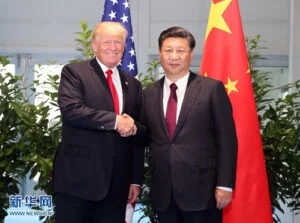
The recent state visit of U.S. President Donald Trump to China has drawn global attention not only because of the strategic importance of relations between the world’s two largest economies, but also because of what the renewed engagement could mean for Africa and the evolving global order.
The three-day visit, the first by a U.S. president to China in nine years, came amid persistent tensions over trade, technology, Taiwan and geopolitical influence.
However, despite longstanding strategic rivalry between the U.S and China, both countries projected a willingness to sustain dialogue and avoid direct confrontation.
Chinese President Xi Jinping described the new direction as a “constructive China-U.S. relationship of strategic stability,” while Trump pledged to strengthen communication and cooperation with China.
The summit also produced agreements to deepen exchanges in trade, diplomacy, public health, tourism, military communication and people-to-people relations.
Chinese Foreign Minister Wang Yi later described the meeting as “historic,” saying both leaders held “open, constructive and strategic” discussions on bilateral relations and global challenges.
According to Wang, both countries agreed to pursue what China described as “positive stability” built on cooperation, manageable competition and peaceful coexistence.
He said both leaders recognised that China-U.S. relations remained the most important bilateral relationship in the world today.
“The two countries can help each other succeed and advance the well-being of the whole world,” Wang said during a post-summit briefing.
The Taiwan issue also featured prominently during the talks, with China reiterating that the matter remained its core national interest and warns against separatist tendencies.
Analysts note that although tensions over Taiwan remain unresolved, the summit appeared to lower immediate fears of escalation between both powers.
For many analysts, the symbolism of the visit itself may prove just as important as any formal agreement reached behind closed doors.
Prof. Mukhtar Imam, a foreign policy scholar, said the visit reflected recognition by both countries that sustained engagement remained necessary despite strategic competition.
“At the diplomatic level, the visit may help to ease tensions between the two major powers, particularly on issues relating to trade disputes, technology competition, Taiwan and global supply chains.
“Even where deep disagreements remain, high-level engagement itself often serves as a mechanism for reducing uncertainty and preventing further deterioration in relations,” he said.
According to him, the meeting sends an important signal that disagreement between major powers does not completely eliminate the possibility of cooperation.
Imam noted that global stability, energy markets, international finance and geopolitical alignments remained heavily influenced by the relationship between the United States and China.
He added that many developing countries depended on both Chinese infrastructure financing and access to Western markets.
“If the visit leads to greater economic predictability, developing economies may benefit from improved investor confidence, more stable supply chains and increased global trade activity,” he said.
Dr Segun Showunmi, public affairs analyst and political strategist, described the visit as evidence that the world was steadily moving away from a strictly unipolar order dominated by one power.
“The message from the visit is clear: serious nations are adjusting to reality.
“Even where there are tensions around trade, technology, security, tariffs, Taiwan or influence, the United States and China understand that disengagement is neither practical nor sustainable,” he said.
According to Showunmi, future global relations may increasingly be defined by strategic coexistence rather than ideological confrontation.
Mr Charles Onunaiju, Director of the Centre for China Studies, also said the most important outcome of the visit was the continuation of communication between both countries.
“It does not matter so much what they agree on or what they disagree on; the fact that they are talking is very important.
“Keeping communication lines open is essential not only for the two countries but also for the rest of the world,” he said.
According to him, the engagement may contribute to what he described as “strategic calm” across the international system.
Onunaiju also argued that the visit reflected the growing reality of a multipolar world order in which major powers must continue to engage despite competition.
Similarly, Prof. Sheriff Ibrahim, Provost of the Anti-Corruption Academy of Nigeria and Head of Contemporary China-Africa Research, said the summit demonstrated the importance of diplomacy, strategic communication and dialogue between major powers.
He noted that President Xi’s emphasis on “constructive strategic stability” reflected China’s preference for managing competition without direct confrontation.
According to him, the summit also underscored the importance of mutual respect, peaceful coexistence and sustained engagement in international relations.
For Africa, analysts say the renewed engagement between the U.S and China presents both opportunities and challenges.
Showunmi argued that Africa was becoming increasingly central to global calculations because of its demographics, natural resources, energy potential and emerging markets.
“The opportunity lies in the increasing competition for influence, markets, resources and partnerships.
“Africa is no longer peripheral to global calculations,” he said.
He added that Nigeria, because of its population, market size and regional influence, possessed the capacity to become a major African voice within the emerging global order.
Onunaiju also said Nigeria must begin to appreciate the growing strategic significance of China in global affairs.
“China has already declared Nigeria a strategic partner. This provides considerable leverage for Nigeria to deepen engagement in ways that can generate more practical benefits,” he said.