
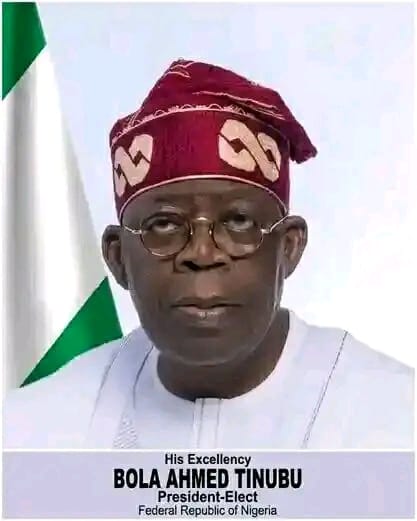
President Bola Ahmed Tinubu has assured Nigerians that the country’s refineries will return to operation, saying his administration is undertaking a comprehensive restructuring of the economics of the facilities to make them commercially viable and productive.
Tinubu gave the assurance on Thursday when he received the leadership of the Nigeria Union of Petroleum and Natural Gas Workers (NUPENG), led by its National Executive President, Comrade Salimon Akanni Oladiti, at the Presidential Villa in Abuja.
The President said his administration was not interested in refineries merely showing signs of activity without producing meaningful economic value.
According to him, the facilities must be commercially viable, profitable and capable of delivering the benefits for which they were established.
“The refineries you mentioned are going to come back to work. We’re just building a very firm reset and structural reworking of the economics of it. Ordinary flame and smoke from a refinery doesn’t mean that it’s working until it’s profitable and yields the value for which it was built,” Tinubu said.
The assurance comes amid renewed efforts by the Federal Government to expand Nigeria’s domestic refining capacity, strengthen the petroleum industry and reduce the country’s dependence on imported refined petroleum products.
Tinubu said he had accepted responsibility for fixing challenges inherited from previous administrations, stressing that his focus was on finding solutions rather than blaming his predecessors.
“I’m not a man who will look back and blame everyone, because I’ve accepted the assets and liabilities of my predecessors. No matter what happened in the past years, it’s my responsibility now as President to fix it and make it work for the greatest common good of our population. I take responsibility for that, and I’m going to do it,” he said.
The President also defended the removal of the petrol subsidy in May 2023, recalling the opposition the policy faced from sections of the labour movement.
Tinubu said the decision was necessary to redirect resources previously spent on subsidising petrol towards infrastructure, salaries and other areas of national development.
“We had threat of possible strike and something, and I served notice; you may strike all you want, but fuel subsidy will be gone. And today, to the benefit of our great country,” he said.
He added that the Federal Government would soon disclose how funds saved from the subsidy removal were being utilised.
“I will soon publish how it is being utilized,” Tinubu stated.
According to the President, the impact of the policy could already be seen in the ability of governments at different levels to meet their salary obligations and fund major infrastructure projects.
He cited the Lagos-Ibadan, Abuja-Kaduna, Abuja-Kano and Sokoto-Badagry highways as some of the projects benefiting from increased funding.
“Yes, the economy is not child’s play. It’s a system of financial re-engineering and reset that you impress, and I want to thank you for the cooperation, collaboration and understanding,” he said.
Tinubu added that increased funding for long-term infrastructure projects was ultimately aimed at improving the economy and the welfare of Nigerians.
The President also expressed concern that the benefits of Compressed Natural Gas (CNG) were not reaching ordinary Nigerians quickly enough.
The Federal Government has promoted CNG as an alternative fuel following the removal of the petrol subsidy, particularly because of its potential to reduce transportation costs.
Tinubu urged stakeholders in the petroleum and transport sectors to ensure that savings from CNG adoption were passed on to commuters.
“Equally, the introduction of compressed natural gas — well, I will appeal to you: we will do more and encourage you, but ask your drivers to let the benefits trickle down to commuters too, because whatever benefit is coming from CNG is going into the pockets of truck owners. It’s not spreading as fast as I would like, but it should spread,” he said.
Describing NUPENG as a critical stakeholder in the Nigerian economy, Tinubu acknowledged the difficulties involved in implementing major economic reforms in a democratic system.
“You occupy a very critical nerve of the economy of this country,” he told the union delegation.
The President said his administration remained committed to its reform agenda despite the challenges.
“It’s not easy to manage a democratic regime, full of twists and turns, hills and valleys. But through perseverance, endurance and good determination we can bring about relief — like the joy of a newborn baby after a difficult pregnancy. Motherhood is painful, but the joy is everlasting. I promise you, you will enjoy a better Nigeria,” he said.
The NUPENG president, Salimon Akanni Oladiti, appealed to Tinubu to intervene in what he described as the growing casualisation of workers in Nigeria’s oil and gas industry, particularly in the upstream sector.
Oladiti said the union had engaged some companies over the issue but had yet to achieve the desired outcome.
“Your Excellency, our relationship with the international oil companies and indigenous players in the upstream sector has been very cordial. However, we want to seize this opportunity to bring to your attention an unhealthy trend we have been trying to correct with little to no success. It is the casualisation of workers, particularly in the upstream sector,” he said.
He described the practice as unacceptable in a sector considered critical to Nigeria’s economy.
“For a sector that is strategic and taken as the economic jugular of the nation, NUPENG and its counterpart PENGASSAN have been tolerating these unwholesome practices, knowing full well the enormous disruption that any industrial action could cause to the economy,” Oladiti said.
He urged the President to use his office to address the issue and protect workers in the sector.
“We have engaged the management of some of the affected companies without results. Mr. President, we urge you to use your good offices to stop the casualisation of workers in our sector,” he said.
Oladiti, however, clarified that the union was not seeking confrontation with the Minister of Labour and Employment, Muhammad Maigari Dingyadi, whom he described as supportive of its activities.
NUPENG also urged the Federal Government to rehabilitate petroleum storage and distribution facilities across the country.
Oladiti commended the administration’s ongoing rehabilitation and dualisation of federal highways, saying improved road infrastructure would make the transportation of petroleum products safer and more efficient for tanker drivers.
He called on the government to extend its refinery rehabilitation programme to the depots operated by the Nigerian Pipelines and Storage Company.
“We’ve seen real progress in the rehabilitation of federal highways, making journeys safer for our tanker drivers,” Oladiti said.
The NUPENG president also commended the administration’s efforts to revive the Warri and Port Harcourt refineries through partnerships with Chinese firms.
“We also want to commend your administration’s move to revive the Warri and Port Harcourt refineries through partnership with Chinese firms. Your Excellency, we humbly request that the same energy and drive to inject life back into the refineries be extended to the decaying Nigerian Pipelines and Storage Company depots across the country,” he said.
The union recommended greater private-sector participation in managing the petroleum depots, arguing that private investors could help restore their operational efficiency.
“We strongly recommend they be handed over to private investors to manage under an equity arrangement,” Oladiti said.