
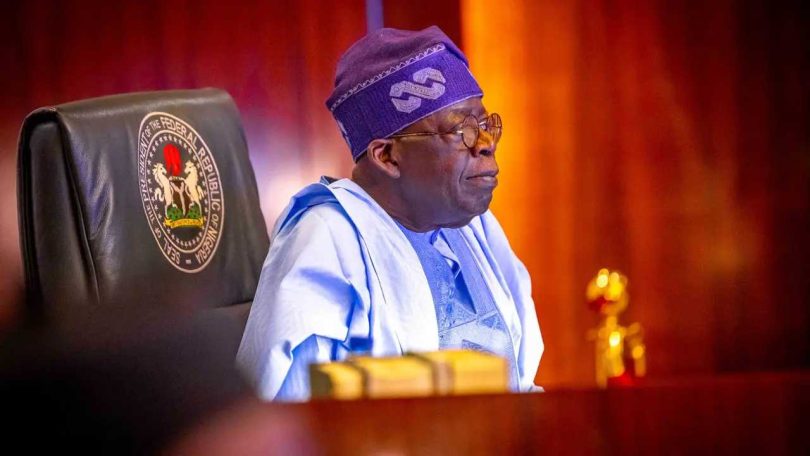
The leadership of the National Assembly on Tuesday held a meeting with President Bola Tinubu at the Presidential Villa in Abuja, just hours after both chambers resumed plenary following a short recess.
The Senate President Godswill Akpabio, Deputy Senate President Barau Jibrin, Senate Leader Opeyemi Bamidele, Speaker of the House of Representatives Tajudeen Abbas, Deputy Speaker Benjamin Kalu, and Imo State Governor Hope Uzodimma arrived at the forecourt of the State House around 3:30 p.m.
The officials left the Villa about 30 minutes later, around 4:00 p.m., without addressing journalists. As of the time this report was filed, the purpose of the meeting had not been disclosed.
Both chambers of the National Assembly had earlier reconvened at about 11:00 a.m. on Tuesday after postponing their initial resumption date of February 24. The delay was to allow committees conclude budget defence sessions with various ministries, departments, and agencies.
The meeting took place barely a week after President Tinubu hosted senators and members of the House of Representatives to separate Ramadan Iftar dinners, where he called on lawmakers to commence constitutional amendments aimed at establishing state police to address Nigeria’s security challenges.
During the Iftar with senators on Wednesday, February 25, Tinubu urged them to begin considering amendments that would allow the creation of state police.
“What I am asking for tonight is for you to start thinking about how best to amend the constitution to incorporate state police for us to secure our country, take over our forests from marauders, and free our children from fear,” the president said.
He made a similar appeal to members of the House of Representatives on Friday, February 27, stressing the need for constitutional safeguards to prevent potential abuse by state governors.
Earlier, on Monday, February 23, Tinubu had also hosted state governors for an Iftar dinner where he reiterated his commitment to establishing state police.
“What I promise you is not to be postponed. We will establish state police,” he said.
Meanwhile, Senate President Akpabio had earlier urged Nigerians to hold their elected representatives accountable and actively engage them on issues affecting their communities.
He made the call while addressing lawmakers at the resumption of plenary following the brief adjournment that enabled committees to undertake legislative assignments.
Akpabio described the Senate as a “workshop of solutions” rather than merely a platform for political debates, stressing that the chamber remained focused on addressing national challenges through deliberate policy actions.
“The Senate is not merely a theatre of debate; it is a workshop of solutions. Where social media magnifies the noise of the moment, the Senate addresses the substance of the problem. Where the digital arena stirs emotion, the legislative process pursues resolution,” he said.
“I, therefore, encourage Nigerians everywhere: engage your representatives. Bring your concerns to those whom you have entrusted with the responsibility of speaking on your behalf. For it is through the instrument of representation that grievances are transformed into policy and concerns into action.”
He further emphasised the importance of citizen participation in a democratic system, noting that lawmakers were elected to represent the interests and concerns of the people.
“We assemble once again in this Senate after our brief adjournment, which enabled our committees to carry out important legislative work. Yet we do so with the full knowledge that while legislatures may adjourn, the life of a nation never pauses.
“The burdens of governance do not take leave. The task of representation lies at the very heart of the democratic enterprise. Representation is not an abstraction written only in constitutional language. It is a living covenant between the people and those whom they elect to speak in their name,” he said.
Akpabio also acknowledged the growing influence of social media in shaping public discourse but maintained that legislative processes remained vital in translating public concerns into concrete policy decisions.
The former Akwa Ibom State governor further highlighted the significance of the national budget currently before the National Assembly, describing it as a major policy instrument that reflects the country’s development priorities and aspirations.
“Among the pressing matters before this chamber stands the national budget, that great ledger of national purpose in which the hopes of millions are translated into the language of public policy. A budget is more than figures on paper. It is a declaration of national intention.
“It tells our citizens where we choose to invest our energies, what priorities we pursue, and what future we seek to build,” he added.