
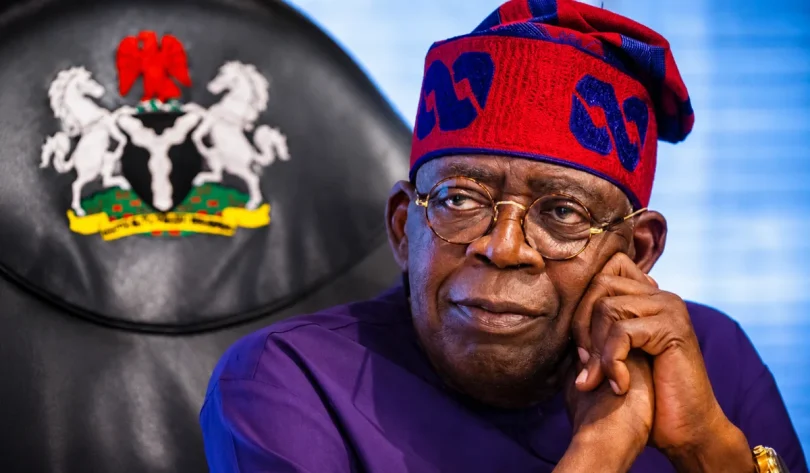
The lawmaker stated this on Channels Television’s Politics Today on Thursday.
Jibrin said the appointments demonstrated the president’s commitment to Kano and should encourage residents of the state to support his administration.
“He has done excellently well, and you know what, he has given Kano over 40, underline the word, 40 — political appointments, key appointments in the Federal Government. Why will Kano people not vote for him?” Jibrin said.
ALSO READ: 2027: Face Nigerians, defend your records — Obi challenges Tinubu, others
Several prominent Kano indigenes have been appointed to federal positions under the Tinubu administration, including Mariya Bunkure as Minister of State for the Federal Capital Territory, Yusuf Abdullahi Ata as Minister of State for Housing and Urban Development, former Kano State Governor Abdullahi Ganduje as Chairman of the Federal Airports Authority of Nigeria board, and former Kano State Deputy Governor Nasiru Gawuna as Chairman of the Federal Mortgage Bank of Nigeria.
However, the claim that the administration has made more than 40 such key appointments could not be independently confirmed from publicly available records.
Addressing concerns over the hardship faced by ordinary Nigerians, particularly the talakawa, Jibrin argued that inadequate communication had made it difficult for citizens to appreciate some of the Federal Government’s achievements.
He cited the completion of the Bichi railway station and activities at Aminu Kano Teaching Hospital as examples of projects and services that he said residents were only beginning to appreciate.
“I told you the last time when I was having a gathering, that people were shocked to hear that the Bichi station has been completed. They were shocked to hear the volume of occupants that were in Aminu Kano Teaching Hospital,” he said.
According to him, some beneficiaries of government services were unaware of the source of the interventions because adequate information had not reached them.
Jibrin also commended the Kano State Government for its infrastructure projects, particularly the construction of rural roads, schools and healthcare facilities across the state.
“They are seeing the roads, and particularly the governor in Kano, he’s also doing a lot of rural roads. Every local government is completing about five kilometres of road. He’s building classes, he’s renovating classes, he’s building health centres, he’s renovating existing health centres. He’s turned Kano to a construction site,” he said.
On persistent concerns about poverty and hunger, Jibrin acknowledged that the challenges remained serious but argued that they had affected Nigerians under successive administrations.
He said governments should be assessed based on their efforts to address the challenges rather than solely on whether poverty and hunger had been completely eliminated.
“Yesterday it was Buhari, people are hungry. The day before yesterday it was Jonathan, people are hungry. Before then it was Yar’Adua, people are hungry. Before then it was Obasanjo, people are hungry. Before then it was Abacha, people are hungry,” Jibrin said.
He maintained that successive governments had faced similar economic and social challenges, stressing the need to assess the current administration based on the measures it was taking to address them.