
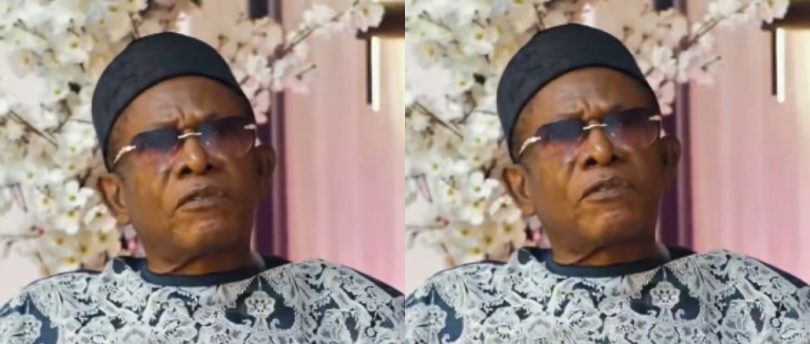
- Veteran actor Nkem Owoh, known as Osuofia, said Yoruba filmmakers helped introduce and popularise Nigeria’s home-video industry.
- He made the comment on comedian Bae U’s YouTube show, *Curiosity Made Me Ask*, while addressing claims that he said Yoruba people started Nollywood.
Veteran Nollywood actor Nkem Owoh, popularly known as Osuofia, has weighed in on the debate over the origins of Nigeria’s home-video industry, insisting that Yoruba filmmakers played a major role in introducing and popularising the format.
The actor made this known during an appearance on comedian Bae U’s YouTube programme, Curiosity Made Me Ask, where he was asked to clarify his alleged statement that the Yoruba people started Nollywood.
The discussion follows a controversy sparked by late actor Francis Duru in August 2026, when he highlighted the significant contributions of the Igbo community to the development of Nollywood, particularly during the commercial home-video boom of the 1990s and early 2000s.
Responding to the question, Owoh explained that Nollywood was not the name used when Nigerian filmmakers initially began producing movies. According to him, the name was adopted much later when industry stakeholders came together to establish a suitable identity for the growing film industry.
He said:
“First of all, you have given me this wrong accusation that I said, Yoruba started Nollywood. No. Yoruba started this film on…when did Nollywood come out? When we started the thing, there was no Nollywood as a name. We sat together and we’re branding, you know, ideas and all that, how the thing is going to come to fruition. And eventually, we chose Nollywood.”
The actor maintained that Yoruba filmmakers were responsible for making home-video productions widely popular in Nigeria. He also acknowledged the contributions of veteran filmmakers Hubert Ogunde and Adebayo, whom he described as people whose works he admired.
Speaking further, Owoh said:
“So, Yoruba started the thing. They made the thing very popular home video and all that. Yes, they did. And I’ve said it several. Ogunde and Adebayo Papa. These are the people I love to watch their thing.”
When Bae U jokingly suggested that Hubert Ogunde was Igbo, the veteran actor immediately disagreed, maintaining that the filmmaker was Yoruba.
“Ogunde is not Igbo. I’m telling you that Yoruba started it. When Ogunde was out, I don’t think there was any Igbo man who was that popular in that,” he added.
However, Owoh later clarified his position, distinguishing between the beginning of home-video productions and the emergence of Nollywood as an industry name.
“The Yoruba did not start Nollywood. They started Home video,” he clarified.
Historically, Yoruba travelling theatre practitioners played an important role in the early development of Nigerian entertainment, transitioning from stage performances to film and television productions. Among the notable pioneers was Hubert Ogunde, whose work helped shape the country’s early film and theatre industry.
The establishment of Western Nigeria Television (WNTV) in Ibadan in 1959 also marked a significant milestone in Nigeria’s broadcasting history.
Meanwhile, the commercial home-video industry experienced major growth during the 1990s, with Igbo filmmakers and businesspeople playing prominent roles in expanding the market.
The name Nollywood gained international recognition in 2002 after New York Times journalist Norimitsu Onishi used it in his September 16 report titled Step Aside, L.A. and Bombay, for Nollywood.
Owoh’s latest remarks have added another dimension to the longstanding discussion about the contributions of the Yoruba and Igbo communities to the history and growth of Nigeria’s film industry.
See post below: