
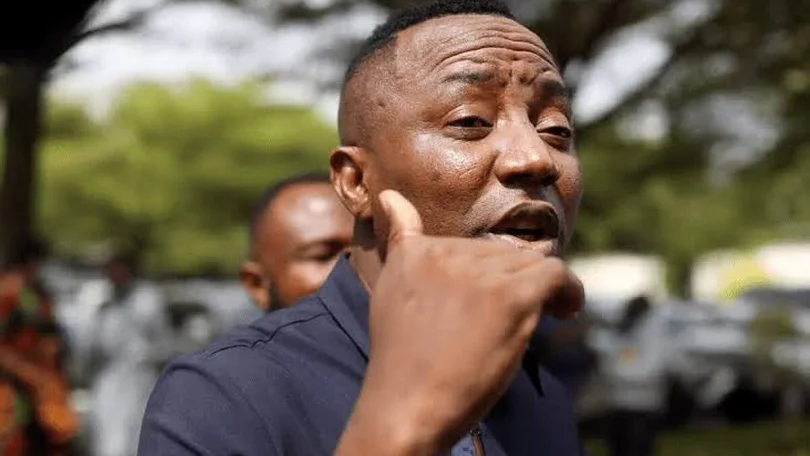
The presidential candidate of the African Action Congress (AAC) in the 2027 general elections, Omoyele Sowore, has demanded an apology from politicians who previously occupied public offices but defend policies that have worsened the hardship in the country.
Sowore made the demand on Monday at the ongoing Nigerian Bar Association (NBA) conference in Port Harcourt, Rivers State.
This was just as he challenged the records of vice presidential candidate of African Democratic Congress and ex-Minister of Transportation, Rotimi Amaechi, and the presidential candidate of Nigeria Democratic Congress (NDC), Peter Obi.
The AAC candidate said he had consistently opposed the removal of fuel subsidy, insisting that some politicians who now support the policy had only recently changed their positions.
“If there’s anyone who has been consistent about not removing our subsidies, it has been me. And it took Amaechi and his principal almost 10 years to catch up with me,” Sowore said.
He argued that the central issue in the subsidy debate should be who benefits from government intervention, rather than the claim that subsidy removal is solely intended to strengthen the economy.
According to him, the removal of petrol subsidy has disproportionately benefited governments through increased federal allocations, while ordinary Nigerians have continued to bear the consequences of higher transportation and living costs.
“The only people who are doing well since they removed subsidies are the governments of states,” he said.
Sowore recalled that successive administrations had announced subsidy removals over several decades with assurances that the measures would improve the economy, but argued that Nigerians were yet to see the promised benefits.
“I was a student in 1988. And in 1989, they removed subsidies. In 1990, they removed subsidies. They said Nigeria will be better.
“We are in 2026. They are still removing subsidies,” he added.
He also accused the administration of President Bola Tinubu of transferring the burden of its economic policies to ordinary citizens, saying, “They are robbing Peter Obi to pay for Bola Tinubu.”
Sowore maintained that the petrol subsidy had provided some relief to poorer Nigerians, arguing that the government had not offered similar support on other petroleum products such as kerosene and aviation fuel.
He urged Nigerians not to accept what he described as misleading explanations from politicians on the subsidy issue.
Turning to Amaechi, who participated in the conference discussions, Sowore said politicians who had previously served in government should account for their records before seeking fresh mandates.
He referenced Amaechi’s observation that, apart from himself and Adebayo, most of those seeking political power had previously held public offices.
“I love one thing that Amaechi said. He said, apart from Sowore and Adebayo, the rest of us have been in government and we have failed,” he said.
“There are no people coming back. You guys should be apologising to the Nigerian people.”
Sowore also linked the subsidy controversy to Nigeria’s transportation system, arguing that a functional and affordable rail network would have reduced the impact of higher petrol prices on citizens.
He criticised Amaechi’s record as transportation minister, particularly the railway projects executed during his tenure.
“We have a former governor, Rivers State, Amaechi, who built the railway line that went nowhere,” Sowore stated
.
“If that rail line was working, the subsidy would have been working for the people of Rivers State.”
He said the records of former public officials should remain central to discussions ahead of the 2027 elections, rather than allowing politicians to distance themselves from policies implemented while they were in government.
Sowore also took aim at Obi’s tenure as Anambra State governor, questioning his administration’s handling of education and industrial disputes involving public-sector workers.
“Peter Obi did not subsidise education in his state. Lecturers and doctors went on strike for 13 months,” he said.
“You may like him as a president, but he did not perform as a governor.”