
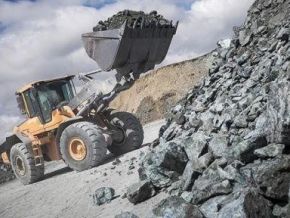
South Africa’s 2026 Industrial Development Strategy proposes linking preferential mining permit allocations to commitments on local processing of critical minerals.
The policy forms part of a broader effort to reverse industrial decline after South Africa lost its position as Africa’s largest manufacturing economy to Morocco in 2025.
Mining industry representatives warn that mandatory beneficiation requirements could discourage investment unless authorities also address structural challenges such as high electricity costs.
Last week, South Africa’s Department of Trade, Industry and Competition (dtic) published its 2026 Industrial Development Strategy, which proposes linking preferential mining permit allocations to commitments on local processing of critical minerals.
The proposal has already drawn criticism from the mining industry. The initiative comes as South Africa seeks to reverse a prolonged industrial decline that culminated in the loss of its position as Africa’s largest manufacturing economy to Morocco in 2025.
The strategy identifies South Africa’s gradual deindustrialization as a major challenge and proposes several measures to strengthen domestic value creation and diversify the economy. The document places significant emphasis on mineral processing. The targeted commodities range from chrome to critical minerals used in clean-energy technologies, including lithium, cobalt, platinum group metals, and rare earth elements.
The dtic plans to introduce mechanisms that accelerate investment in domestic processing capacity in coordination with the Department of Mineral and Petroleum Resources (DMPR).
South Africa’s approach mirrors policies already implemented elsewhere on the continent. Zimbabwe has pursued local lithium processing, while the Democratic Republic of Congo has promoted domestic cobalt value addition and Guinea has encouraged processing in its bauxite sector.
The timing carries particular significance. In May, the African Development Bank highlighted South Africa’s “steady decline in industrial competitiveness” in its Africa Industrialisation Index 2025. The institution linked that trend to the country’s loss of continental manufacturing leadership.
The strategy underscores the growing role that critical mineral beneficiation plays in African industrialization policies. The shift comes as analysts expect demand for most critical minerals to rise sharply, driven largely by the global energy transition. However, South Africa has yet to define the specific local-processing requirements it intends to impose on critical mineral projects.
Chrome remains an exception. Policymakers have already discussed targeted measures for the sector, including export taxes and export quotas. The lack of clarity has fueled concerns within the mining industry.
The Minerals Council South Africa, whose members account for roughly 90% of the value of the country’s annual mining production, expressed reservations in a note published on 9 June. The organization argued that incorporating local-processing obligations into mining permits could undermine future investment in affected sectors.
The council stated that policymakers should distinguish more clearly between mining production and mineral processing while introducing measures that actively support industrialization.
“Mining and processing are distinct economic sectors within the minerals value chain. Processing cannot and should not be imposed on mining because it forms an integral part of manufacturing and broader industrialization. Therefore, specific measures must be implemented to incentivize and attract investment to drive industrialization,” said Mzila Mthenjane, Chief Executive Officer of the Minerals Council.
The Minerals Council further illustrated its argument through the challenges facing South Africa’s chrome industry. The organization stated that deindustrialization in the sector does not stem from insufficient ore supply. Instead, it identified rising electricity costs as the primary constraint on domestic processing activities.
The example highlights a recurring debate across Africa’s industrialization agenda. Regulatory requirements alone may not sustain local processing industries if governments fail to create competitive industrial and economic conditions.
South African authorities will therefore need to clarify several aspects of the proposed policy if they choose to implement the strategy. For now, the document remains a policy proposal rather than binding legislation.
... South Africa Pushes Mineral Beneficiation as It Seeks Industrial Revival ... Naijaonpoint.