
Secrets Reporters
One of the fiercest federal recruitment exercises in Nigeria’s recent history has ended with an unexpected revelation that has once again thrown open allegations of influence peddling and cash-for-jobs in the nation’s public service. Checks by SecretsReporters reveal that what began as the announcement of successful candidates for the Nigeria Customs Service recruitment has now snowballed into a public exchange exposing the murky underbelly of how government jobs are allegedly secured through political connections and huge financial commitments.
The Nigeria Customs Service recently unveiled the final list of successful candidates for its 2024/2025 recruitment exercise after receiving an astonishing 573,680 applications, from which only 3,852 applicants eventually made the list. While announcing the outcome, the Comptroller-General of Customs, Adewale Adeniyi, maintained that recruitment into the Service remained completely free, warning Nigerians that anyone demanding money in exchange for employment was a criminal who should be reported to the appropriate authorities.
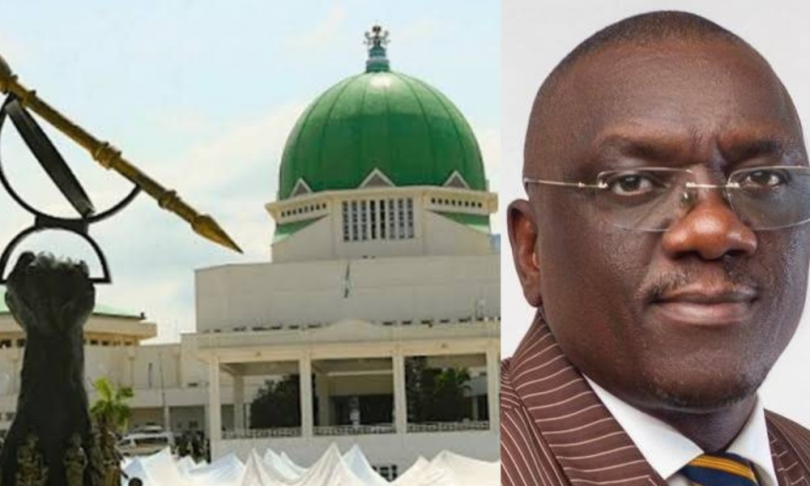
But barely days after that official assurance, a startling disclosure emerged from Delta State, where a member of the House of Representatives publicly explained why he allegedly committed two million naira on behalf of each constituent in a desperate effort to secure Customs employment slots that eventually slipped away from some of those he sponsored.
Hon. Benedict Etanabene, who represents the Okpe/Sapele/Uvwie Federal Constituency in the House of Representatives, had formally written to the Comptroller-General of the Nigeria Customs Service in a recommendation letter dated January 13, 2025, seeking employment opportunities for some of his constituents.
The letter, which was officially received and stamped by the Nigeria Customs Service on January 15, 2025, contained the names of twelve applicants alongside their individual application reference numbers. In the correspondence, Etanabene described each of them as people personally known to him, trustworthy, diligent and conscientious, before appealing to the Comptroller-General to kindly consider and approve their employment into the Service.
One of the names contained in the recommendation letter was Mayomi Efe Aaron. However, after the final recruitment list was released and it became obvious that Mayomi and some other recommended applicants had failed to make the cut, criticisms quickly followed.
Mayomi openly took to social media to appreciate Senator Ede Dafinone, who represents Delta Central Senatorial District, for standing solidly behind his supporters and ensuring that they secured employment in the Nigeria Customs Service. He further advised fellow Deltans to always follow “who know road” if they did not want to end up with regrets. The message was widely interpreted as a direct comparison between Dafinone’s apparent success and the inability of other political figures to deliver similar results.
Apparently unsettled by the criticism, Etanabene responded with a lengthy explanation. He questioned what offence he had committed to deserve being branded a deceiver, insisting that he honoured the request made to him by recommending the applicants and also committed millions of naira on behalf of each of them in pursuit of assistance.
According to him, many of those he backed successfully scaled the various stages of the recruitment exercise, including the aptitude tests, only for some of them to disappear from the final list. He said he was deeply disappointed both because of the financial commitment he allegedly made and because of his desire to see his constituents gain employment. He disclosed that he had already lodged complaints in the appropriate quarters and was awaiting a response, stressing that spending about two million naira on each applicant was no small sacrifice and that, in the end, he was the one who suffered the financial loss.
Etanabene further argued that failing to secure employment after successfully participating in the recruitment process did not amount to deceiving anyone. He then made an even more startling revelation by acknowledging that many lawmakers routinely purchase employment slots whenever genuine recruitment opportunities arise. Drawing from his personal experience, he said he had made similar efforts for applicants seeking jobs in the Nigerian National Petroleum Company, only for them to be informed after interviews that they failed to meet the required cut-off mark. He equally cited previous successful interventions he had made in helping constituents secure employment with the Federal Inland Revenue Service, the Nigeria Security and Civil Defence Corps, as well as facilitating scholarship opportunities.
He nevertheless maintained that occupying a seat in the National Assembly does not automatically translate into the power to obtain everything one requests from government.
The controversy is unfolding against the backdrop of long-standing allegations that recruitment into many federal government establishments is often shaped by political influence, patronage networks and unofficial financial arrangements rather than strict merit.
Several investigations conducted over the years have alleged that vacancies in ministries, departments and agencies are frequently distributed as unofficial employment slots to lawmakers, ministers, senior civil servants and other influential figures either before or alongside publicly advertised recruitment exercises.
Equally, numerous job seekers have repeatedly alleged being asked to part with amounts ranging from hundreds of thousands to several millions of naira by middlemen claiming to have access to these coveted employment slots. On different occasions, committees of the House of Representatives have received petitions and listened to testimonies detailing multi-million-naira recruitment rackets operating across government institutions.
Although the sale or purchase of public service appointments is prohibited under the Independent Corrupt Practices and Other Related Offences Commission Act and other extant laws, allegations surrounding cash-for-jobs continue to resurface almost every time major federal recruitment exercises are conducted.
In contrast, Senator Ede Dafinone has steadily built a reputation among many of his supporters for facilitating employment opportunities and career advancement for constituents across several federal agencies, including the Nigeria Customs Service, the Nigeria Immigration Service, the Nigeria Police Force, the Federal Inland Revenue Service and others. His supporters openly credit him with consistently delivering results where many other politicians appear to have failed.
For its part, the Nigeria Customs Service has continued to insist that the just-concluded recruitment exercise was transparent, rigorous and completely free, maintaining that every application underwent screening, computer-based examinations and verification using applicants’ National Identity records.
The Service has also announced a major policy shift, declaring that recruitment into the Nigeria Customs Service will now become an annual exercise rather than an occasional one, with another recruitment cycle expected to commence later in 2026.
Yet, beyond the official assurances lies a reality that many applicants say tells a different story. While Etanabene insists the alleged two-million-naira payments represented personal funds he committed in good faith to assist his constituents and which he ultimately lost, the controversy has once again exposed the sharp disconnect between official recruitment procedures and the experiences of many Nigerians desperately seeking federal employment.