
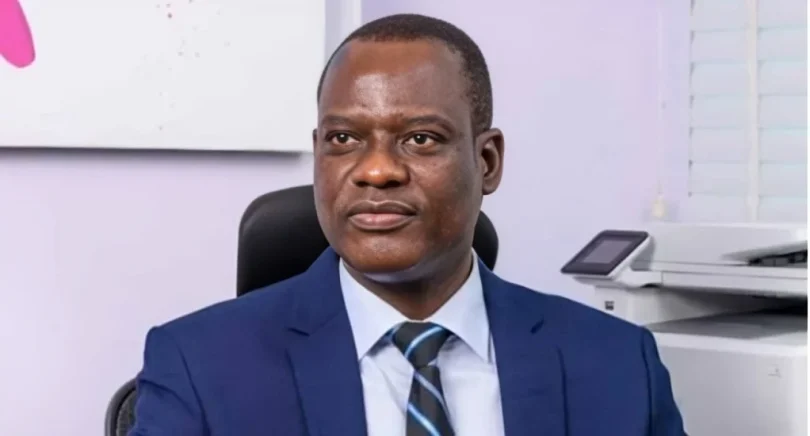
Following an attempt by the Minister of Finance and Coordinating Minister of the Economy, Mr Taiwo Oyedele, to explain how fuel and foreign exchange subsidy removal savings have been spent by the Federal Government, with a promise to publish details in a few days, Nigerians are calling for transparency.
Oyedele, while responding to a question by the World Bank Chief Economist and Senior Vice President, Indermit Gill, on how the government had utilised the savings from the subsidy removal at the just-concluded 7th African Emerging Markets Forum (EMF) hosted by the Central Bank of Nigeria (CBN), said the Federal Government used part of the savings to fund government spending. When the Nigerian government stopped printing money, part of the savings, according to him, was used for salaries when the minimum wage was moved from N30,000 to N70,000.
The other part, he said, was used to fund the Nigerian Education Loan Fund (NELFUND). Reacting, an entrepreneur in Lagos, Judith Peve, told Nigerian Tribune that “I am not convinced. What the Minister gave us wasn’t really an account of “how” the money was spent — it was a list of things government already does anyway.
“Debt servicing, salaries, and student loans are not new inventions created because of subsidy removal; they are standard federal obligations that existed long before Tinubu’s reforms. Saying subsidy savings “funded” them is like saying your salary “funded” your rent — of course it did, that is what income is for.
“What we actually asked for was a breakdown on how many trillions were saved, and a matching trillion-for-trillion account of where each naira went — not a general statement that the money went into “government spending.” Almost two years after the subsidy was removed”.
She said “as for the promise to publish details ‘in the coming days’, I will believe it when I see it — and even then, I will be watching closely. This government has made similar promises before around subsidy savings, Ways and Means, and CBN forensic audits, and many of them either never materialized or came out heavily filtered.
“My expectation is a report that is long on macro totals and short on itemized figures — clear naira-for-naira trail showing exactly which projects, states, or programmes got what, If they truly want to prove this wasn’t just political messaging, the report needs dates, figures, disbursement channels, and ideally third-party verification — not another press briefing dressed up as transparency” Peve stated.
From Port Harcourt, another entrepreneur, Mascot Ube, said “in a society where the political class earns way higher, I think it is embarrassing to come before the glare of the world to proudly say a minimum wage was reviewed and approved from 30,000 to 70,000 all because subsidy was scrabbled.
“Because in my view, that can be sorted without subsidy funding. And with the current hardship and realities on ground that figure is even meagre to be a minimum wage for a country like Nigeria. The hardship is even worse now more than ever with the removal.
“Now, lets say for a fact that the subsidy removal was what was crucial to do upon assumption of office I think channeling the savings to the fight of insurgency…. Banditry and kidnapping would have been applauded than other things mentioned that the money was used for.
“Trust comes with great responsibility, so is accountability and transparency. People have lost trust in the system over time due to how sensitive information on issues like this is dispensed to the public” he stated.
Also speaking to Tribune, Gift Uzor, from Enugu, noted that the major thing government lacks over time is accountability. “That is why citizens don’t trust them. They ought to have been transparency all the while but the Minister is only explaining how the money was spent because he was asked.
“If government was transparent enough people wouldn’t be in doubt of their intentions and actions. The Minister said, the subsidy money was used for government spendings but MDA’s are lamenting that they didn’t receive budget allocations and that has stifled a lot of projects.
“For about one month, the federal secretariat in Abuja had no power supply. Civil servants are lamenting yet that subsidy removal is been claimed to have been channeled into government spendings” she lamented.
She asked whether the details of these spendings are verifiable. “Anyone can just go put data together but what system of accountability and transparency do we have to give credibility to the data and information that the Minister will be sharing? ” Uzor questioned.
She said “looking at the economy today, looking at the grass root, looking at the buying power of Nigerians, I am not convinced on the judicious use of the money. My expectations for the details of the subsidy spending is honest accountability” Gift stated.
From Benue State, Samson Gemane said the reaction of Mr Taiwo Oyedele cannot be different from what any appointee of the President is expected to do. However, the Tinubu administration told Nigerians that the removal of subsidy was meant to address problems in the health sector, education, roads and other critical infrastructure.
“Assuming but not conceding, I will agree that the government have increased the wages of Civil Servants and given loans to students. These two categories represents less than 2% of Nigerians population and in my view can not be used as a tool to measure the success of subsidy removal considering the huge revenue accrued from it.
“The Minister’s statement is not absolute because an average Nigeria does not feel the impact especially where health workers are consistently on strike for lack of basic tools. The devaluation of naira has made things difficult for many families that even the take home of N7000 cannot take the workers home.
“One will expect that by the removal of subsidy, there will be more money to address key infrastructural issues which are supposed to be the key components of economic growth” he noted.
In Abuja, another entrepreneur, Rita Thomas, told Nigerian Tribune that, “personally I think that the money realized from subsidy removal was not spent properly.
“Not all people receive minimum wages and as such it didn’t benefit them. Even after salaries where increased, life became more difficult than it used to be, and that is due to fuel subsidy removal. A small business owner who moves his or her goods by road turns to pay more for their goods because of the financial effect of moving the goods by road.
“The consumers turn to suffer more because everything becomes very expensive. I expect the government to give a more detailed and comprehensive insight on how subsidy removal has benefited all Nigerians and how it will continue to make our lives better”
Abdul Ahmed, from Kaduna, said: “I hoped to see a verifiable detailed data of how much the Federal government had saved from the subsidy removal and how it has been spent.”
The World Bank Chief Economist and Senior Vice President, Indermit Gill, at the Forum, cautioned the government that not much help to the economy would come from outside, given the global economic situation, urging it to utilise every resource at its disposal to grow the nation’s economy.
He, however, assured Nigeria of the World Bank’s support even in difficult days.