
Naijaonpoint
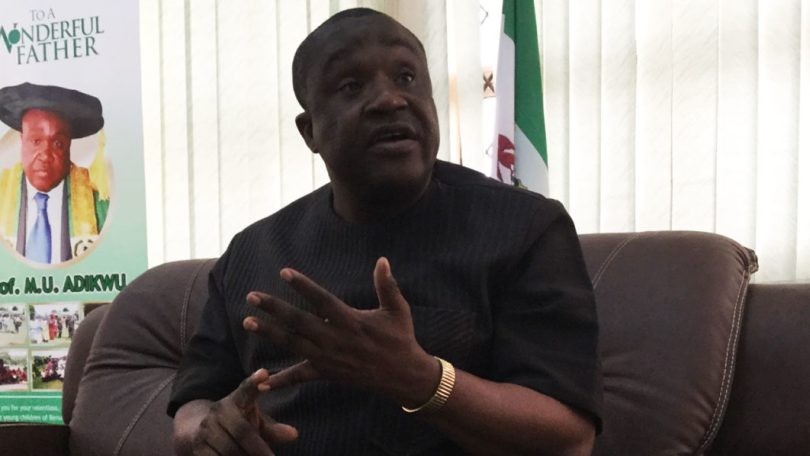
Prof. Michael Umale Adikwu’s tenure as Vice-Chancellor of the University of Abuja formally ended on 30 June 2019. Between July and December 2019, six months after that date, ₦7,493,436.00 was paid to him as salary.
The payment is the subject of a review finding against the University. Paragraphs 415 and 112(g) of the Financial Regulations 2009 apply, as does Public Service Rule 100222, which deals with sabbatical leave.
Management’s response to the review does not dispute the dates or the amount. It cites a basis for the payment instead: “This is a Governing Council approval and Regulations governing the Condition of Service for Principal Officers and Senior Staff. It is peculiar to Nigerian Universities for an outgoing Vice-Chancellor to be entitled to his salary and allowances and also be on sabbatical leave for one year after his tenure.”
The argument rests on sabbatical leave. But Public Service Rule 100222 is specific about who qualifies: sabbatical leave is available to career officers. Prof. Adikwu was a political appointee, not a career academic. He therefore did not fall within the provision management relied on to justify the payment.
That distinction is not a technicality. Sabbatical leave exists to allow career academics people who have built their professional lives inside the university system to step away for research and return to their substantive posts afterwards. The leave is tied to the post, not to the person. A Vice-Chancellor appointed from outside that career track has no substantive post to return to, and no sabbatical entitlement to draw on. Management’s own response describes the practice as “peculiar to Nigerian Universities,” which is precisely the problem: a local custom, however widespread, cannot create an entitlement that the Public Service Rule does not provide.
Management also leans on the fact that the payment was approved by the Governing Council. That approval explains how the money was released. It does not establish that the release was lawful. Governing Councils have authority over their institutions, but they cannot approve payments that the Financial Regulations and Public Service Rules prohibit. If council approval alone were sufficient, every irregular payment in the federal system could be legitimised by the same route. The review finding stands on the regulation, not on whether a council signed off.
There is also the question of precedent. Management frames the payment as standard practice, something “peculiar to Nigerian Universities.” If that is accurate, it describes a practice that has been allowed to continue across the university system without a lawful basis. If it is not accurate, then the University is defending the payment with a custom that does not exist. Either way, the ₦7,493,436.00 remains unexplained in regulatory terms.
The possible risk identified are waste of public and loss of public fund. Both describe the same outcome: ₦7,493,436.00 left the University’s accounts for a period during which the recipient no longer held the office that justified the salary. The money was spent, and it was spent without a lawful basis. In a university system that routinely pleads inadequate funding, six months of salary paid to a former Vice-Chancellor is not a small matter.
What remains is the question the review leaves open on what authority a six-month salary payment was made to a former Vice-Chancellor whose tenure had already ended.
Source: …Secretsreporters