
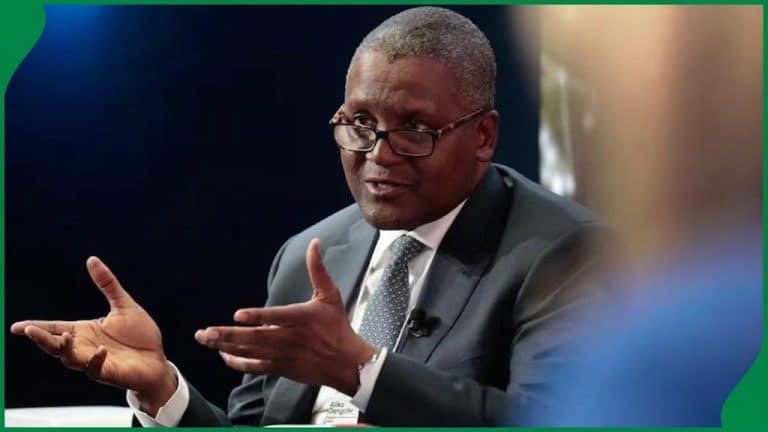
President of Dangote Group, Aliko Dangote, has explained why Nigerians should not expect a sharp reduction in petrol prices despite the expansion of local refining capacity.
Dangote said the price of petrol produced by his refinery remains influenced by the international crude oil market, noting that the facility purchases crude at prevailing market prices and, at times, pays significant premiums.
Speaking during an interview with Arise TV, the businessman said petrol was still more expensive in some neighbouring countries, a situation he linked to the continued smuggling of locally produced fuel across Nigeria’s borders.
He disclosed that his refinery bought crude oil for as much as $124 per barrel in May, stressing that the company could not indefinitely absorb the resulting cost difference.
“We can’t go now and subsidise everything,” Dangote said.
He, however, assured Nigerians that his refinery would continue supplying the domestic market and that there would be no shortage or queues from its operations.
Dangote: 30% Interest Rate Threatens Industrialisation
On Nigeria’s industrial development, Dangote identified high interest rates as a major obstacle to manufacturing and new investments.
He argued that it would be extremely difficult to industrialise the country when businesses face borrowing costs of around 30 per cent.
The billionaire businessman also expressed concern that current conditions in the downstream oil sector could discourage further investment in new refineries.
Dangote urged the government to create policies that protect productive domestic industries, arguing that local businesses generate employment, taxes and wider economic activity.
He warned that excessive dependence on imports could result in jobs being created abroad rather than in Nigeria.
The Dangote Group president also identified inconsistent government policies and inadequate electricity supply as major challenges confronting manufacturers.
“You cannot manufacture goods with diesel,” he said, stressing the need for more reliable and affordable power for Nigerian industries.