
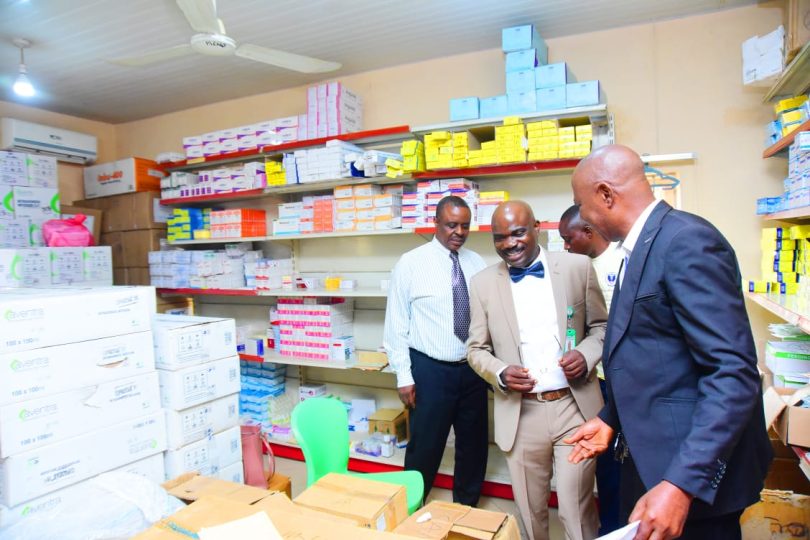
The Ondo State Government has unveiled a fresh healthcare reform agenda aimed at achieving medicines security, strengthening local pharmaceutical production, improving diagnostic capacity and expanding private-sector participation in the health sector.
The Senior Consultant on Pharmaceutical and Medical Investments to the state government, Dr Samuel Adekola, disclosed this during a familiarisation visit to the University of Medical Sciences Teaching Hospital (UNIMEDTH), Ondo.
Adekola said the reforms were designed to reposition the health sector for greater efficiency, innovation and sustainability through stronger institutional partnerships.
He disclosed that Governor Lucky Orimisan Aiyedatiwa had approved the establishment of the Ondo State Pharmaceutical and Life Sciences Hub to secure the state’s medicines supply chain, deepen local pharmaceutical manufacturing, stimulate biotechnology research and position the state as a regional hub for health innovation.
Describing the initiative as a deliberate policy intervention, Adekola said it represented an investment in both the state’s economic and health security.
He added that the governor had also approved the procurement of critical diagnostic equipment for healthcare facilities across the state.
According to him, the equipment would enhance diagnostic capacity, improve early disease detection, support clinical decision-making and ultimately improve patient outcomes.
Adekola identified UNIMEDTH as a critical institution in implementing the reforms, citing its clinical expertise, research capacity and operational experience.
He also called for closer collaboration between the teaching hospital and the Ondo State Drugs and Health Commodities Management Agency (OSDHCMA), describing the agency as the backbone of the state’s medicines security architecture.
He said the agency was responsible for ensuring quality, affordability and accountability in the procurement and distribution of drugs and health commodities.
“For us to eliminate stockouts, prevent circulation of substandard medicines, and maintain a transparent supply chain, UNIMEDTH must be fully aligned with the Agency’s systems and processes,” he said.
Adekola disclosed that OSDHCMA would soon evolve into a State Drugs and Health Commodities Distribution Centre, with a mandate to serve public and private health institutions within and outside the state.
He said comprehensive operational guidelines for the new framework were being developed, adding that the Commissioner for Health, Dr Banji Awolowo Ajaka, had given his concurrence for stakeholders, including UNIMEDTH, to participate in the process.
The consultant also announced an evidence-based nutrition model for in-patient care across the state.
He explained that the model would treat nutrition as a clinical intervention, with patients receiving meals tailored to their medical conditions, metabolic needs and recovery pathways.
According to him, the approach would improve treatment outcomes, reduce complications and shorten hospital stays.
Adekola said UNIMEDTH would lead the implementation and refinement of the initiative, while the state government would partner with the West Africa Society of Parenteral and Enteral Nutrition (WASPEN).
He further urged the management of UNIMEDTH to conduct a structured assessment of areas where public-private partnership (PPP) investments could be deployed.
He listed diagnostic services, imaging, specialised clinics, digital health infrastructure and biomedical engineering among areas that could benefit from private-sector investment.
Adekola said Governor Aiyedatiwa had demonstrated political will and strategic commitment to strengthening the state’s health sector, adding that Ondo was entering a new phase defined by reforms, partnerships and clear performance expectations.
Responding, the Chief Medical Director of UNIMEDTH, Prof. Michael Gbala, commended the state government for its efforts to improve the institution and the health sector over the past three years.
Gbala said the changes were noticeable, particularly in the return and availability of medical professionals within the state’s health system.
He, however, called for improved drug supply and better management of medicines to ensure that patients had access to essential and lifesaving drugs when needed.
The CMD urged health facilities to maintain adequate stocks of scarce but critical medicines, noting that some drugs might not be frequently required but could become lifesaving during emergencies.
Gbala specifically cited antivenom, stressing that health facilities must have it available because a snakebite victim could not afford to wait for the drug to be sourced before receiving treatment.