
By Chimezie Godfrey
An engineer and national development advocate, Ibiam Oguejiofo, has called for stronger local content policies, sustainable food production and investment in agro-processing to unlock Kogi State’s agricultural potential and create economic opportunities.
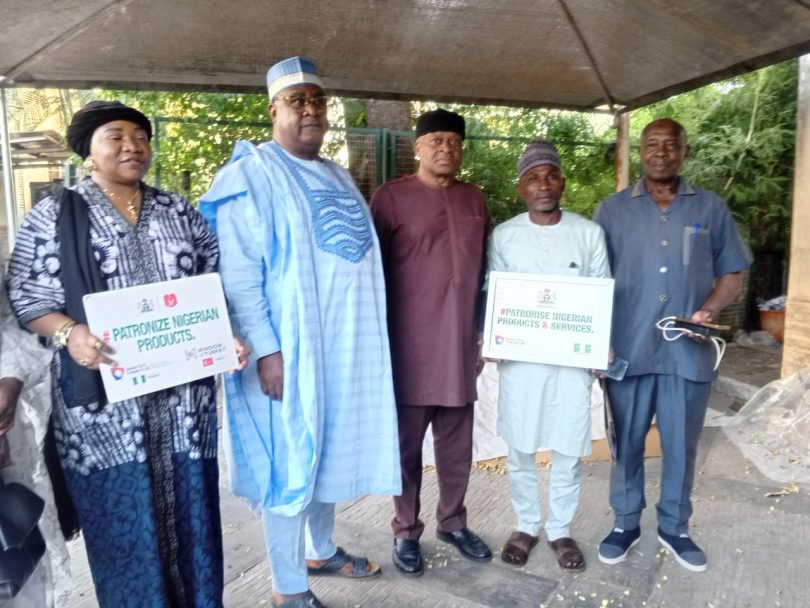
Oguejiofo, National Coordinator of SITOPEO-5, made the call while delivering a speech at the pre-event meeting for the Okene Farm Food and Trade Fair, held at the Exhibition Centre of Black Origin Export Company, Abuja, on November 19, 2026.
He said the proposed fair should go beyond the exhibition and sale of agricultural produce to become a platform for local economic development, wealth creation, employment generation and food security.
According to him, local content, organic food production and economic empowerment are interconnected priorities capable of contributing significantly to Nigeria’s economic transformation.
On local content, Oguejiofo urged Nigeria to move beyond the production of raw agricultural commodities to developing the capacity to process, package, distribute and market locally produced goods.
He explained that local content involved creating opportunities for Nigerians across the entire agricultural value chain, including farming, processing, packaging, transportation, marketing and financing.
“This approach is consistent with the Federal Government’s Nigeria First Policy and Presidential Executive Order No. 5, which promote the utilisation of Nigerian capacity, enterprises, professionals, goods, services, science, engineering and technology in national development,” he said.
He said the Okene Farm Food and Trade Fair should provide an opportunity to promote Nigerian agricultural products, encourage local sourcing, attract investment in agro-processing and strengthen markets for products from Kogi State and other parts of the country.
On organic food production, the engineer highlighted the need for environmentally responsible farming practices, including soil health protection, water conservation, biodiversity preservation and the responsible use of agricultural inputs.
He said organic agriculture could help farmers improve the value of their produce, access specialised markets and contribute to healthier food systems.
However, he cautioned against describing agricultural products as organic without meeting the required production standards and verification processes.
“However, we must understand that organic food production is not merely about describing agricultural produce as organic. It requires appropriate production practices, credible verification, traceability and compliance with recognised standards,” he said.
Oguejiofo identified Kogi State as having considerable potential to develop organic agriculture, citing its agricultural resources and diversity of farming activities.
He urged the state government to encourage sustainable farming practices, promote organic farming cooperatives, strengthen agricultural extension services and support facilities for sorting, grading, processing, packaging and storage.
He also called for greater economic empowerment through agriculture, insisting that farming should become a viable business capable of generating sustainable income and employment rather than remaining an occupation of necessity.
“For Kogi State, this is particularly important,” he said, adding that the state’s agricultural potential should translate into measurable economic benefits for its people.
He stressed the need to improve farmers’ earnings, expand opportunities for women in food processing and marketing, and encourage young people to embrace agriculture as a modern business driven by technology, innovation, mechanisation and access to finance.
Oguejiofo further advocated support for small and medium-sized enterprises, cooperatives and community-based businesses, describing them as important channels for ensuring that agricultural wealth circulates within local economies.
He cited cassava, rice, maize, yam and cashew as some of the commodities that could support community-based processing enterprises, create jobs, reduce post-harvest losses and increase farmers’ incomes.
He also called for investment in locally developed agricultural equipment, irrigation systems, storage facilities, processing technologies and packaging industries.
On the expected outcomes of the Okene Farm Food and Trade Fair, Oguejiofo urged the organisers to look beyond a one-off exhibition and establish lasting economic relationships among farmers, buyers, processors, distributors and investors.
He said the fair should promote locally produced agricultural goods, sustainable farming methods, indigenous technologies and locally manufactured equipment, while creating opportunities for women and young entrepreneurs.
He also advocated improved access to finance, technical support, training and modern agricultural technologies through partnerships involving government, private investors, financial institutions, research organisations and community-based enterprises.
The engineer urged the organisers to establish a follow-up mechanism to monitor business agreements, investment commitments, new enterprises, market linkages and employment opportunities generated by the fair.
“The real success of this initiative should not be measured only by the number of exhibitors or visitors, but by the economic opportunities and lasting partnerships it creates,” he said.
Oguejiofo said Kogi State had an opportunity to position agriculture as one of the strongest pillars of its economic development, urging stakeholders to work together to convert the state’s agricultural resources into measurable prosperity.
“We must produce locally, process locally, add value locally and create opportunities for our people. We must also ensure that the food we produce is safe, wholesome and cultivated through sustainable practices,” he said.
He urged the organisers to make the fair a platform for promoting the Nigeria First policy, strengthening local content, advancing sustainable agriculture, empowering women and young people, creating jobs and building a stronger agricultural economy.
Oguejiofo commended the organisers and stakeholders for the initiative and expressed hope that the forthcoming fair would deliver lasting benefits to Kogi State and Nigeria.