
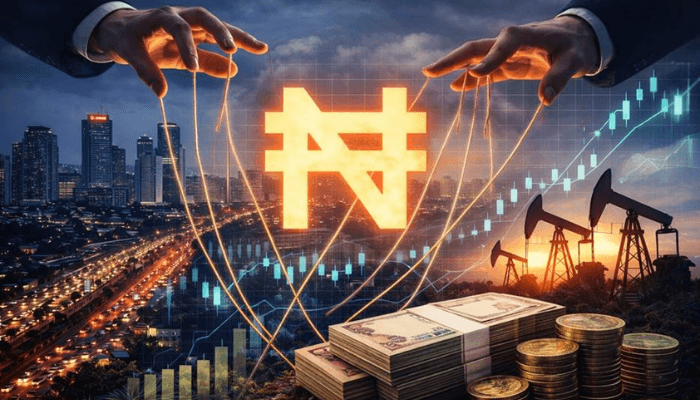
Nigeria is entering 2026 with inflation easing sharply, giving policymakers their clearest window in years to stabilise the economy and reset investor confidence. That window, however, is conditional: the slowdown in prices will persist only if oil revenues meet ambitious budget assumptions, fiscal discipline is maintained, and exchange-rate stability is preserved.
Headline inflation slowed for an eighth straight month to 14.45 percent in November 2025, down from more than 24 percent in March, according to official data. External reserves climbed to a seven-year high of about $47bn, while economic growth edged higher, with output expanding by 3.98 percent in the third quarter of 2025. The gains have eased immediate macro pressure, but they remain vulnerable to policy slippage or external shocks.
A budget built on tight assumptions
The improvement has shaped the government’s 2026 budget, which aims to lock in macro stability under tight assumptions. The spending plan is built on an oil price of $64.85 a barrel, production of 1.84m barrels a day, and an exchange rate of N1,400 to the dollar. On those assumptions, gross oil revenue could reach about N61tn, other things being equal, according to BusinessDay computation. Any shortfall in output, prices or revenue collection would quickly test the durability of the disinflation trend.
Read also: Nigerians earning between N30,000-N100,000 most affected by inflation in December – CBN
The Central Bank of Nigeria says the stabilisation should continue. It projects real GDP growth of 4.49 percent in 2026, with inflation easing further to around 13 percent, helped by tight monetary policy and improved supply conditions.
For investors and banks, the message is clear: inflation is no longer the dominant risk it was a year ago. Lower price pressures should ease the squeeze on households, stabilise company balance sheets and gradually reduce credit risk. It also opens room for domestic asset prices, especially fixed income to adjust after years of inflation-driven volatility.
Why the calm may not last
But the calm comes with limits.
Nigeria’s disinflation has not been driven by strong productivity gains or a surge in investment. Instead, it reflects a mix of tight financial conditions, favourable base effects and some easing in food and energy prices. That makes the next phase more fragile.
“The progress on inflation is real, but it is still vulnerable to shocks,” the IMF said in its latest Nigeria assessment, warning that supply disruptions or fiscal slippage could quickly reverse the gains.
Debt pressure and banking implications
The 2026 budget underlines that risk. Total spending is projected at N58.2tn, with N15.5tn set aside for debt servicing, a figure that exceeds combined capital spending on infrastructure, education and health. The deficit, estimated at 4.28 percent of GDP, implies continued borrowing.
For banks, this means government securities will remain central to balance sheets, anchoring liquidity and yields even as inflation slows. Private-sector credit expansion, while improving, is likely to remain selective.
Read also: Markets bet on prolonged tight policy as CBN defends inflation, naira
Oil remains the swing factor
Oil is the biggest uncertainty. The budget’s production target of 1.84m barrels a day is well above Nigeria’s recent performance. Output averaged closer to 1.5m barrels a day in 2025, according to industry data.
Scenario analysis shows how sensitive the outlook is. At 80 percent of the production target, oil revenue would fall to about N48.8tn; at 60 percent, it drops to roughly N36.6tn. A 20 percent decline in oil prices would reduce revenues further.
“That gap between assumptions and reality is where fiscal stress can re-emerge,” said Bismarck Rewane, chief executive of Financial Derivatives Company. “The risk is not today’s inflation number, but whether revenues hold up if oil underperforms.”
The government is trying to reduce that exposure. It has stepped up digitisation of revenue collection, tightened remittances from state-owned enterprises and leaned more heavily on non-oil taxes. According to the World Bank, improved tax administration rather than higher rates has already lifted non-oil revenues.
There are also early signs of a more balanced growth model. Capital allocations prioritise security, infrastructure, education and health, sectors that could crowd in private investment if execution improves. Agriculture stands out as a potential disinflation anchor, with investment in storage and processing helping to reduce food price swings that have driven inflation in recent years.
For foreign investors, easing inflation, strong reserves and a more predictable exchange-rate framework lower macro risk, even if they do not eliminate it. For Nigerian banks, the challenge in 2026 will be moving from defensive balance-sheet positioning to carefully priced lending, without assuming that macro stability alone guarantees repayment.
“Nigeria has bought itself some breathing room,” said Yemi Kale, Group Chief Economist at the African Export Import Bank. “What matters now is whether that stability is converted into productivity and revenue, not just better numbers.”
Nigeria’s reset is real, but incomplete. Disinflation offers a dividend, not a cure. The payoff in 2026 will depend on disciplined policy, realistic oil outcomes and whether capital spending finally translates into growth that can sustain itself. Stability, for now, is an opening, not an outcome.