
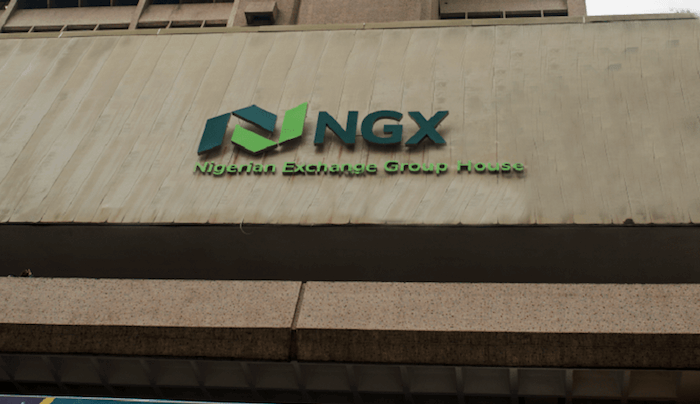
Nigeria’s equity market has surged to a historic high, but beneath the headline N129 trillion valuation lies a growing imbalance that is reshaping how capital flows across the Exchange.
The Nigerian Exchange’s All-Share Index crossed the 200,000-point mark for the first time, closing at 201,156.86 points with a YTD return of 29.27 percent. This is an indicator of strong investor appetite. Yet this rally is increasingly driven by a narrow band of large-cap stocks, raising concerns about market depth and sustainability.
At the centre of this surge is a cluster of heavyweight companies, collectively referred to as stocks worth over one trillion naira (SWOOT), that dominate market capitalisation. Ten of such firms collectively account for about 61 percent of the exchange’s total value, leaving over 140 listed companies competing for a shrinking share of investor attention.
Telecommunications giant MTN Nigeria remains the most valuable listed company at N15.9 trillion, contributing 12.3 percent of total market capitalisation. It is followed by BUA Foods at N14.4 trillion and Dangote Cement at N13.7 trillion.
A notable shift occurred on March 16, 2026, when BUA Cement hit the N10 trillion (N11.1 trillion as at March 23, 2026) mark after gaining the maximum daily limit, overtaking Airtel Africa, which now stands at N8.53 trillion. The top four firms alone account for roughly N54 trillion in market value, underscoring the outsized influence of a handful of tickers.
Read also: NGX-ASI crosses historic 200,000 mark
This concentration has effectively created a dichotomous market structure, where gains in a few large-cap stocks can lift the entire index, even as the majority of the listed companies record minimal activity. What this means is that the broader market performance no longer reflects a uniform improvement in corporate fundamentals.
Trading data reinforces this divergence. On the day the index crossed the 200,000-point threshold, about 948.1 million shares valued at N49.15 billion were exchanged; yet activity remained concentrated in a handful of banking and blue-chip stocks. Historical trends show a similar pattern, with the average daily value traded at N23.76 billion in 2025, while dozens of equities frequently record no price movement.
In some trading sessions, as many as 57 stocks remain unchanged, highlighting what market participants will describe as a liquidity gap in mid- and small-cap equities. These stocks, often backed by solid fundamentals, face limited institutional participation, making it difficult for investors to enter or exit positions without affecting prices.
The ongoing banking sector recapitalisation has further intensified this concentration. With one week left before the March 31 deadline set by the Central Bank of Nigeria, major lenders have raised significant capital, drawing liquidity toward financial stocks.
Guaranty Trust Holding Company, Access Holdings, and Zenith Bank have collectively listed hundreds of billions of naira in fresh equity, becoming some of the most actively traded counters on the exchange. In total, about N2.25 trillion has been raised and listed by leading banks during the recapitalisation cycle.
While this wave of capital raising reflects strong domestic investor capacity, it has also redirected liquidity away from other sectors. Oil and gas stocks, for instance, have struggled to gain traction, while the power sector continues to attract limited market participation.
The result is a market where capital is increasingly recycled within a narrow group of large, liquid stocks, leaving the rest of the exchange relatively stagnant. This creates a valuation paradox for many mid-cap companies that grapple with strong earnings potential but weak price discovery due to thin trading volumes.
As the market heads into the second quarter of 2026, the sustainability of the current rally will depend on whether liquidity broadens beyond the dominant names. Without improved market-making, deeper institutional participation, and incentives for wider sectoral investment, the current expansion risks becoming a concentrated upswing rather than a broad-based market development.
Until liquidity improves across the board, Nigeria’s equity market will continue to be defined less by its breadth and more by the weight of its biggest stocks.
The N129 trillion milestone could therefore be a sign of growing investor confidence at the top end of the market but also a reminder that much of the exchange remains thinly traded, reflecting both progress and fragility.