
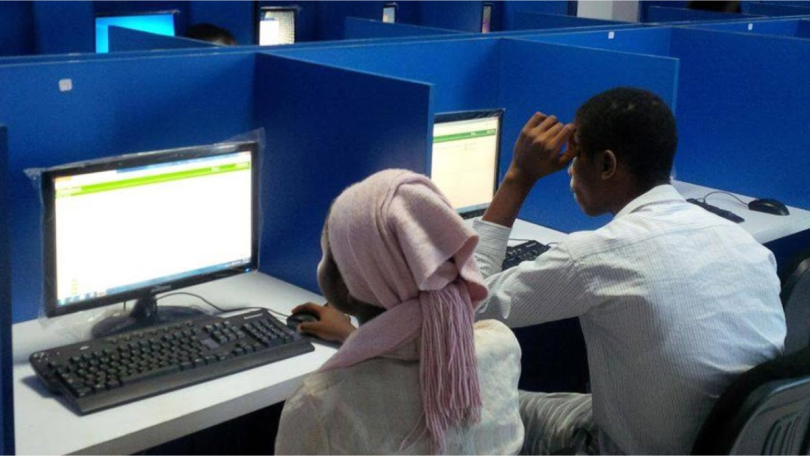
Education stakeholders in Kogi, Nasarawa and Niger have expressed optimism that the planned adoption of computer-based testing by the West African Examinations Council (WAEC) and the National Examinations Council will significantly reduce examination malpractice and the activities of so-called ‘miracle centres’.
The stakeholders, however, cautioned that CBT alone might not completely eradicate examination malpractice, stressing the need to address poor learning environments, inadequate teaching personnel, poor student preparation, parental pressure and infrastructural deficiencies.
They spoke in separate interviews on Monday during a survey on the activities of examination ‘miracle centres’ and the possible impact of CBT on exam malpractice.
A ‘miracle centre’ is regarded as an exam centre where candidates are assisted through fraudulent means to obtain high grades in public examinations.
In Kogi, Stephen Ojapa, principal of Government Science Secondary School, Lokoja, said the location of some schools, overcrowded classrooms, inadequate teaching personnel and pressure to produce good results could contribute to the emergence of miracle centres.
Mr Ojapa said schools located far from urban centres were particularly vulnerable due to difficulties associated with effective monitoring.
He said some school proprietors and principals believed that impressive examination results would attract more students, while some parents pressured schools to ensure that their wards passed examinations at all costs.
Mr Ojapa said some teachers could also become involved when money contributed by candidates for examination malpractice was shared among supervisors and teachers. He, however, said his school regularly sensitised students on the dangers and consequences of examination malpractice through seminars and classroom discussions.
The principal expressed optimism that CBT would reduce malpractice but identified electricity supply, inadequate computers, and a shortage of computer-skilled workforce as potential challenges.
Mr Ojapa suggested using solar power to support CBT centres, especially large schools that could serve as examination centres.
A parent, Ramat Ahmed, said the cost of registration, recommendations from relatives and friends and fear of failure could influence some parents to register their children at miracle centres.
She said some parents prioritised examination results over integrity because they feared that poor grades could limit their children’s future opportunities.
Ms Ahmed said CBT could reduce some forms of examination malpractice but would not eliminate the problem. She urged parents to teach their children that honesty was more important than high grades, lead by example and encourage them to seek assistance when they encountered difficulties in their studies.
Emmanuel Adebolawe, a student, said inadequate preparation, laziness and societal influence were among factors encouraging students to patronise miracle centres.
Mr Adebolawe said he had once been encouraged to register at a miracle centre but declined, adding that the widespread activities of such centres had affected some students’ belief in their ability to pass examinations through hard work. He said CBT, particularly the system used by the Joint Admissions and Matriculation Board (JAMB), could help reduce malpractice by testing candidates’ individual abilities.
He, however, identified inadequate time, system failures and examination anxiety as possible challenges, and urged students to be consistent, persistent and hardworking.
Similarly, Aruwa Enyo-Ojo, who recently completed Senior Secondary II, said some students patronised miracle centres because they regarded them as an easy means of passing examinations without putting in the required effort.
Ms Enyo-Ojo described CBT as a technologically advanced approach to examinations but expressed concern over power outages and inadequate computer facilities.
Fatima Ahmed, another education stakeholder, identified parental influence, poor preparation, inadequate teaching, overcrowded classrooms and poor study habits as factors sustaining examination malpractice.
She also cited the misuse of smartphones, messaging applications, hidden earpieces and social media as means through which candidates could share answers during examinations.
Ms Ahmed said miracle centres had survived because of the demand for guaranteed examination success, with some students and parents willing to pay for high grades.
She warned that examination malpractice could produce graduates whose certificates did not reflect their actual knowledge and skills, reduce public confidence in examination results and discourage hard-working students.
She advocated that CBT should be complemented with biometric verification, CCTV surveillance, restrictions on external devices and internet access, improved teacher training and provision of adequate learning materials.
An official of an examination body, who requested anonymity, described miracle centres as schools primarily interested in helping candidates pass examinations through fraudulent means rather than merit.
He said schools found engaging in malpractice faced sanctions ranging from fines to blacklisting, which could prevent them from presenting candidates for external examinations for between three and five years.
The official said CBT would significantly reduce malpractice because candidates would access questions simultaneously, making it more difficult to leak questions or smuggle answer scripts out of examination halls.
He, however, identified poor electricity supply, inadequate computer literacy among some candidates and insufficient computer facilities as major obstacles to the full implementation of CBT.
A long-serving WAEC examiner and team leader, who also requested anonymity, said methods used in miracle centres included teachers writing answers on boards, the use of mobile phones and AI, and access to examination questions before scheduled dates.
The examiner attributed the persistence of malpractice to parental pressure, schools’ desire to maintain high pass rates, poor study habits and the involvement of some examination officials.
He advocated wider deployment of CBT, CCTV surveillance, reduced involvement of schools in examination administration and the use of multiple versions of examination questions.