
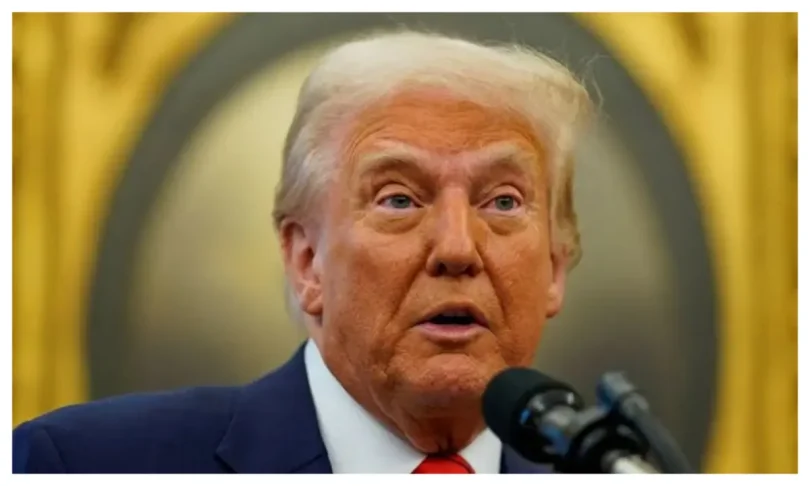
United States President, Donald Trump has expressed optimism that a comprehensive peace agreement in the Middle East could be finalised within days, following a temporary halt in hostilities between Iran and Israel.
Speaking to journalists upon his return to Washington on Tuesday, Trump described ongoing diplomatic efforts as being in their concluding phase, saying negotiators were making significant progress toward a broader settlement aimed at ending months of regional instability.
According to the US president, recent exchanges between Tehran and Tel Aviv had subsided after both sides agreed to suspend further military actions, creating room for negotiations to advance.
“We are very close to reaching a good agreement,” Trump said, adding that discussions could be concluded within “two or three days” if current momentum is maintained.
Despite the optimism from Washington, major issues remain unresolved. Iranian authorities have repeatedly maintained that any lasting agreement must address the conflict in Lebanon, where Israeli forces continue military operations against Hezbollah, the Iran-backed militant group.
The latest diplomatic push followed a brief exchange of missiles between Iran and Israel at the weekend. Although neither side reported casualties from the attacks, the incident showcases the fragile nature of the existing ceasefire.
Tehran warned that it would retaliate if Israeli military actions continued, while Israeli Prime Minister Benjamin Netanyahu insisted that his country would respond forcefully to any future attacks.
Israeli Defence Minister Israel Katz also signalled that military operations in Lebanon would continue, stating that Israeli forces would target Hezbollah positions whenever threats emerged from the group’s strongholds.
Reports from Washington indicate that Trump personally intervened to prevent a wider military escalation, urging Israeli leaders to exercise restraint while negotiations remain ongoing.
US Vice President JD Vance acknowledged that while the United States and Israel maintain a strong strategic alliance, both countries do not always share identical policy objectives regarding regional security matters.
Meanwhile, violence persisted in southern Lebanon, where health officials reported multiple fatalities following fresh airstrikes.
The Israeli military said its operations were aimed at neutralising threats posed by Hezbollah fighters.
In Tehran, daily life appeared to be gradually returning to normal despite lingering uncertainty. Businesses reopened, public spaces remained active, and flights resumed at the country’s main international airport after temporary disruptions caused by recent military exchanges.
The conflict has also continued to affect global energy markets. Shipping activities through the Strait of Hormuz remain under pressure, while concerns over supply disruptions have contributed to fluctuations in international oil prices.
Diplomatic mediation efforts led by Pakistan remain active, with both Tehran and Washington signalling willingness to continue discussions despite recurring setbacks.
Iranian President Masoud Pezeshkian reaffirmed his country’s commitment to dialogue, stating that Tehran remains engaged in negotiations aimed at achieving a political resolution to the crisis.