
As foreign capital continues to pull back from Nigeria, local investors are quietly stepping forward. The shift is changing how private equity and long-term capital flow across the country.
Currency devaluation, macroeconomic volatility and global risk repricing have made Nigeria a tougher sell for foreign limited partners (LPs). Many have chosen to pause new investments. Others are simply seeking to exit.
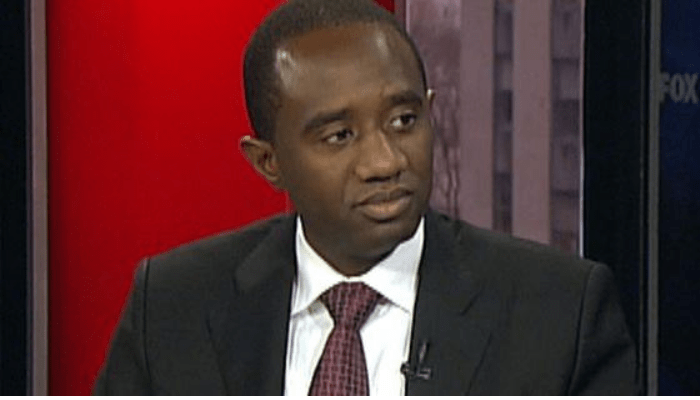
Speaking at the PwC–BusinessDay Executive Roundtable on Nigeria’s 2026 Budget and Economic Outlook, Danladi Verheijen, managing director of Verod Capital, said Nigerian investors are now driving private equity investments across the country, following the pullout of foreign LPs.
“What we’re seeing globally is that commercial investors have largely disappeared,” Verheijen said. “The capital is no longer incremental.”
According to him, foreign investors are under pressure at home. Many are sitting on portfolios eroded by currency losses. In some cases, only a handful of funds still hold cash positions. “None of us would accept that in our private portfolios,” he said. “But that’s the reality because of devaluation.”
With alternatives available in markets such as India, Vietnam and Pakistan, foreign capital is being redeployed. Africa, for now, is perceived as too expensive and too risky. “They just want their capital back,” Verheijen added.
Read also: We spent a year stabilising what Shell left behind – Renaissance CEO
Yet the picture looks different in local currency terms. Despite the turbulence, Nigerian fund managers have delivered stronger-than-expected outcomes. “In naira terms, fund managers have done quite well,” Verheijen said, noting that many portfolios have outperformed domestic securities.
As foreign LPs stay on the sidelines, local investors are beginning to fill the gap. Driven by regulation, constrained liquidity and necessity, domestic capital is learning to adapt. “Local investors are now figuring it out,” Verheijen said.
This transition, however, has come with a sharper investment lens. Private equity firms are becoming more selective. “We’re not investing in an index. We’re not investing in the country,” he said. “The macro affects everything.”
Instead, firms are narrowing their focus to businesses that can survive prolonged economic pressure. These include non-discretionary and counter-cyclical sectors. Sectors where demand is resilient. Sectors where companies can pass on price increases during periods of devaluation, or benefit from a natural foreign exchange edge.
“The bar is a lot higher now,” Verheijen said. “As an industry, we have to get back to real returns.”
Value creation, he explained, depends less on financial engineering and more on execution. Private equity firms are not running these businesses day-to-day. That makes leadership critical. “It’s even more important to invest in the right operators,” he said.
Read also: Seven key issues that will shape the economy in 2026 – PWC
The philosophy is simple. “It’s better to invest in an A team in a B business than a B team in an A business.”
Verheijen noted that Verod Capital continues to focus primarily on consumer-facing sectors, an area where it has built experience over 17 years. Healthcare remains a key theme. Other sectors, while attractive, fall outside the firm’s capability set. “There are opportunities in upstream, commodities, critical minerals and real estate,” Verheijen said. “But we don’t invest in what we can’t properly evaluate.”
Similar trend in the energy sector
A similar pattern is emerging in Nigeria’s energy sector.
Tony Attah, managing director of Renaissance Africa Energy Consortium, a fellow panelist during the session, highlighted that Nigerian independents are increasingly stepping into assets previously owned by international oil companies. “Nigerian independents are stepping into these assets instead of international independents, which is what is obtainable in other climes,” he said.
Attah contrasted their new approach with the old extractive model. “Shell was purely extractive,” he said. “However, Renaissance has a vision of providing more value for Nigerians.” He also noted that Renaissance has a vision to become the African leader in energy.
That vision, he explained, is anchored on integration and long-term energy security. Before conversations around energy transition can gain traction, Africa must first solve its energy access challenge. “We need to focus on energy security for Africa,” Attah said.
Together, the insights from the panel point to a broader reset underway. As foreign capital retreats, local investors are assuming greater responsibility. They bring deeper market knowledge. They also bring longer time horizons.
While macroeconomic risks remain, industry leaders say this shift could strengthen Nigeria’s investment ecosystem, one built less on hot money, and more on patient, homegrown capital.