
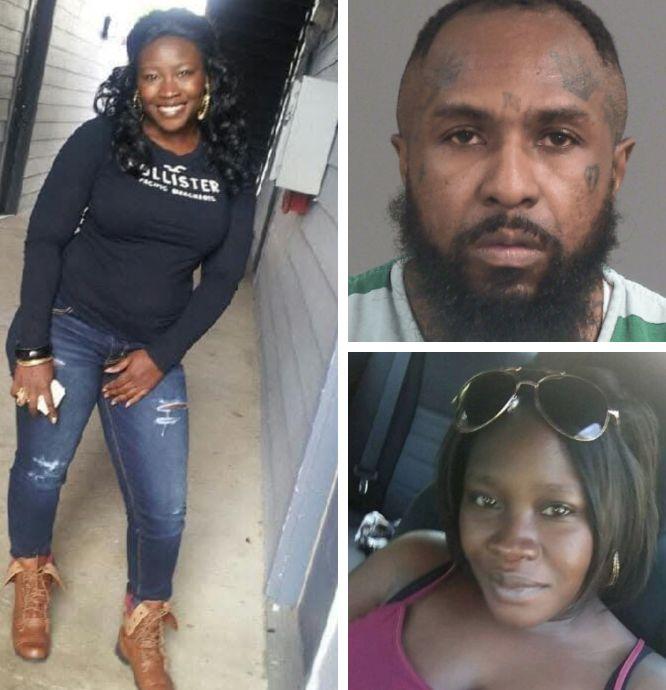
Forty-two-year-old Harry Capers III is currently in custody at the Al Cannon Detention Center, facing charges of murder, desecration of human remains, and possession of a weapon during a violent crime. These charges follow the discovery of his wife, Adrean Sade Capers, whose remains were recovered from a septic tank on property owned by the suspect’s father on June 11, 2026—six years after she was first reported missing.
Adrean Capers vanished in 2020 following a volatile argument with her husband. While the investigation spanned years and multiple jurisdictions—shifting from North Charleston to Summerville and eventually landing with the Charleston County Sheriff’s Office in April 2026—it took until the deployment of a cadaver dog to finally expose the gruesome reality of her fate. The Charleston County Coroner’s Office eventually confirmed her identity through dental records and preserved markings on her remains.
The timeline of this case exposes a chilling pattern of evasion and, quite frankly, a system that took far too long to connect the dots. For six years, Harry Capers III treated the country like his personal playground, drifting through Texas, California, Florida, and Georgia while his wife’s body lay rotting in a septic tank. That he was finally apprehended in Gwinnett County, Georgia, only after getting entangled in separate fraud and theft charges, serves as a grim reminder that justice often waits on the sidelines until a perpetrator makes a clumsy mistake elsewhere.
There is a sickening irony in the fact that the victim’s final resting place was on property owned by the suspect’s own family. It suggests either a horrific degree of complicity or a level of domestic concealment so brazen that it allowed a murderer to walk free for over half a decade. Six years of silence is not just an investigative hurdle; it is a lifetime of uncertainty for a family denied the truth.
This case is a stark indictment of the gaps in inter-agency cooperation. The fact that the case had to be passed like a hot potato between North Charleston and Summerville before the Sheriff’s Office finally took the helm in 2026 speaks to a bureaucratic sluggishness that failed a woman who likely lost her life in 2020. While the authorities are now moving forward with the prosecution, the “system” cannot pat itself on the back. A wife is dead, her body was discarded like refuse in a tank, and her killer spent years fleeing across state lines before the law finally caught up. This isn’t just a crime story; it is a story of how easily a person can vanish while the wheels of justice grind agonizingly slow.