
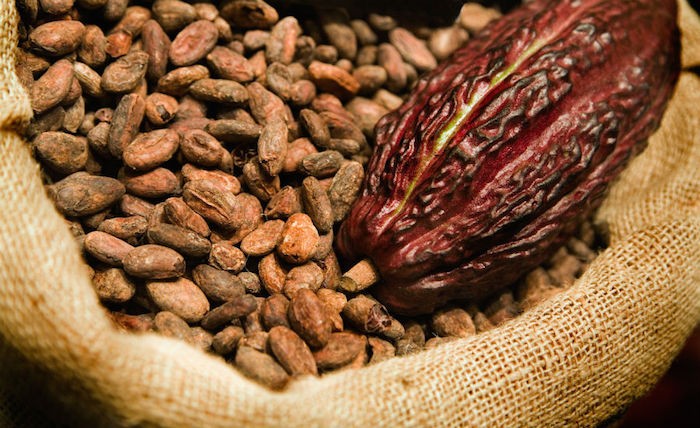
Sunbeth Global Concepts is positioning itself at the centre of Nigeria’s cocoa resurgence, scaling rapidly at a time when global supply is struggling to keep up with demand.
The 10-year-old agro-exporter has expanded its export capacity from just 200 metric tonnes to more than 200,000 tonnes of cocoa and other commodities, building a network of over 250 buying agents across Nigeria’s key producing belts.
Read also: Sunbeth goes big with N100bn Commercial Papers move
The company now accounts for more than 16 percent of the country’s cocoa export market, highlighting how scale and logistics depth are becoming defining advantages in a tightening global trade.
The backdrop is a structurally constrained market. Global cocoa production stands at roughly 4.3 to 4.4 million tonnes annually, while consumption continues to rise, driven by resilient chocolate demand in Europe, North America and increasingly Asia.
West Africa continues to be the industry’s focal point, contributing over two-thirds of global output, with Côte d’Ivoire and Ghana accounting for more than half. Yet despite this dominance, a huge gap exists.
African producers capture only a limited share of downstream value, exporting largely raw beans while processing and branding margins accrue elsewhere.
Read also: Sunbeth signs MoUs with top universities to expand agro-commodity careers
“That gap exists because, for too long, Africa has been positioned as a raw material supplier instead of a value creator. We grow about 75 percent of the world’s cocoa but process less than 10 percent of it locally,” Oyinkansola Owoyemi, sustainability director at Sunbeth Global Concepts, said in an interview with BusinessDay.
“The real money is not in the beans we see; it is in what happens after – processing, packaging, branding, and retail. Those stages are dominated by Europe and North America, which is why they capture the bulk of the $100 billion chocolate market.”
That imbalance is prompting a rethink across the continent’s supply chains. With price volatility and weather disruptions exposing vulnerabilities, international buyers are prioritising traceability, aggregation efficiency, and reliable delivery times.
For exporters, this means deeper integration, linking farmers, warehouses, quality control systems and port logistics into a cohesive value chain rather than operating as fragmented intermediaries.
Sunbeth’s growth strategy reflects that shift. By expanding its agent network and investing in structured aggregation systems, the company has sought to guarantee consistent volumes while maintaining quality standards required by global buyers.
Read also: Sunbeth gets investment-grade ratings from GCR in boost for capital
Its operational scale has also supported stronger credit credentials, helping it secure the financing needed in a commodity trade where working capital intensity can be a limiting factor.
The agro-exporter received national-scale ratings with a stable outlook from Global Credit Ratings (GCR), an investment-grade rating that will position the agribusiness firm to access longer-tenor, better-priced capital to expand infrastructure, strengthen supply chains, and deepen impact at origin.
That helped when the company raised N165.73 billion from investors after its commercial paper issuance was oversubscribed by 65 percent, highlighting strong demand for short-term corporate debt tied to Nigeria’s agricultural export sector.
Nigeria’s macro trade data reinforces the opportunity. Cocoa accounted for about 35 percent of the country’s non-oil export value in the first half of 2025, contributing to a nearly 20 percent increase in total non-oil exports during the period.
As policymakers push to diversify away from oil dependence, agricultural commodities are regaining strategic importance. Cocoa, long one of Nigeria’s traditional export pillars, is again becoming central to foreign-exchange generation.
Read also: Nigeria re-enters Ghana’s cocoa market as Sunbeth secures historic license
Regional policy shifts could further amplify the trend. The African Continental Free Trade Area is expected to deepen intra-African commerce by reducing tariff and non-tariff barriers, creating the potential for more regional processing, cross-border aggregation, and integrated commodity corridors.
For exporters with established sourcing networks and scalable logistics platforms, this could translate into expanded market access and improved margins.
Still, competition is intensifying as global traders and multinational processors recalibrate supply chains in response to persistent deficits.
For indigenous exporters like Sunbeth, sustaining growth will depend on balancing rapid expansion with risk management, farmer engagement and evolving compliance standards tied to sustainability and traceability requirements in destination markets.
Read also: How Nigeria, African nations can tap from $130bn chocolate market — Sunbeth’s Owoyemi
As global cocoa markets navigate supply shortfalls and shifting trade patterns, companies that combine volume, operational discipline and regional integration are likely to shape the next phase of Africa’s commodity trade.
Sunbeth’s trajectory illustrates how Nigerian firms are attempting to move beyond incremental participation toward structural influence in a market long defined by external value capture.