
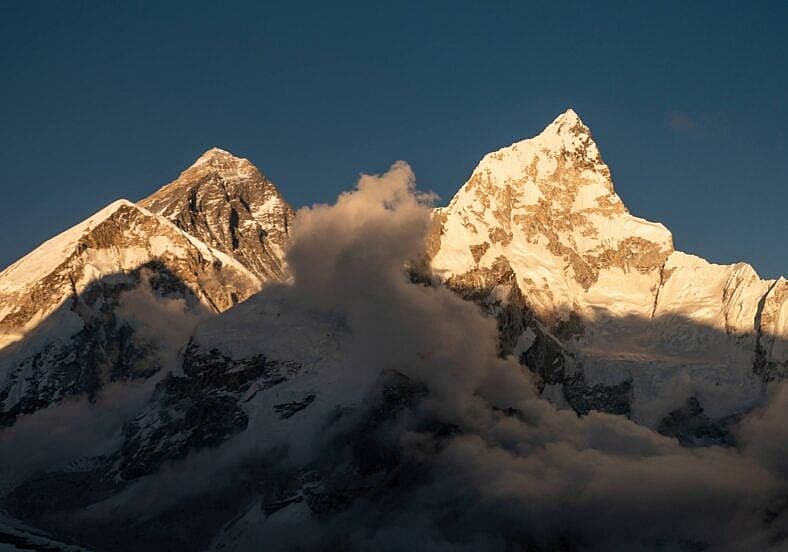
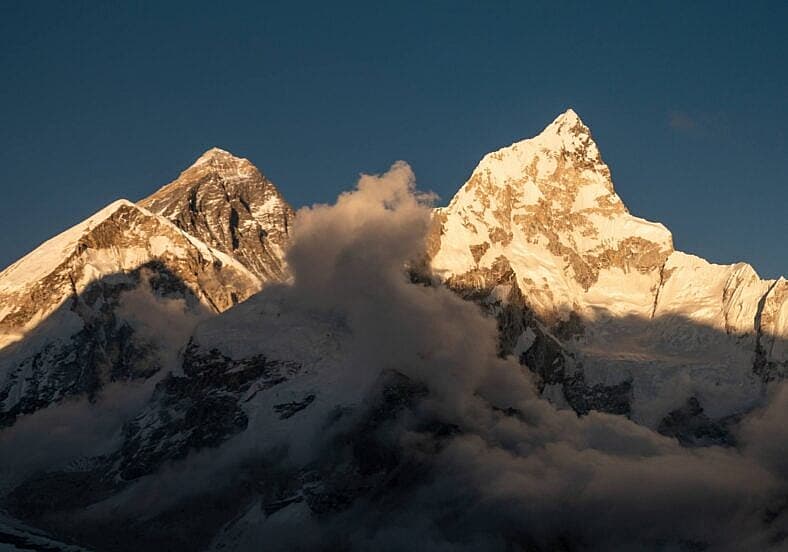
A human foot found inside an old climbing boot on Mount Everest may belong to a young explorer who disappeared more than a century ago, but the discovery has also revived a bizarre theory involving a missing body, a secret camera and an alleged cover-up. The boot was discovered on the Central Rongbuk Glacier in September 2024. Inside it was a partial human foot and a woolen sock bearing a name label stitched in red letters: “A.C. IRVINE.” The initials immediately pointed to Andrew Comyn “Sandy” Irvine, who vanished with George Mallory while attempting to reach Everest’s summit in 1924.
A National Geographic documentary team led by photographer and filmmaker Jimmy Chin found the remains on a glacier below Everest’s north face. The discovery was reported to the Royal Geographical Society, while the foot and boot were placed in the custody of the China Tibet Mountaineering Association. Irvine’s relatives offered DNA samples for comparison. However, no publicly available report has confirmed that the identification was established through DNA testing.
The labeled sock and location nevertheless led the expedition team to believe the remains belonged to Irvine. When Julie Summers, Irvine’s grandniece and biographer, received the news at her home in Oxford, she described it as “a shocking, extraordinary moment.”
The unexpected discovery encouraged Summers to revisit her great-uncle’s disappearance with mountaineering historian Jochen Hemmleb, who helped research the 1999 expedition that located Mallory’s body. Their findings and theories are explored in “The Everest Mystery: Sandy Irvine, George Mallory, and the Truth Still Buried on Everest”, scheduled for release on August 25.
Climbers Vanished While ‘Going Strongly For The Top’
 8
8Irvine was a 22-year-old Oxford student when he joined the 1924 British expedition. Mallory, who was 16 years older, had already participated in two previous Everest expeditions and was considered one of Britain’s most accomplished climbers.
On June 8, 1924, expedition member Noel Odell spotted the pair in the distance as two black dots “going strongly for the top.” A bank of mist then moved across the mountain and swallowed them from view. Neither climber was seen alive again.
Their disappearance created one of mountaineering’s greatest mysteries. If Mallory and Irvine reached the summit before dying, they would have accomplished the feat nearly three decades before Edmund Hillary and Tenzing Norgay’s recognized first ascent in 1953.
Why Mallory Chose The Inexperienced Irvine
 8
8Irvine had far less climbing experience than other members of the expedition, but he possessed two valuable qualities: extraordinary physical endurance and mechanical skill. The young adventurer was a star rower at Oxford and had the strength required for the grueling high-altitude climb.
He also understood the expedition’s cumbersome oxygen equipment. During the group’s journey from Darjeeling to Everest’s base, Irvine reportedly redesigned parts of the apparatus to make it lighter and more reliable.
Mallory had previously viewed supplemental oxygen as unsportsmanlike. After failing to summit Everest without it in 1922, however, he changed his position. Irvine’s ability to repair and modify the breathing equipment may have helped secure his place beside Mallory during the final climb.
Evidence discovered at their last camp indicated that Irvine continued working on the oxygen system shortly before the pair disappeared.
Mallory’s Body Revealed Signs Of A Violent Fall
 8
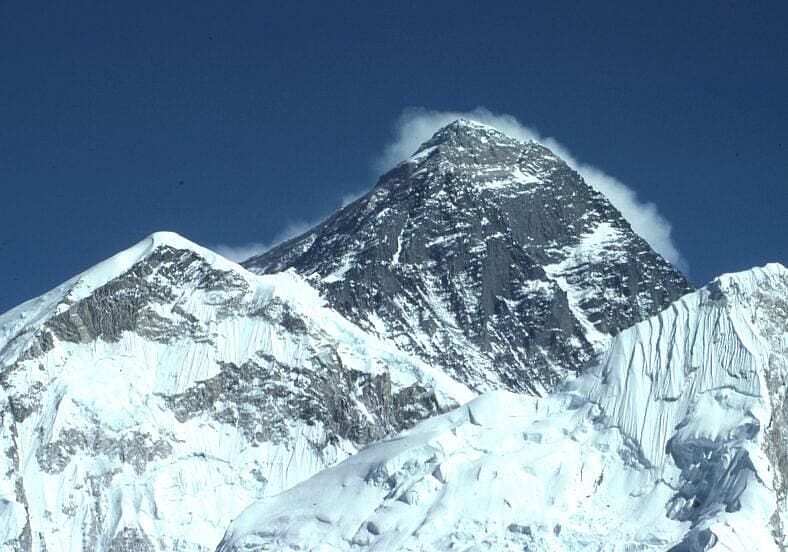
8Mallory’s mummified remains were located in 1999 in Everest’s high-altitude “death zone,” approximately 2,000 vertical feet below the summit. His body was found facedown on a slope of rock and ice. He had a severely broken leg and a snapped rope tied around his torso.
Those details led researchers to theorize that Mallory fell while tethered to Irvine. If the rope broke during the fall, Irvine may have been left alone on the mountain while injured, exhausted and exposed to deadly temperatures.
Irvine’s recently discovered foot was found more than 7,000 feet below Mallory’s body, raising new questions about how his remains traveled so far down the mountain.
Did Someone Move Irvine’s Body?
 8
8Reports from Chinese climbing expeditions have fueled a darker theory about Irvine’s remains. The British team climbed Everest from the northern Tibetan side, an area that came under Chinese control in 1950 and remained largely inaccessible to foreign expeditions for decades.
The deputy leader of a 1960 Chinese expedition allegedly reported seeing the body of a Caucasian climber dressed in vintage clothing high on Everest’s northeastern ridge. Members of another Chinese expedition in 1975 reportedly saw a body on a snow terrace below the location where Irvine’s ice axe had previously been discovered. Chinese authorities denied those reports.
Rumors later emerged that Chinese climbers had removed Irvine’s body, recovered his camera and concealed evidence that he and Mallory had reached the summit first. Another version of the theory claimed the body had been pushed down the mountain to remove it from a climbing route.
No evidence has proven either allegation.
 8
8Summers believes the movement of Everest’s ice offers a more likely explanation for where the boot was found. Irvine may have fallen onto the glacier after the rope connecting him to Mallory broke. Over the following century, moving ice could have gradually carried his remains farther down the mountain.
“We just don’t know if he was on the glacier the whole time, since 1924, or whether he was pushed or moved,” Summers told the New York Post. “I prefer to believe the first.”
The finding could help searchers narrow down where the rest of Irvine’s body and equipment may be located. However, glaciers contain deep crevasses and channels capable of moving, burying or destroying objects over long periods. Researchers cannot assume the rest of his remains are still close to the boot.
Missing Camera Could Solve The Everest Mystery
 8
8The most valuable missing item is a Vest Pocket Kodak camera that Mallory or Irvine may have carried during their final ascent. No camera was discovered on Mallory’s body. If a camera were found with recoverable film showing the climbers at the summit, it could rewrite the history of Everest by proving they arrived there before Hillary and Norgay.
An ice axe believed to have belonged to Irvine and an old crampon have also been found near 28,000 feet. Everest’s summit stands at 29,031 feet.
Those artifacts show how close members of the expedition came to the top, but they do not establish that Mallory and Irvine reached it.
Everest’s Deadly History
 8
8Historical figures from the Himalayan Database demonstrate how dangerous the mountain remained long after Irvine and Mallory disappeared. The supplied data show that the death rate among climbers traveling above base camp climbed to approximately 2.2% during the 1970s before falling below 1% between 2010 and 2018.
Avalanches accounted for the largest share of Everest deaths in the 2010 to 2018 period, followed by other causes, acute mountain sickness, exhaustion and falls.
Those figures provide context for how extraordinary the 1924 attempt was. Mallory and Irvine faced Everest with primitive equipment, unreliable oxygen systems and almost no understanding of how conditions near the summit could affect the human body.
Summers now hopes the story will focus as much on what the two climbers accomplished as on how they died. “It’s an extraordinary achievement to get as far as they did then,” she said.
The labeled sock has supplied the first physical trace of Irvine in more than a century. The rest of his body, his possible camera and the answer to whether the pair reached the summit remain somewhere on Everest, if the mountain has preserved them at all.